 CHAT WITH US NOW!

Planning for a Kerala trip? Here’s our guide to Kerala packing essentials for a hassle-free trip. Know what things to pack for your Kerala trip season-by-season.
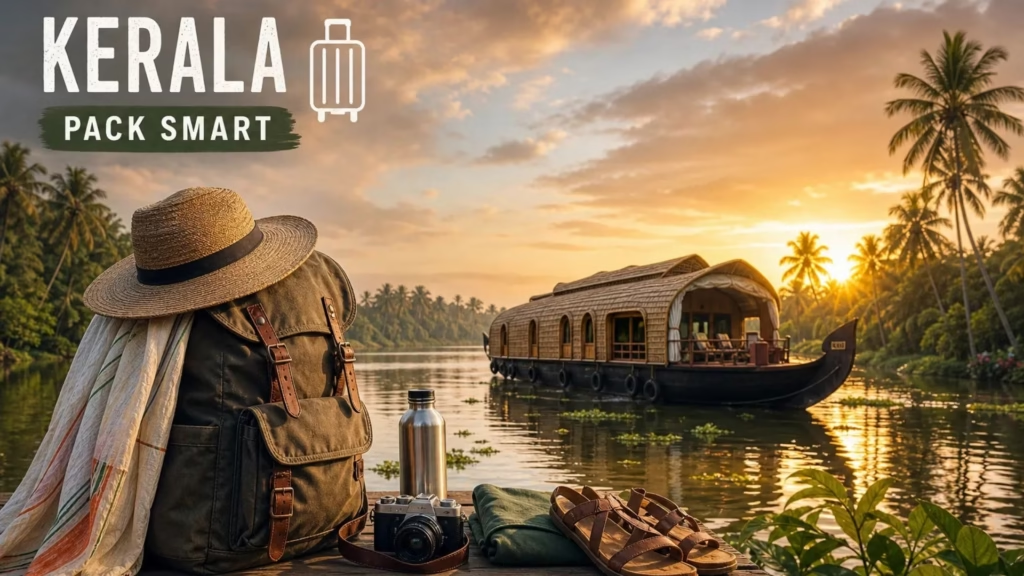
Kerala is not one destination. It’s at least three crammed into one state, and most travellers pack for only one of them. A single week here can take you from the humid backwater canals of Alleppey to the misty tea gardens of Munnar, then down to the salty breeze of Kovalam beach. Pack only sundresses and flip-flops, and you’ll be shivering in Munnar by night three. Pack only warm layers, and you’ll melt on the houseboat before lunch. This Kerala trip packing list solves that. It’s a complete packing breakdown organised by terrain zone and season, so you pack smart once and enjoy every part of the trip.
Before anything else, your itinerary determines your bag. If you haven’t locked in your route yet, TourismBharat’s curated Kerala tour packages map out exactly which zones you’ll cover and when. Knowing your route is step one to knowing what to pack; sort that first, then come back here.
Why Your Itinerary Determines Your Kerala Trip Packing List
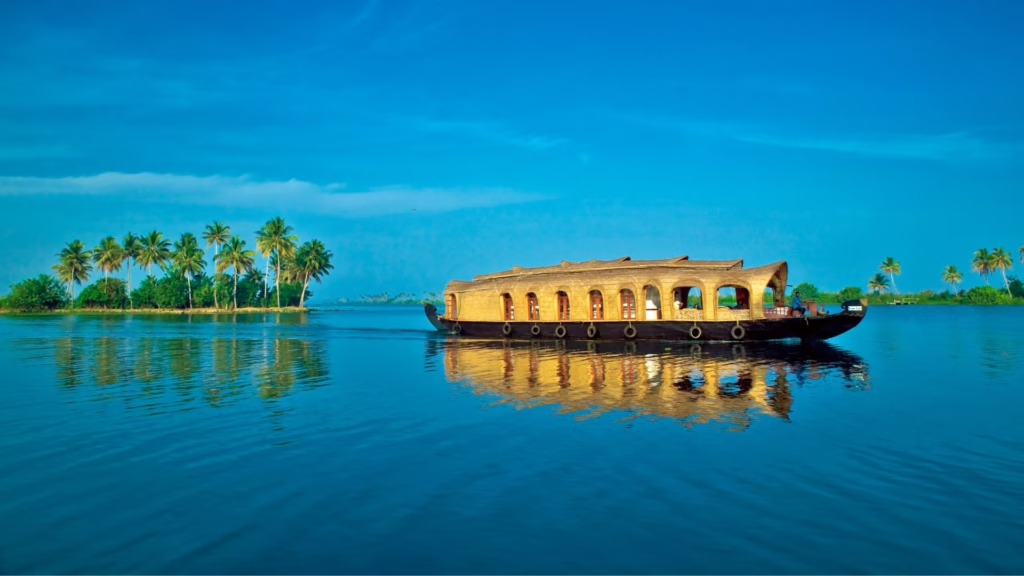
Kerala’s geography shifts dramatically within short distances. The coastal belt sits at sea level, hot and breezy. The backwater corridors of Alleppey and Kumarakom are humid, low-lying, and surrounded by water on most sides. Munnar and Wayanad sit at 1,500 to 2,500 metres above sea level, where cloud cover and altitude bring noticeably cool nights. A traveller doing only the backwaters needs very different gear from one doing a Munnar trek in the same week.
The Three Packing Zones of Kerala
Think of Kerala in three terrain layers. Coastal Kerala, covering Kovalam, Varkala, and Marari, demands lightweight breathable fabrics, sun protection, and sandals. Backwater Kerala, centred on Alleppey and Kumarakom, adds waterproofing needs, insect protection, and grip-soled footwear for slippery houseboat decks. Hill-station Kerala, covering Munnar and Wayanad, requires a mid-layer for cool evenings, waterproof trekking shoes, and a windproof shell. If your itinerary spans all three, your Kerala travel essentials need to cover all three without becoming a suitcase you’ll regret at every flight check-in.
Season Matters as Much as Location
Peak season runs from October to March. Temperatures across most of Kerala sit at a comfortable 22 to 32°C, skies are largely clear, and the backwaters are calm. This is the easiest season to pack for. Monsoon season, from June to September, is a different matter entirely. Rainfall in June alone can exceed 600mm, humidity is relentless, and everything from your electronics to your footwear needs waterproofing consideration. April and May are shoulder months, warm and building towards monsoon but not yet drenched. Your rain gear decisions hinge entirely on which of these windows your trip falls into.
Kerala Trip Packing List: Clothing for All Zones
Clothing is where most Kerala packing decisions either succeed or fail. The temptation is to pack one wardrobe for the whole trip. The smarter move is to pack pieces that layer and convert across all three zones.
Beach Days and Backwater Cruises: Fabric and Modesty Count
For coastal and backwater travel, lightweight and breathable wins every time. Cotton and linen separates are ideal: they breathe well in the heat and dry reasonably fast. Pack one or two sarongs, which double as beach cover-ups, impromptu temple cover-ups, and an extra layer on a cool evening boat ride. For sun protection during long houseboat days, loose full-sleeve shirts or rash guards are more practical than sunscreen alone. Worth noting: Kerala’s general culture leans modest even outside temple precincts, and floaty full-length trousers will serve you better than shorts across most village and town settings.
Packing for Munnar and the Hill Stations
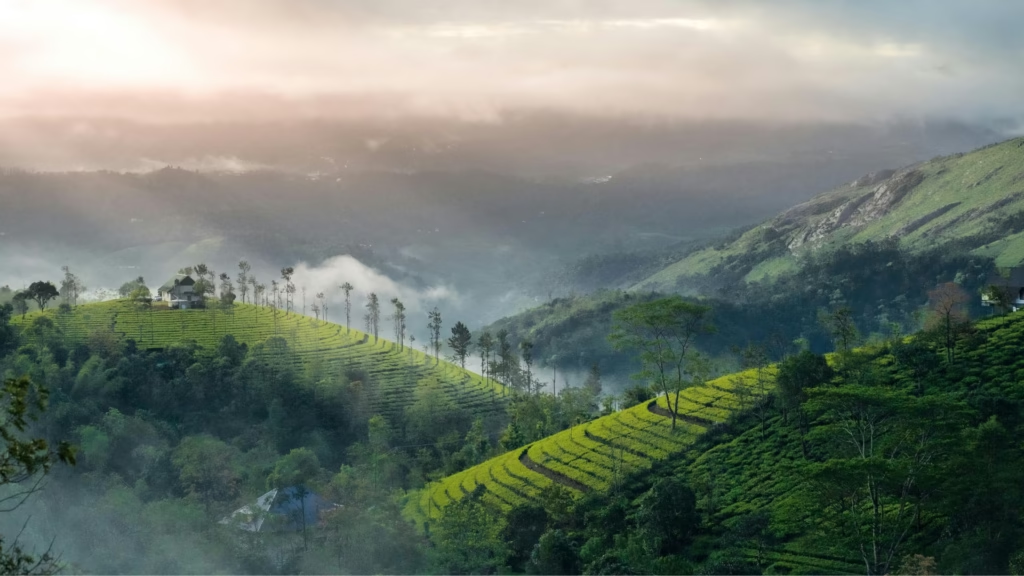
Munnar’s altitude means night temperatures can drop to 10 to 15°C between October and February, and even in warmer months, evenings after a day of trekking feel significantly cooler than the coast. Travellers arriving directly from Alleppey or Kovalam are consistently caught off-guard. You don’t need heavy luggage for this: one lightweight fleece or zip-up jacket and one windproof shell layer is enough. Carry one pair of full-length trousers that doubles as both a trekking and evening layer. Two mid-layers maximum; anything more is dead weight.
Temple Visits: The Dress Code You Need to Know
Kerala’s major temples have strict entry rules that catch unprepared travellers at the gate. At temples like Sree Padmanabhaswamy and Guruvayur, men are required to wear a mundu or dhoti, and shirts are removed before entering inner sanctum areas. Women must wear a saree, set-mundu, or salwar kameez with full coverage. Jeans, shorts, sleeveless tops, and western-style clothing are not permitted at these temples, regardless of how modest they look to you. Pack a ready-to-wear mundu if you’re visiting any major temple, and carry a long skirt or dupatta in your day bag as a backup. Arriving without these means being turned away at the entrance.
Footwear That Handles Everything from Houseboat Decks to Jungle Trails

Kerala demands more from footwear than most Indian destinations. In practice, two or three pairs is all you need to cover every terrain on a typical Kerala itinerary.
Grip-Soled Shoes for Houseboat Decks and Wet Paths
Houseboat decks are wet and smooth, and backwater pathways can be muddy and slippery after rain. Anti-slip sandals with a closed or semi-closed toe are the baseline recommendation. Flat, smooth-soled footwear is a real hazard on these surfaces: flip-flops are fine for lounging on deck but should have a solid grip sole, not a flat foam base. For beach days and temple visits where you’ll be removing footwear frequently, a clean pair of flat sandals is practical. That’s two pairs already handling most situations.
Waterproof Trekking Shoes for the Western Ghats
For Munnar, Wayanad, or any trail in the Western Ghats, a mid-cut waterproof trekking shoe with deep rubber lugs is the right choice. Wet-rock grip matters more than waterproofing alone on Kerala’s laterite rock and mossy stone trails, which are notoriously slick during and after rain. Brands worth considering include CTR, which is well regarded for Western Ghats grip, and Decathlon’s Quechua NH500 Mid Waterproof for budget-conscious trekkers. Canvas sneakers and plain trainers offer no grip on wet stone and soak through quickly; leave them at home for any trail section.
Kerala Packing List for Monsoon Travel (June to September)
Travelling Kerala in monsoon season is an entirely different experience, and a worthwhile one if you pack for it correctly. The backwaters look extraordinary in the rain, and the hill stations turn an intense, luminous green. Humidity means wet things stay wet for a long time, so every item in your bag needs to earn its place.
Waterproofing Your Valuables and Gear
A 10 to 20 litre roll-top dry bag is non-negotiable for backwater trips during monsoon. Every document, electronic device, and piece of cash should go into it or into a sealed ziplock pouch at minimum. For on-deck use during houseboat rides, a submersible waterproof phone pouch worn around the neck is the most practical solution: your phone stays accessible without the risk of a splash kill. Travelling overland between destinations? A backpack rain cover protects your main bag throughout.
Rain Wear That Actually Keeps You Dry
A compact, packable rain poncho is the practical choice for Kerala monsoon, not an umbrella. Kerala’s monsoon winds will invert a standard umbrella within minutes, and large umbrellas are impractical on houseboat decks and forest trails. Quick-dry fabrics are essential during these months: cotton stays wet for hours after a soaking, which is miserable in already-humid conditions. The layering formula that works is a quick-dry base layer with a poncho over the top: lightweight, packable, and effective.
Health Kit and Mosquito Protection
Kerala is generally safe, but the humid tropical climate means mosquito activity is high, particularly in rural backwater areas and forested hill-station zones near Wayanad and Periyar. Pharmacies in remote backwater regions or near jungle lodges can be an hour’s drive away. Packing a solid health kit keeps that from becoming a problem.
Essential Over-the-Counter Medications to Carry
Pack paracetamol, antihistamine tablets, an antacid, anti-diarrhoeal medication (loperamide), oral rehydration salts, antiseptic cream, and plasters or bandages. Pharmacies are widely available in Kerala’s towns and cities, but remote backwater stays and jungle lodges are a different story. Pack for at least three days of self-sufficiency on every item in your kit. ORS sachets in particular are underrated: heat, activity, and occasional traveller’s stomach can dehydrate you faster than you expect in a tropical climate.
Mosquito and Insect Protection
DEET-based repellent is the primary recommendation, applied especially at dawn and dusk. Worth knowing: dengue, chikungunya, and Zika are spread by Aedes mosquitoes, which are daytime biters, so repellent use throughout the day matters, not just at night. Backwater houseboat stays, and forested areas near Wayanad and Periyar are higher-exposure zones. Carry a mosquito net if you’re staying in budget or non-air-conditioned accommodation. In rural Kerala, a torch and closed-toe footwear at night are also sensible precautions: snake activity is real in forested areas, and a lit path is always safer than an unlit one.
Gadgets and Your Quick-Scan Kerala Backwaters Packing Checklist
Electronics need extra thought in Kerala’s humidity and rain. A waterproof phone pouch doubles as active-use protection during boat rides. A universal travel adaptor is useful if you’re staying in older hill-station guesthouses with non-standard sockets. A power bank is essential for full-day backwater or beach trips where charging points are scarce. Ziplock bags for cameras and laptops are a low-cost but effective waterproofing method, one most travellers only remember after something gets damp.
Your Kerala Trip Checklist at a Glance
Here’s a quick reference covering everything in this guide. Screenshot it, print it, or check it off before you zip up your bag.
- Clothing: Cotton/linen separates, 2 sarongs, quick-dry full-sleeve shirt, fleece or zip-up jacket, windproof shell layer, full-length trekking trousers, mundu or long skirt for temples, salwar kameez or modest dress for women
- Footwear: Grip-soled anti-slip sandals, mid-cut waterproof trekking shoes, flat sandals for temples and beach
- Monsoon gear: 10 to 20L roll-top dry bag, packable rain poncho, submersible waterproof phone pouch, backpack rain cover
- Health kit: Paracetamol, antihistamine, antacid, loperamide, ORS sachets, antiseptic cream, plasters, DEET repellent, mosquito net (if staying in non-AC accommodation)
- Gadgets: Power bank, universal travel adaptor, waterproof phone pouch, ziplock bags for electronics
- Documents: ID/passport, printed booking confirmations, emergency contacts, travel insurance details
This Kerala trip packing list works best once your itinerary is confirmed. If you’re still building your route, TourismBharat’s curated Kerala packages are a practical starting point: they map out your zones, dates, and activity types so you know exactly what you’re packing for before you open a single bag.
Pack with Intention and Enjoy the Whole Trip
Kerala rewards the traveller who packs with intention. Your list looks genuinely different depending on whether you’re drifting through Alleppey’s backwaters at dawn, pulling on a fleece for an early Munnar trail, or kicking off your sandals at Kovalam as the sun drops into the sea. Those are three different Keralas, and this Kerala trip packing list is built to handle all of them. Keep it light, keep it waterproof, and never leave the health kit behind.
Book your Kerala holiday now with our special Kerala Tour Package 3 Nights/4 Days in Munnar & Alleppey.
Additionally, join our Travel Forum to share your experiences, ask questions, and connect with fellow travellers.
FAQs
- Can tourists wear shorts in Kerala?
Yes, shorts are fine for beaches and casual outings. For temples and cultural sites, wear modest clothing.
- Which month is best to visit Kerala?
October to March is the most pleasant season.
- What will be the cost of a Kerala trip?
A Kerala trip cost depends on your package. Check out our affordable Kerala Holiday Tour Package (3 Nights/4 Days in Munnar & Alleppey)
- Are 4 days enough for Kerala?
Yes, if you focus on popular spots like Munnar and Alleppey.
- How much will a Kerala trip cost?
Budget trips start from ₹8,000–₹12,000 per person, while luxury ones cost more.
- Is Kerala budget-friendly?
Yes, with affordable homestays, local transport, and tour packages.
- How to go to Kerala on a low budget?
Choose trains or buses, budget stays, and group packages.
- What do ladies wear in Kerala?
Cotton kurtis, sarees, or dresses. On beaches, sarongs and swimsuits are acceptable.
- What type of clothes should I pack for Kerala?
Light cottons, beachwear, woollens for hill stations, and rain gear for monsoon.
- Should I bring a raincoat or an umbrella for Kerala?
A raincoat is better during heavy monsoons; umbrellas are fine for light showers.
- Is lightweight clothing suitable for Kerala’s climate?
Yes, breathable fabrics are best for humidity.
- What should I wear if I’m visiting Kerala’s hill stations?
Carry sweaters, jackets, and comfortable closed shoes.
- Is mosquito repellent necessary for Kerala?
Absolutely, especially in backwaters and rural areas.
- What medications and first aid items should I carry for Kerala?
Basic medicines, motion sickness tablets, band-aids, antiseptic cream, and personal prescriptions.
- Is sunscreen important for Kerala trips?
Yes, for beaches and outdoor sightseeing.
- What travel documents do I need for a Kerala vacation?
ID proof, tickets, hotel confirmations, and insurance.
- Do I need travel insurance for a Kerala trip?
Highly recommended for medical and travel emergencies.
- Can I travel to Kerala with only hand luggage?
Yes, if you pack smart with multipurpose clothing and travel-size essentials.
- What are some common packing mistakes to avoid for Kerala?
Overpacking, forgetting rain gear, skipping mosquito repellent, and not carrying woollens for hill stations.
- What electronic items and adapters should I bring to Kerala?
Universal adapter, power bank, camera, and chargers.
- How do I pack for Kerala’s monsoon season?
Carry waterproof bags, quick-dry clothes, anti-fungal powder, and a raincoat.
- What should I pack for Kerala’s beaches and backwaters?
Beachwear, flip-flops, waterproof pouches, sunscreen, and mosquito repellent.
- Are there any dress codes for temples or cultural sites in Kerala?
Yes, modest clothing that covers the shoulders and legs.