 CHAT WITH US NOW!

Planning a Jaipur tour package? Real 2026 itineraries, honest cost breakdowns, and local tips. Chat with us on WhatsApp today.
Introduction
If you’ve spent an evening with fifteen browser tabs open, comparing every Jaipur tour package you can find and still can’t tell what you’re actually paying for, you’re not alone. Most listings quote a number, show you the Amber Fort and Hawa Mahal on a template map, and leave you to guess what happens on day two. Jaipur is not a one-temple city you tick off in an afternoon — it’s a walled Pink City with seven distinct bazaars each selling something different, a fort complex that takes a full unhurried morning to actually see, and a food culture that most three-star itineraries skip entirely in favour of a “cultural dinner” at a hotel banquet hall. This guide is built the way we actually plan trips for guests: real day-by-day structures for 3, 5, and 7-day trips, an honest INR cost breakdown with nothing hidden in a “starting from” asterisk, and the specific local knowledge — which gate to enter Amber Fort from, when the light hits Hawa Mahal best, which bazaar sells what — that a generic package usually doesn’t have room for.
Who This Guide Is For
This guide works whether you’re planning a first-timer’s introduction to Rajasthan, a slower culture-and-food trip with extra days built in, or a Jaipur-plus-one-more-city loop (Pushkar, Ranthambore, or Udaipur) inside a single week off work. It assumes you want to see Jaipur properly rather than sprint through it, and that you’d rather know the real cost upfront than discover add-ons once you’ve already booked.
Np Trips Found
Best Time to Visit Jaipur for a Multi-Day Trip
Jaipur sits in a semi-arid belt, and the difference between visiting in June and visiting in December is not subtle — it changes what you can comfortably do outdoors, and for how long.
- October to March is the working window for most travellers. Days settle into the low-to-mid 20s°C, evenings can dip into single digits in December-January, and this is when the forts, step-wells, and bazaars are genuinely walkable at midday without needing a siesta break. This is also peak season, so book heritage hotels 6-8 weeks out if you want a specific property.
- April to June turns punishing fast — daytime temperatures regularly cross 40°C, and outdoor fort visits need to happen before 9 am or after 5 pm. Doable, but plan around the heat rather than against it.
- July to September brings the monsoon. Jaipur doesn’t get the drenching some of India does, but you’ll get intermittent heavy showers, greener hills around Amber and Nahargarh, and noticeably lower hotel rates. Underrated if you don’t mind carrying a light raincoat and adjusting outdoor plans day-of.
- Teej and Gangaur (roughly July-August and March-April depending on the lunar calendar) bring processions and markets that a lot of visitors never see, simply because nobody tells them the festival calendar. If your dates are flexible, this is worth checking before you lock a trip.
How to Get to Jaipur
- By air: Jaipur International Airport (JAI) has direct connections from Delhi, Mumbai, Bengaluru, and several other metros, plus a small set of international routes, mainly to the Gulf. Flight time from Delhi is under an hour.
- By train: The Delhi–Jaipur route is one of the more comfortable rail journeys in the country. Shatabdi Express-class trains cover it in roughly 4.5-5 hours; slower trains take longer but cost less. Booking 2-3 weeks ahead in peak season avoids the waitlist scramble.
- By road: Delhi to Jaipur on the Delhi-Jaipur Expressway is around 5-5.5 hours by car, depending on traffic and exit points, and this is the route we usually recommend if you’re combining Jaipur with Pushkar or Ajmer, since both sit conveniently off the same corridor.
- Within the city: Auto-rickshaws and app-based cabs cover short hops fine, but the Amber Fort–City Palace–Nahargarh triangle is spread out enough that a full-day car with a driver is worth the cost on your busier sightseeing days — this is built into our package pricing below rather than charged separately per attraction.
Jaipur Multi-Day Tour Itineraries
We’ve built these as starting frameworks. Every TourismBharat itinerary gets adjusted to your pace, mobility, and interests on a WhatsApp call before anything is booked — these are the shape of the trip, not a rigid script.
Option 1: The 3-Day Jaipur Essentials (2 Nights / 3 Days)
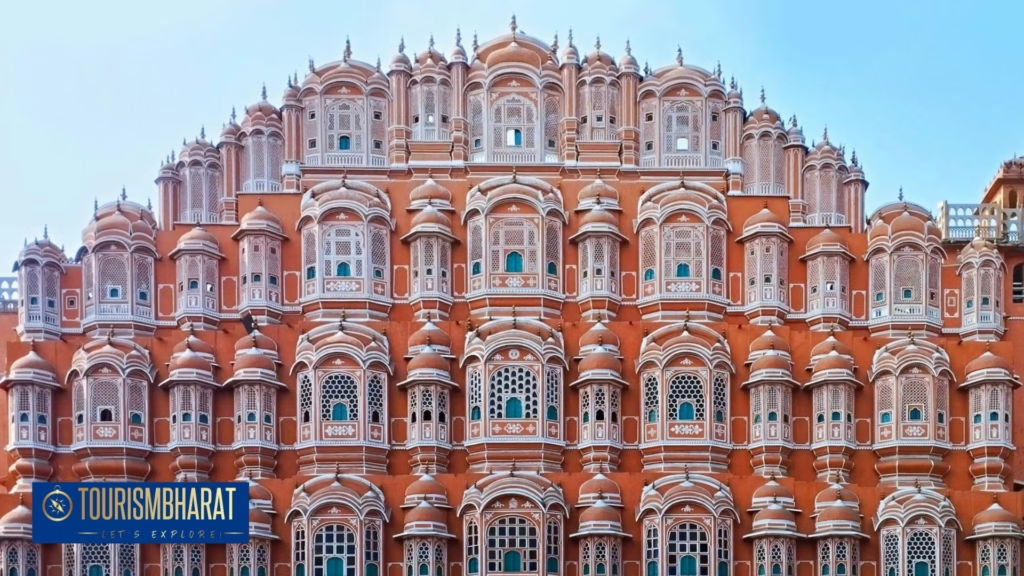
Day 1 — Old City & Bazaars: Arrive and check in by late morning. Afternoon spent walking the City Palace complex and the Jantar Mantar observatory, followed by Hawa Mahal at golden hour — the honeycomb facade catches the low sun best around 5-6 pm, which most day-tour buses miss because they’re already headed to dinner. Evening free to wander Bapu Bazaar or Johari Bazaar for lac bangles, block-printed textiles, and gemstones if that interests you.
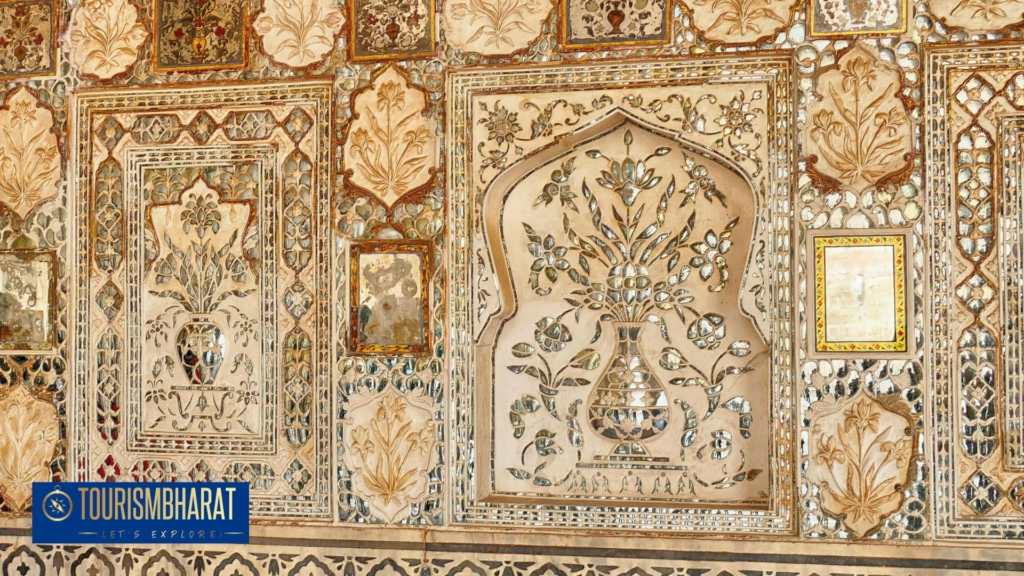
Day 2 — Amber Fort & the Hills. Early start (by 8 am, before tour buses fill the fort) to Amber Fort, allowing 2.5-3 hours to actually walk the ramparts and the Sheesh Mahal properly rather than rushing through in 45 minutes. Short stop at Jal Mahal for photos on the way back. Afternoon at Nahargarh Fort for the sunset view over the whole Pink City — this is the single most requested add-on we get, and it’s not always included in template packages.
Day 3 — Departure: Morning free for last-minute shopping or a leisurely breakfast, checkout by noon, transfer to airport/station.


Option 2: The 5-Day Deep Jaipur (4 Nights / 5 Days)
Builds in everything from the 3-day version, plus:
Day 3 — Food & Craft Day: A half-day built around Jaipur’s food culture rather than monuments — a walking food trail through the old city covering kachori, pyaaz ki kachori, ghewar (seasonal), and lassi from the specific stalls locals actually queue at, not the ones nearest the tourist entrance. Afternoon visit to a block-printing or blue pottery workshop in Sanganer or Bagru, where you see the actual dyeing and carving process rather than just the retail showroom.
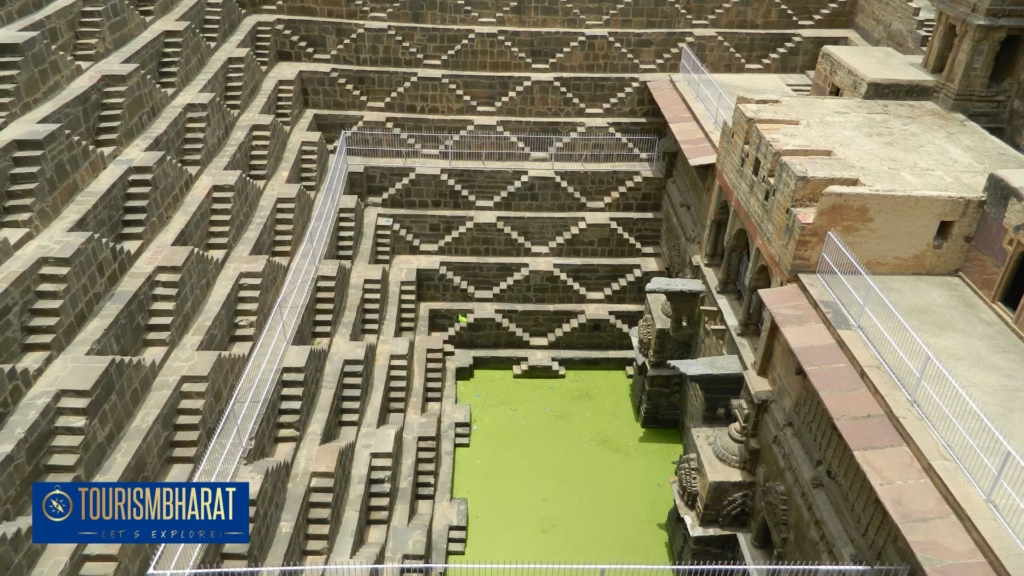
Day 4 — Day Trip to Abhaneri or Samode: A half-day excursion to Chand Baori step-well in Abhaneri (roughly 1.5 hours each way) — one of the most photogenic and least crowded sites near Jaipur, and something almost never on a standard package day plan. Alternatively, Samode Palace and village for a quieter, more rural counterpoint to the city.
Day 5 — Departure, as above.
Option 3: The 7-Day Jaipur + Pushkar/Ranthambore Loop (6 Nights / 7 Days)
For travellers combining Jaipur with a second stop within the same trip.
Days 1-3: Jaipur as per the 3-day plan above.
Days 4-5: Either Pushkar (2.5-3 hours by road) for the lake, the temples, and a slower small-town pace, or Ranthambore National Park for a tiger safari — two very different trip characters, so this is where the WhatsApp planning conversation matters most: one is contemplative, the other is early-morning-jeep-safari active.
Day 6: Return travel and a relaxed half-day back in Jaipur — often used for the food trail or craft workshop from Option 2 if it wasn’t covered earlier.
Day 7: Departure.
Jaipur Trip Cost 2026: Full Cost Breakdown
Below is a realistic per-person cost range for two people travelling together, mid-range comfort level, for the 5-day/4-night itinerary above. Budget and premium variants are noted separately.
| Cost Component | Budget Range (per person) | Mid-Range (per person) | Notes |
|---|---|---|---|
| Accommodation (4 nights) | ₹4,000 – ₹6,500 | ₹9,000 – ₹16,000 | Twin-sharing; heritage haveli stays sit at the top of mid-range (rates may differ in peak season) |
| Private car + driver (full-day, sightseeing days) | ₹6,000 – ₹8,000 total | ₹6,000 – ₹8,000 total | Split across 2 travellers; AC sedan/SUV depending on group size (rates may differ in peak season) |
| Monument entry fees (Amber Fort, City Palace, Jantar Mantar, Hawa Mahal, Nahargarh) | ₹1,200 – ₹1,800 | ₹1,200 – ₹1,800 | Indian vs. foreign national rates differ significantly (rates may differ in peak season) |
| Local guide (per site or full-day) | ₹800 – ₹1,500 per day | ₹1,500 – ₹2,500 per day | We use guides who live in the old city, not agency-assigned rotational guides (rates may differ in peak season) |
| Meals (breakfast included; lunch + dinner out of pocket) | ₹700 – ₹1,000/day | ₹1,500 – ₹2,500/day | Old-city street food trail runs far cheaper than hotel dining (rates may differ in peak season) |
| Food & craft workshop half-day | ₹1,200 – ₹1,800 | ₹1,800 – ₹2,500 | Includes tastings and workshop demo, excludes purchases (rates may differ in peak season) |
| Abhaneri/Samode day excursion (car + guide) | ₹1,500 – ₹2,000 | ₹2,000 – ₹2,800 | Per person, shared between 2 travellers (rates may differ in peak season) |
| Approximate total (5 days, per person, twin-sharing) | ₹18,000 – ₹24,000 | ₹28,000 – ₹40,000 | Excludes flights/train to Jaipur and shopping (rates may differ in peak season) |
A few honest notes on where costs actually move:
- Season is the biggest lever. The same itinerary in July can run 25-30% cheaper on accommodation than in December.
- Foreign national entry fees at monuments like Amber Fort and City Palace are substantially higher than Indian national fees — this is a government rate, not something any operator controls, so be wary of a package that quotes one flat number regardless of nationality.
- “All-inclusive” packages sometimes bundle a fixed, generic guide and a fixed set of meals you may not want, which is where a lot of the padding in bigger platforms’ pricing actually comes from. We price accommodation, transport, and experiences separately so you can see exactly what you’re paying for each.
Where to Stay in Jaipur by Budget
Budget (₹1,500 – ₹3,000/night): Clean guesthouses and budget hotels around Bani Park and MI Road — good base if you’re spending most daylight hours out sightseeing anyway.
Mid-range (₹4,000 – ₹8,000/night): Boutique hotels and smaller heritage properties near C-Scheme and the old city periphery, often converted havelis with genuine period architecture rather than generic modern rooms.
Heritage/Premium (₹10,000+/night): Palace-hotel properties in and around the city — the kind of stay where the building itself is the experience. The rates could be remarkably high in the peak season, so two to three months prior reservations are always an advantage for travellers.
Safety, Permits & Health Notes
- No special permits are required for Indian or foreign nationals to visit Jaipur or the standard sightseeing circuit covered in this guide.
- Tap water: stick to sealed bottled water or filtered water provided by your accommodation; most upset stomachs on Rajasthan trips trace back to ice or uncovered street-side water rather than food itself.
- Sun exposure is a bigger practical risk than most first-time visitors expect, especially October-March when the dry heat doesn’t feel as intense as it is — carry water on fort visits, where shade is limited for long stretches.
- Amber Fort and City Palace involve genuine walking and some uneven stone stairs — worth flagging to your planner in advance if anyone in your group has mobility considerations, since routes can be adjusted.
- Solo women travellers: Jaipur’s tourist circuit is generally well-trodden and well-lit in the evenings around Hawa Mahal and the main bazaars; standard precautions around late-night solo auto rides apply as they would in any Indian city of this size.
Do’s and Don’ts from Local Experience
Do visit Amber Fort at opening time. By 10:30 am the tour buses arrive in waves, and the ramparts get genuinely crowded.
Do bargain in the bazaars — it’s expected, not rude — but do it with good humour, not aggression. A price that seems too easily accepted usually wasn’t a fair starting point.
Don’t try to see Amber Fort, City Palace, and Jantar Mantar all in one afternoon. We see this attempted constantly on bus-tour itineraries, and it means rushing through all three without absorbing any of them.
Do ask before photographing people in the old city, especially artisans at work in small workshops — most say yes, but the ask matters.
Don’t assume every “authentic” cooking class or workshop advertised near tourist zones is what it claims — ask specifically where it happens and who’s teaching, since some are staged for groups rather than run by the actual artisans. TourismBharat can get it arranged from authentic people.
How a TourismBharat Jaipur Itinerary Is Different
A lot of Jaipur packages online are built to cover as many Rajasthan cities as possible in one listing, which means Jaipur itself often gets a template two-day treatment regardless of how many days you’ve actually booked — the “extra” days just get padding activities. We do the opposite: our Jaipur guides are people who live in the old city or just outside it, not a rotational pool assigned by a call centre. Pricing is quoted itemised and fixed once confirmed — no day-of “optional” add-ons that turn out not to be optional. And because most of our booking conversation happens over WhatsApp rather than a ticket queue, if you want to swap the craft workshop for an extra bazaar afternoon, or add a half-day to Abhaneri, that’s a message, not a re-quote through a support form.
Frequently Asked Questions
How many days do I actually need in Jaipur?
Three days covers the essential monuments — Amber Fort, City Palace, Hawa Mahal, Jantar Mantar, and the main bazaars — comfortably without rushing. Five days lets you add the food trail, a craft workshop, and a day excursion to Abhaneri or Samode, which is where Jaipur starts to feel less like a checklist and more like a place.
What is a realistic Jaipur trip cost for 2026?
For a mid-range 5-day, 4-night trip per person on twin-sharing, expect roughly ₹28,000 – ₹40,000 covering accommodation, private transport, entry fees, a local guide, and select experiences, excluding flights or trains to Jaipur and personal shopping. Budget travellers can bring this down to roughly ₹18,000 – ₹24,000. [CONFIRM CURRENT RATE] for exact seasonal pricing.
Is Amber Fort worth a full morning, or can I see it faster?
You can technically see it in an hour, but the fort complex includes the Sheesh Mahal, multiple courtyards, and rampart walks that reward slower exploration. We recommend 2.5-3 hours and an early-morning visit before tour groups arrive in volume.
Do I need a guide for Jaipur, or can I explore independently?
You can absolutely explore independently — Jaipur is a manageable, well-signed city. A local guide adds the most value at Amber Fort and City Palace specifically, where the history and architectural detail aren’t obvious from signage alone. Bazaars and food exploration are often better done without a fixed schedule.
What’s the best time of year for a Jaipur multi-day tour?
October to March offers the most comfortable daytime temperatures for extensive walking and fort visits. April to June is workable if you plan outdoor activities around early morning and evening hours. Monsoon season (July-September) is quieter and greener, with noticeably lower hotel rates, if you don’t mind occasional rain.
Can I combine Jaipur with Pushkar or Ranthambore in one trip?
Yes — both pair naturally with Jaipur within a 7-day loop. Pushkar suits a slower, temple-and-lake pace, roughly 2.5-3 hours by road; Ranthambore suits travellers specifically wanting a tiger safari, and involves early-morning jeep timings that shape the rest of the day around them.
Chat With Us
Every itinerary in this guide is a starting framework, not a fixed script — the trip that actually works for you depends on your pace, your budget tier, and what you’d rather trade off. Chat with the TourismBharat trip planner on WhatsApp right away!