 CHAT WITH US NOW!

Planning a Meghalaya tour package? Real itineraries, root bridge treks, Cherrapunji tips & honest costs. Chat with a local planner on WhatsApp.
Introduction
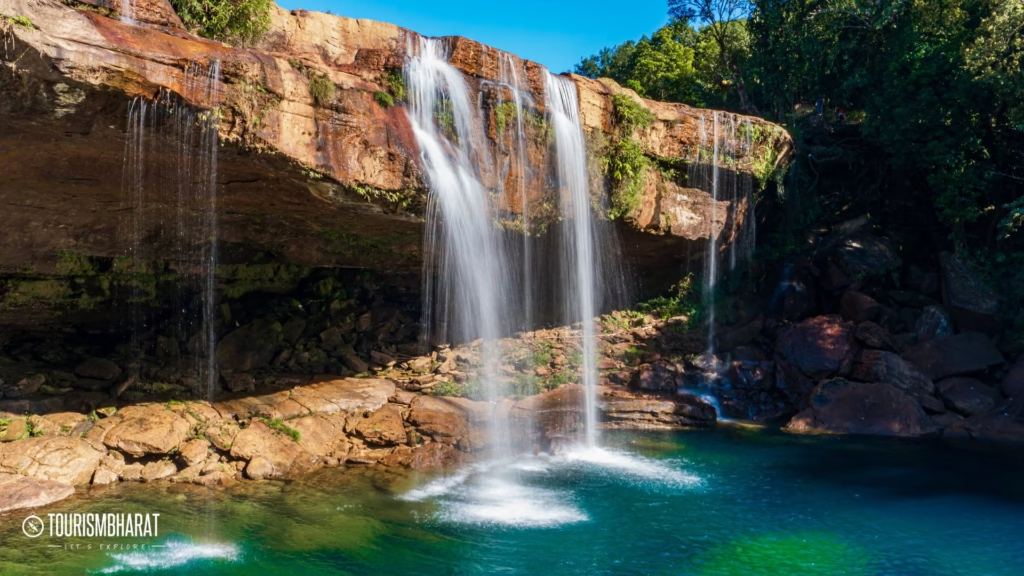
If you’ve spent an evening with ten browser tabs open comparing a Meghalaya tour package, you already know the problem: every itinerary looks the same, the “Cherrapunji sightseeing” line item never says which waterfall, and nobody tells you what the double-decker root bridge trek actually costs once you add the local guide, the entry fees, and the taxi back up 3,500 steps. Most Northeast India content online is written by someone who has never stood in the Umngot river at Dawki watching a wooden boat cast a shadow on water so clear it looks photoshopped. This guide is written by people who have. We’ll walk you through when to go, how the villages of Sohra (Cherrapunji) and Mawlynnong actually work, what a realistic Meghalaya tour package costs in rupees, and where a good local guide changes the trip entirely.
Why Meghalaya, and Who This Trip Is For
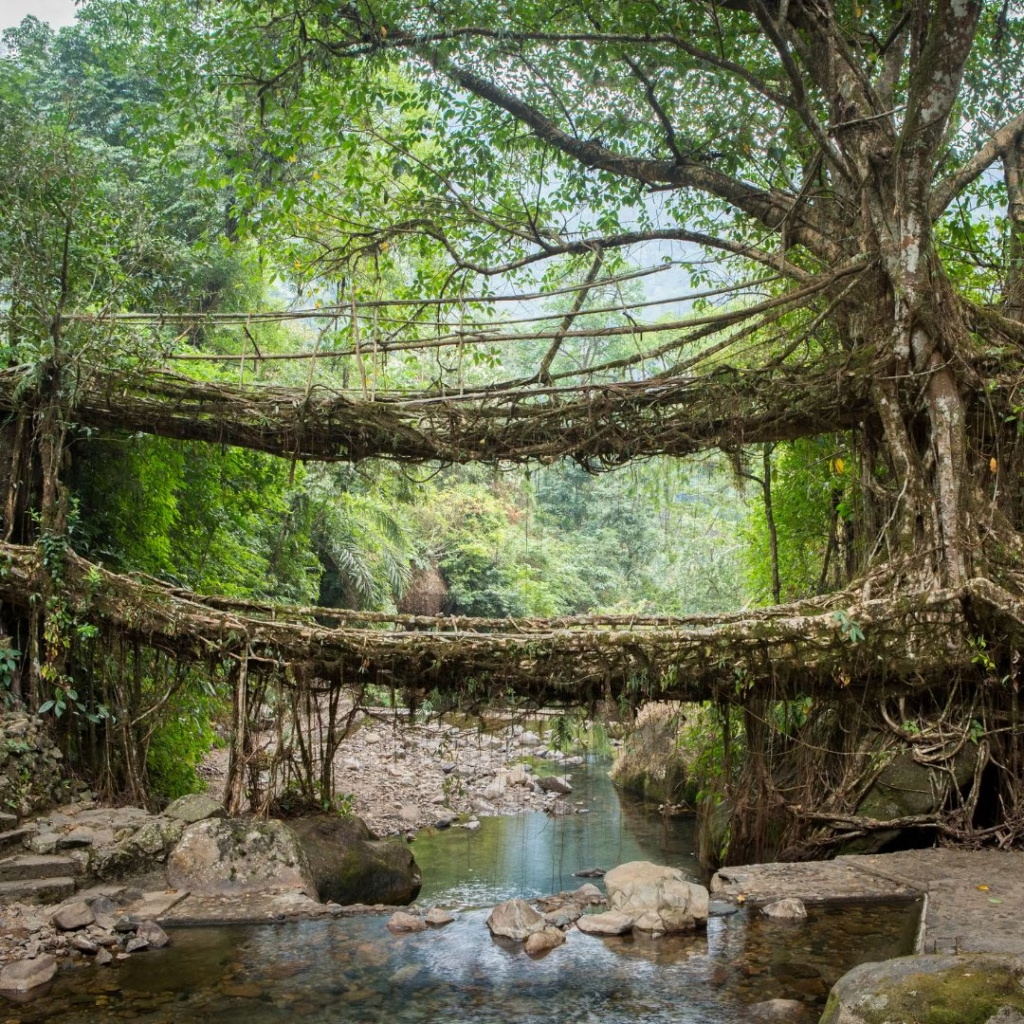
Meghalaya rewards travellers who like their landscapes with a story attached. The living root bridges of the War-Jaintia hills weren’t built for tourists — the Khasi and Jaintia communities trained the roots of rubber fig trees across rivers over generations, because monsoon floods here wash out anything made of wood or steel within a few seasons. Some of these bridges, like the double-decker at Nongriat, are still growing.
This trip suits:
- First-time Northeast India visitors who want dramatic landscape without the higher-altitude demands of Arunachal or Sikkim
- Moderately fit trekkers — the Nongriat descent is roughly 3,500 steps down and the same number back up, doable by most people in decent shape but genuinely tiring
- Photographers, waterfall chasers, and anyone who wants a slower, village-based trip rather than a city-hopping one
- Families with older kids and couples; it’s less suited to travellers who cannot manage sustained stair descents or very young children on the longer treks
It does not suit travellers expecting five-star infrastructure at every stop. Sohra and Mawlynnong run on homestays and small guesthouses, not chain hotels, and that’s the point.
Best Time to Visit Meghalaya
Meghalaya’s weather swings between two extremes, and your Meghalaya tour package should be built around which one you actually want.
- October to April (the dry-ish season): Clear skies, visible root bridges without slippery rocks, and the double-decker bridge trail at its safest. Sohra’s famous rainfall drops off sharply, so waterfalls like Nohkalikai are thinner but the trekking is far easier. This is the best window for first-timers.
- May to September (monsoon): Sohra genuinely lives up to its reputation as one of the wettest inhabited places on earth. Waterfalls are at their most dramatic, but trails are slick, leeches appear on the Nongriat route, and river crossings at Dawki and Mawlynnong’s canoe rides can be suspended without warning. Go now only if you specifically want to see the rain — not despite it.
- December to February: Cool, dry, and the clearest visibility for the sacred forests, but nights in Sohra and Shillong drop cold enough that you’ll want a proper jacket, not a light shawl.
How to Get to Meghalaya
There’s no airport inside Meghalaya itself — every route funnels through Assam.
- By air: Fly into Guwahati (GAU), Assam. It’s the only realistic air gateway. From Guwahati, Shillong is a 3–3.5-hour drive (100 km), through winding but scenic NH6.
- By road from Guwahati: Shared taxis, private cabs, and Meghalaya Transport Corporation buses all run this route. A private cab is more comfortable for the mountain bends; budget travellers use shared Sumos from Guwahati’s Paltan Bazaar taxi stand.
- By rail: The nearest major railhead is Guwahati Railway Station, well connected to Kolkata, Delhi, and Bengaluru. There is no train into Meghalaya itself.
- Getting around once there: Shillong to Sohra is roughly 1.5–2 hours; Sohra to Mawlynnong and Dawki adds another 2–2.5 hours one-way. Hiring one vehicle for the full loop is far less stressful than switching taxis at each stop — this is one of the first things we sort out for guests before they land.
Sample Itineraries

We’re giving you three lengths because most Meghalaya tour package searches don’t specify duration, and the right one depends on whether you’re treating this as a standalone trip or pairing it with Guwahati or Kaziranga.
Option 1: The 4-Day Essentials Loop
Day 1 — Guwahati to Shillong to Sohra: Land in Guwahati, drive to Shillong for lunch and a look at Ward’s Lake, then continue to Sohra by evening. Overnight in Sohra.
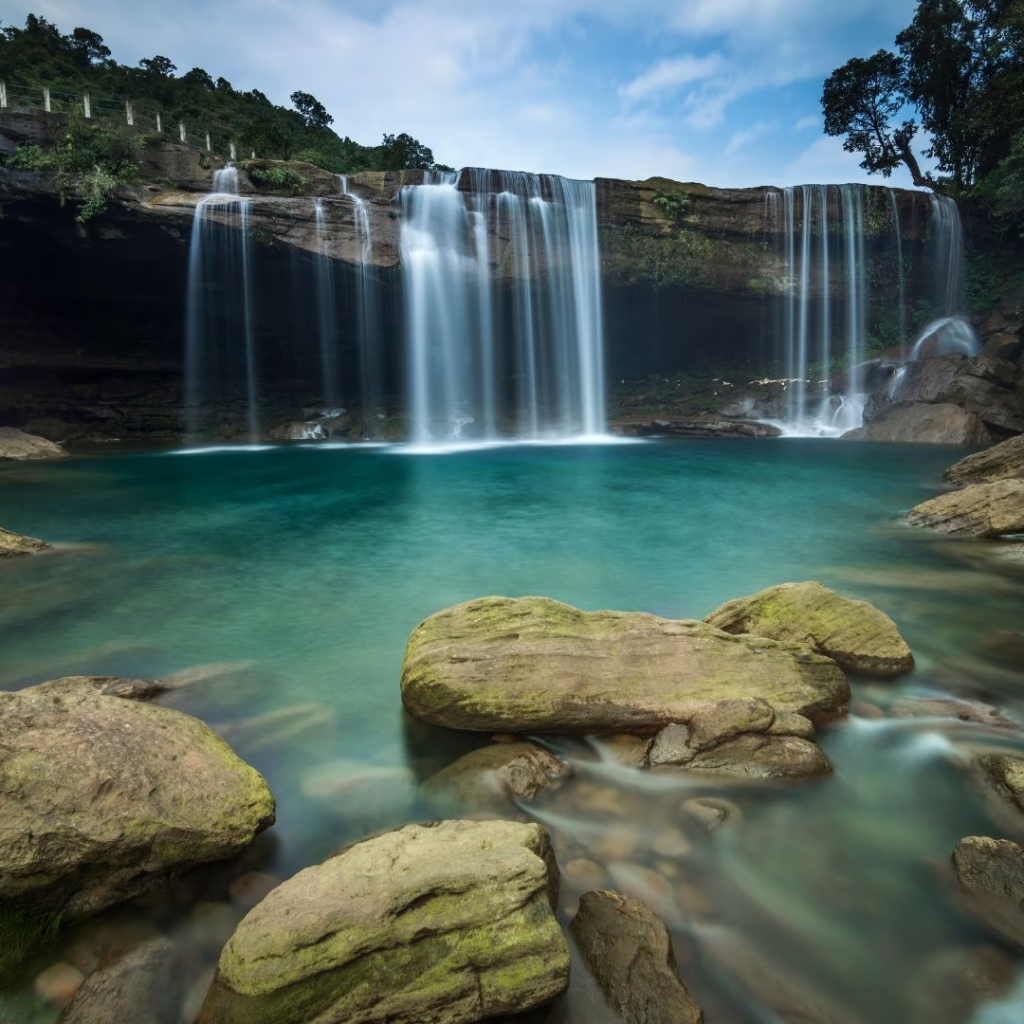
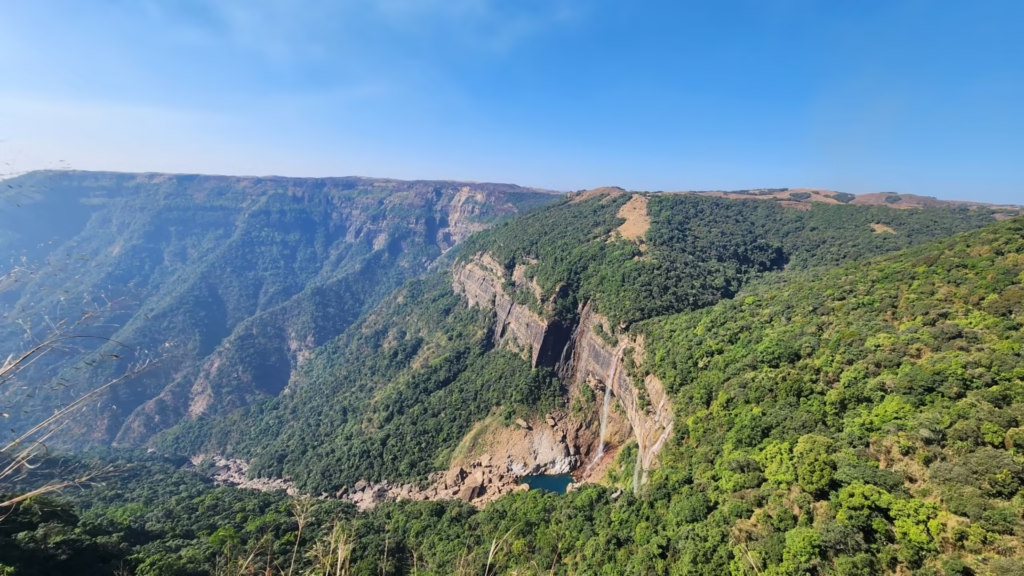
Day 2 — Sohra Waterfalls and Sacred Forest: Morning at Nohkalikai Falls and Seven Sisters Falls, afternoon walk through Mawsmai’s sacred forest and limestone caves. Overnight in Sohra.
Day 3 — Double-Decker Root Bridge Trek: Early start for the Nongriat trek — steep descent through Tyrna village to the double-decker living root bridge, swim at the turquoise Rainbow Falls pool if water levels allow, then the climb back up. This is the physically demanding day of the trip; start by 7 AM to avoid afternoon heat on the return climb. Overnight in Sohra.
Day 4 — Mawlynnong, Dawki, Departure: Visit Mawlynnong (“Asia’s cleanest village” — a real title it holds from a 2003 Discover India award, see its single-decker root bridge and Sky View bamboo tower, then Dawki for the Umngot river boat ride before heading back to Guwahati for departure.
Option 2: The 6-Day Deep Dive
Days 1–4 as above, plus:
Day 5 — Nartiang and Jaintia Hills: A quieter day exploring Nartiang’s monolith park and the Jaintia hills’ limestone caves — this region gets a fraction of the visitors Sohra does, and it shows in how unhurried it feels.
Day 6 — Shillong City and Departure: Return to Shillong, visit Elephant Falls and Laitlum Canyons for sunset views over the valley, shop for local Khasi handicrafts, then depart from Guwahati the next morning.
Option 3: The 8-Day Northeast Combo
Days 1–6 as above, plus 2 extra days extending into Kaziranga National Park (roughly 3.5–4 hours from Guwahati) for a one-horned rhino safari — a natural pairing since both are reached through the same Guwahati gateway, and it’s a route many Meghalaya tour package searchers ask us about once they realise how close Kaziranga sits.
Itemised Cost Breakdown (Meghalaya Trip Cost)
Here’s what a 2-person, 6-day trip realistically costs, itemised. All figures are in INR, per person unless stated.
| Cost Head | Budget Range | Mid-Range | Notes |
|---|---|---|---|
| Guwahati–Shillong–Sohra private cab (round loop, 6 days) | ₹9,000–12,000 | ₹14,000–18,000 | Shared per 2–4 pax; SUV vs sedan changes this |
| Accommodation (per night, per room) | ₹1,200–2,200 (homestay) | ₹3,000–5,500 (guesthouse/resort) | Sohra and Mawlynnong are homestay-led; Shillong has more resort options |
| Nongriat trek local guide fee | ₹800–1,500 per group | — | Not compulsory but strongly advised — trail forks are easy to miss |
| Entry/eco fees (Mawsmai caves, sacred forest, Sky View tower, etc.) | ₹50–150 per site | — | Small individually, adds up across 5–6 sites |
| Dawki boat ride (Umngot river) | ₹500–600 per boat (shared 4–5 pax) | — | Price fluctuates with river levels and season |
| Meals (full board, per day) | ₹600–900 | ₹1,200–1,800 | Homestay meals are often included in the room rate — always confirm |
| Total per person, 6 days, 2 travellers sharing | ₹18,000–24,000 | ₹30,000–40,000 | Excludes flights to/from Guwahati |
Flights into Guwahati vary too widely by booking window and origin city to quote a fixed range here — we’ll pull live fares when you tell us your travel dates.
Where to Stay, by Budget Tier
- Budget (₹1,000–2,200/night): Family-run homestays in Sohra and Mawlynnong — often the same family that’s guided the local trails for two generations. Basic rooms, hot water by the bucket, but the meals and local knowledge you get at dinner are worth more than a rating star.
- Mid-range (₹2,500–5,500/night): Small guesthouses and boutique resorts around Shillong and the Sohra plateau edge, several with valley or waterfall views.
- Higher-end (₹6,000+/night): A handful of resort properties near Shillong with more polished amenities, though even at this tier, Meghalaya’s charm stays rooted in its villages rather than luxury infrastructure.
Safety, Permits, and Health Notes
- Permits: Indian nationals do not need an Inner Line Permit for Meghalaya. Foreign nationals should carry a valid passport and visa; registration requirements can shift, so verify current foreign-national entry requirements before travel.
- Physical demands: The Nongriat double-decker trek is the trip’s main physical filter — roughly 3,500 stone steps down and back. Carry water, wear grip-soled shoes, and start early.
- Monsoon caution: During heavy rain, river crossings and canoe rides at Dawki can close without notice. Build a buffer day into monsoon-season itineraries.
- Connectivity: Mobile network is patchy to absent in Sohra and Mawlynnong village interiors. Tell people back home not to expect quick replies for a day or two.
- Leeches: During and just after monsoon, leeches are common on the Nongriat trail. Salt or tobacco-rub remedies are standard local advice; long socks help prevent bites in the first place.
Do’s and Don’ts from Local Experience
Do:
- Greet homestay hosts and guides properly — Khasi hospitality runs on warmth, not transactions, and it’s returned in kind
- Carry cash; card machines are rare outside Shillong
- Book the Nongriat guide even if you’ve read the trail is “easy to follow” — forks near the bridge are not signed
- Pack layers; Sohra’s weather can shift from bright sun to fog within an hour
Don’t:
- Touch or pull on the root bridges’ aerial roots — they’re still growing, and centuries of community effort went into training them
- Assume ATMs will be available in village stops — withdraw cash in Shillong or Guwahati first
- Plan a same-day Sohra-to-Dawki-to-flight schedule; mountain roads and river-boat timing don’t respect flight departure times
- Skip travel insurance for the trek days — it’s a genuine descent-and-climb, not a stroll
How TourismBharat’s Meghalaya Tour Package Is Actually Different
Most Meghalaya tour package listings online are templated: the same six stops, the same stock photo of the double-decker bridge, and a quote that changes twice before you book. A handful of larger platforms cover Northeast India as one line item among dozens of destinations nationwide — which shows in itineraries that skip local nuance like which Sohra waterfall actually has water in March, or that Mawlynnong’s canoe rides depend on river level.
What we do differently, plainly:
- Local guides who live here — not a driver reading off a printed sheet, but someone from Sohra or the Jaintia Hills who knows which homestay family has the best home-cooked jadoh that week
- Fixed, itemised pricing before you pay anything — the cost table above is the format your actual quote will follow, no hidden “local taxes” surprise on day 3
- WhatsApp-first trip planning — you talk to an actual person who has been on this exact route, not a chatbot reading from a script or a call centre reading from ours
- Real flexibility for monsoon and permit changes — because we watch Sohra’s weather patterns ourselves, not through a generic seasonal calendar
Frequently Asked Questions
Is a Meghalaya tour package worth it for first-time Northeast India travellers?
Yes — Meghalaya is one of the more accessible Northeast India destinations for first-timers because it doesn’t require the higher-altitude acclimatisation or longer permit processes that parts of Arunachal Pradesh or Sikkim do, while still delivering the region’s distinct landscape and tribal culture.
How many days do I need for Meghalaya?
A minimum of 4 days covers Shillong, Sohra, the double-decker root bridge trek, and Mawlynnong/Dawki. 6 days allows a more relaxed pace with the Jaintia hills added in, and 8 days lets you extend into Kaziranga National Park.
Is the Nongriat root bridge trek difficult?
It involves roughly 3,500 stone steps down to the bridge and the same number back up, so it’s physically demanding but not technical — most moderately fit adults complete it, typically in 5–7 hours round trip including time at the bridge and Rainbow Falls.
What is the best time to visit Cherrapunji (Sohra)?
October to April offers the clearest trekking conditions and easiest access to the root bridges, while May to September shows Sohra’s famous heavy rainfall and fullest waterfalls at the cost of slippery trails and possible closures.
Do I need a permit to visit Meghalaya?
Indian nationals do not need an Inner Line Permit for Meghalaya. Foreign nationals should carry a valid passport and visa documentation; requirements can change, so confirm current rules before travel.
How much does a Meghalaya trip cost for a couple?
For a 6-day trip, budget travellers typically spend around ₹18,000–24,000 per person, while mid-range travellers spend ₹30,000–40,000 per person, excluding flights to Guwahati.
Ready to Plan Your Meghalaya Trip?
Chat with our advanced TourismBharat trip planner on WhatsApp — get replies instantly. Tell us your travel dates and how many trekking days you want, and we’ll build your itemised itinerary around it, not the other way around.
NOTE – The rates mentioned above are approximate prices; the actual prices may vary based on season.