 CHAT WITH US NOW!

Where to go in Himachal Pradesh? Our travel expert answers it for people planning a family holiday, an adventurer looking for his/her first trip, someone seeking an offbeat exploration, or a couple wanting a romantic getaway. Get ready to shortlist your two to five must-visit Himachal destinations before you book anything.
The best places in Himachal Pradesh span a remarkable range, from colonial hill towns that feel like a slice of Victorian England to high-altitude cold deserts where Buddhist monasteries have stood for a thousand years. In a single state, you can pitch a tent beside a crescent-shaped lake at 4,300 metres, wander through a Tibetan bazaar in McLeod Ganj, or eat fresh apples straight from an orchard in a quiet Kinnaur valley that sees very few visitors between November and April. That range is exactly what makes Himachal so magnetic, and so easy to get wrong.
Most first-time visitors end up doing the Shimla, Manali circuit and calling it Himachal. That trip is genuinely good, but it covers only a small fraction of what the state actually offers. The frustrating part is that the logistics of stringing together multiple regions- Spiti, Kinnaur, Dharamshala, the Tirthan Valley- can become overwhelming fast, which is why TourismBharat has built curated fixed-departure packages that take the route-planning headache off your plate entirely.
This guide is organised by travel style, not by alphabetical order or popularity rankings. Scroll straight to the section that matches your trip, whether you are planning a family holiday, an adventure-first trip, an offbeat exploration, or a romantic getaway, and use the logistics details to shortlist your two to five must-visit Himachal destinations before you book anything.
The Himachal classics: iconic destinations that still deliver every time
There is a reason Shimla, Manali, Dharamshala, and Dalhousie consistently dominate Himachal travel guides. These are not popular merely because everyone else goes there; each one is genuinely distinct, and together they represent four very different versions of the same mountain state. They also serve as the most practical entry points for first-time visitors to these top destinations in Himachal Pradesh.
Shimla and Manali: still the two best entry points into Himachal
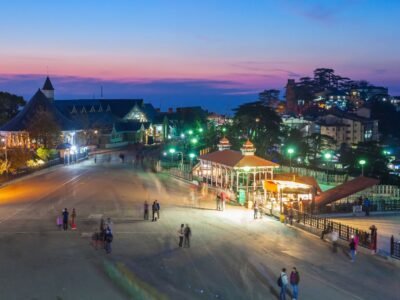
Shimla works brilliantly as a trip opener. The Ridge and Mall Road deliver the colonial hill-town atmosphere without requiring much physical effort, and Jakhu Temple is a sharp uphill walk that rewards you with views across the entire Shivalik range. It sits at a comfortable altitude, the food scene is decent, and the Kalka, Shimla narrow-gauge toy train, part of the UNESCO-listed Mountain Railways of India, is one of those experiences that fully justifies its reputation.
Manali is where Himachal shifts into high gear. Old Manali’s café culture gives the trip a slower, more reflective pace, and the cedar-framed Hadimba Temple is one of those places where the atmosphere alone justifies the visit. Manali is also the natural springboard for both Rohtang Pass and the deeper journey into Spiti Valley, making it one of the most strategically placed of all the best places in Himachal Pradesh for onward exploration.
Dharamshala, Dalhousie, and Khajjiar: culture, calm, and scenery
Dharamshala and McLeod Ganj are technically the same place at different altitudes, and they offer something neither Shimla nor Manali can: a genuinely Tibetan atmosphere, centred around the Tsuglagkhang Complex and the residence of the Dalai Lama. The energy here is quieter and more contemplative. It is the kind of place where a two-night stay easily stretches to four.
Dalhousie runs on colonial pine-forest charm and an unhurried pace that feels increasingly rare in popular Himachal circuits. Pair it with a half-day detour to Khajjiar, that famous meadow-lake setting that inspired the “Mini Switzerland” comparison, and you have a self-contained three- to four-day western Himachal circuit that most tour itineraries still overlook.
Best places in Himachal Pradesh for adventure seekers
If your idea of a good Himachal holiday involves a paragliding launch site at 2,400 metres or a river trail that takes two days to complete, the classics above are just the warm-up. These Himachal Pradesh attractions are built for the traveller who wants to come back tired.
Bir Billing and Rohtang Pass: where the adrenaline lives
Bir Billing is India’s paragliding capital, full stop. The Billing launch site is widely regarded by paragliding communities as one of the highest and most technically favourable take-off points in Asia, and conditions in March, June and September, and November are exceptionally consistent. If you have never paraglided before, this is one of the most forgiving and spectacular places in the country to start.
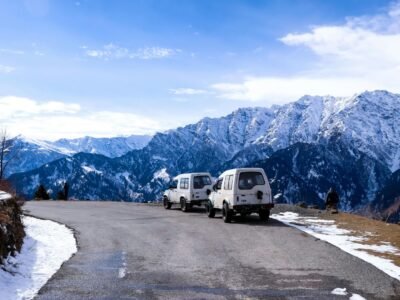
Rohtang Pass is the bucket-list snow experience that almost every Manali visitor attempts, but go in with clear expectations: permits are required (the tourism sightseeing permit runs approximately ₹550, and daily vehicle numbers are capped), and the route gets extremely busy in peak season. If you are travelling onward to Spiti via the Atal Tunnel, you do not need a Rohtang permit at all. Solang Valley, en route, offers its own year-round outdoor calendar, skiing and snow activities from December to February, and paragliding, zorbing, and cable-car rides through the summer months.
Kasol and Tirthan Valley: for trekkers and slow adventurers
Kasol in the Parvati Valley is the base camp for some of Himachal’s most popular trekking routes: Kheerganga (10, 12 km one way, easy to moderate), Grahan (8, 9 km one way, easy to moderate), and the more challenging routes toward Pin Parvati. The backpacker crowd is thick here in season, so manage your expectations on solitude, but the trails themselves are genuinely rewarding.
Tirthan Valley offers a different kind of adventure: quieter, greener, and centred on the Great Himalayan National Park. Light hiking, trout fishing, and riverside guesthouses define the experience here. It suits the traveller who wants real mountain air and nature without the noise of a backpacker hub.
Offbeat places in Himachal Pradesh most travellers never reach
The destinations in this section require more planning, more time, and in some cases more physical resilience. The reward is a version of Himachal that feels like a genuine discovery rather than a tick on a popular itinerary; these are the best places in Himachal Pradesh for those willing to go a little further.
Spiti Valley and Lahaul: cold-desert landscapes at high altitude
Spiti is defined by its stark beauty: brown mountains cut by turquoise rivers, Buddhist monasteries perched on vertical cliff faces, and a pace of life almost entirely untouched by mass tourism. Kaza is your main base. Tabo Monastery, one of the oldest active Buddhist monasteries in the world, is a non-negotiable stop, and Chandratal Lake, the crescent-shaped high-altitude lake at around 4,300 metres, is worth every kilometre of rough road to reach it.
There are two road approaches. The Shimla, Kinnaur, Kaza route is longer but more reliably open, sometimes from April onward. The Manali, Atal Tunnel, Kunzum, Kaza route is more dramatic but seasonal: Kunzum Pass typically opens only in late May or early June and closes by mid to late October. Bear in mind that accessibility varies by year and conditions; for the Manali-side route, the practical window is broadly mid-June to early October, while the Shimla-side route can often be used earlier and sometimes later. Do not underestimate this: Spiti requires advance planning in a way that Shimla and Manali simply do not.
Kinnaur, Kalpa, and Jibhi: the quieter Himachal no one talks about
Kinnaur is Himachal’s apple-orchard belt, and it is culturally distinct from the rest of the state. The landscape shifts from pine forests to stark Tibetan-influenced terrain as you move deeper into the district. Kalpa, the standout village here, delivers jaw-dropping morning views of the Kinner Kailash range that travel writers have been struggling to describe adequately for decades.
Jibhi and Shoja, in the Jalori Pass area, are forest-village escapes in the truest sense: small, cold, and utterly unhurried. These are places to do nothing except sit by a river with a cup of chai and remember why you left the city. The best time to visit Kinnaur is March to June or September to October, with the apple harvest in late August and September adding a particularly photogenic dimension.
Himachal by traveller type: matching the right destination to your trip
Family-friendly Himachal: easy access, activities for all ages
For families with children and older members, the strongest picks cluster around the Shimla circuit. Shimla itself is manageable without serious physical exertion; Kufri adds skiing in winter, pony rides, nature walks, and even indoor attractions like a mirror maze and 5D theatre; and Chail, with its palace and serene forested setting, works well as a one-night add-on. Kasauli, further down the hills, is ideal for families who want colonial-era calm without the Shimla crowds. Khajjiar is well worth including as a short family add-on from Dalhousie, particularly for children who will remember that meadow and lake long after the trip ends.
Romantic getaways and solo travel in Himachal Pradesh
Couples looking for a more intimate Himachal experience should look beyond Shimla and Manali. Palampur’s tea-garden atmosphere and Dhauladhar views create a genuinely romantic setting, especially for a slow two-night stay. Dalhousie’s colonial pine-forest vibe is unhurried in a way that most popular Himachal hill stations are not. For boutique-stay romance with serious natural beauty, Jibhi and Tirthan Valley have developed a small but excellent ecosystem of heritage cottages and riverside homestays.
Solo travellers tend to find their most welcoming communities in Kasol, McLeod Ganj, and Spiti. Each of these destinations has a well-established network of like-minded independent travellers, plenty of solo-friendly guesthouses, and enough independent exploration potential to fill ten days comfortably. They are popular with solo visitors precisely because the infrastructure and social scene have grown up around independent travel.
When to go and how to get to each region
The seasonal guide every Himachal traveller needs
Four windows define the Himachal travel calendar:
- March to June is the best overall window for the widest range of destinations: pleasant temperatures, clear mountain views, and all major roads open.
- July to September brings lush green landscapes but also a genuine monsoon risk, particularly landslides on lower and mid-hill road routes. Avoid this window for Spiti specifically.
- September to November is arguably the most underrated period. October in particular delivers crisp skies, the Kinnaur apple harvest, noticeably lighter crowds, and some of the clearest mountain views of the year.
- December to February is snow season for Shimla, Kufri, and Manali, but road disruptions are common, and Spiti is effectively inaccessible from the Manali side.
Getting there: airports, railways, and road routes
The three main air gateways are Chandigarh (IXC) for Shimla-bound travellers, Bhuntar/Kullu, Manali Airport (KUU) for Manali and Kasol, and Kangra, Gaggal (DHM) for Dharamshala. Typical road times from Delhi: Shimla runs eight to nine hours, Manali around twelve to fourteen hours, and Dharamshala approximately ten to twelve hours via Pathankot (Pathankot to Dharamshala alone is four to five hours). Spiti is road-only from either the Shimla or Manali side, seasonal in its accessibility, and requires more advance logistical planning than any other destination in this guide.
Covering more of Himachal in a single, well-planned trip
Why multi-destination Himachal trips are tricky to plan solo
Himachal’s valleys do not connect neatly. Doing Shimla, Kinnaur, Spiti, Manali as a circuit, for example, means sequencing carefully around seasonal road conditions, securing Rohtang permits in advance, and finding accommodation in areas where guesthouses book out quickly during peak windows. Many travellers end up visiting only one or two regions because the planning complexity becomes genuinely overwhelming once you try to cover more than a single valley in a single trip.
How TourismBharat’s curated packages solve the multi-destination problem
TourismBharat’s fixed-departure Himachal tour packages are built specifically for this challenge. Itineraries like the Magical 5N 6D Himachal Tour Package from Delhi (starting from ₹25,666 with departures across July through November 2026) and the 5N 6D Himalayan Retreat Package (from ₹25,488) cover multiple regions with transport, accommodation, and departure dates already structured into a coherent route. Group pricing can make these packages a more cost-effective option than piecing together an independent itinerary across multiple regions and valleys. Browse the full list of available Himachal packages on TourismBharat and check upcoming departure dates to find the window that works for your travel style.
Start where you are, then go deeper
Himachal Pradesh rewards you in direct proportion to how much of it you are willing to explore. A first trip built around Shimla and Manali is a perfectly good trip. A second trip that adds Dharamshala and Dalhousie is a better one. A third trip into Spiti’s cold desert or Kinnaur’s apple valleys is the one that tends to change how people think about travel in India altogether.
The key is to pick your travel window based on the destinations you want, not the other way around. October is among the best months: clearer skies, lighter crowds, and the tail end of the Kinnaur harvest. June opens Spiti but brings significantly busier conditions to Manali. March gives you mild weather and unhurried roads almost everywhere west of the Rohtang divide. Start with two or three places in Himachal that genuinely excite you, plan around the right season, and discover the best places in Himachal Pradesh more deeply on every trip that follows.