 CHAT WITH US NOW!

Read this Kaas Plateau travelogue written by Jayanthi Chandrasekaran and access the lively, detailed Kaas Pathar travel experience.
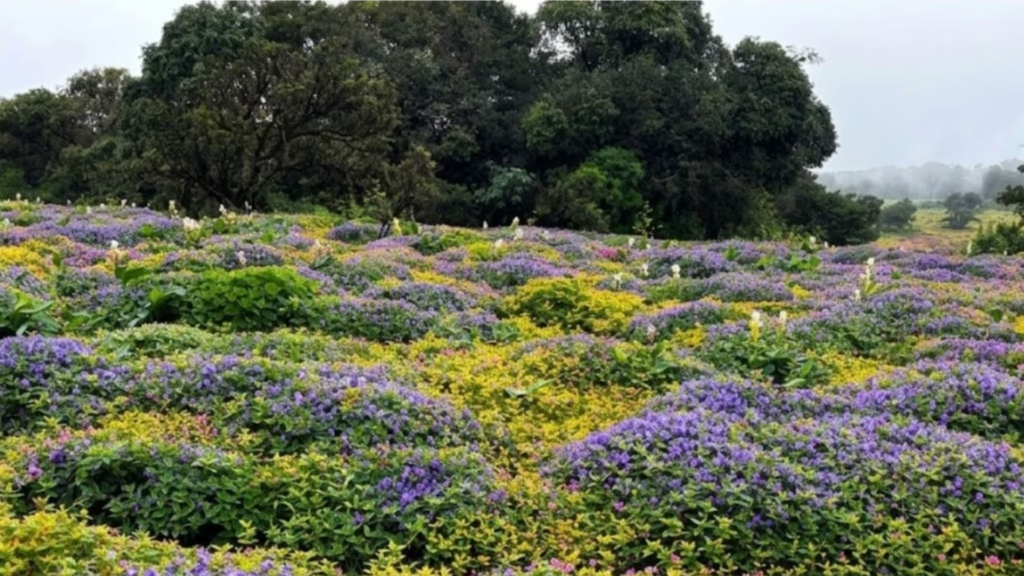
There are places one visits for their beauty, and then there are places that make one pause and wonder at the ingenuity of Mother Nature. Kaas Plateau, or Kaas Pathar, is one such place, where nature seems less like a landscape and more like a poem.
Perched at about 1,200 metres in the Sahyadri, Kaas Plateau is around 25 kilometres from Satara, near Pune. From Pune, one can drive via NH48 to Satara and then take the winding Kaas Road into the hills. The plateau itself is a geological wonder: formed millions of years ago from volcanic basalt and covered with a thin, iron-rich laterite crust and soil. This seemingly inhospitable terrain spends much of the year looking deceptively austere. Nevertheless, the seasonal pools and the porous laterite retain just enough water to sustain this brief explosion of life. And what an explosion it is!
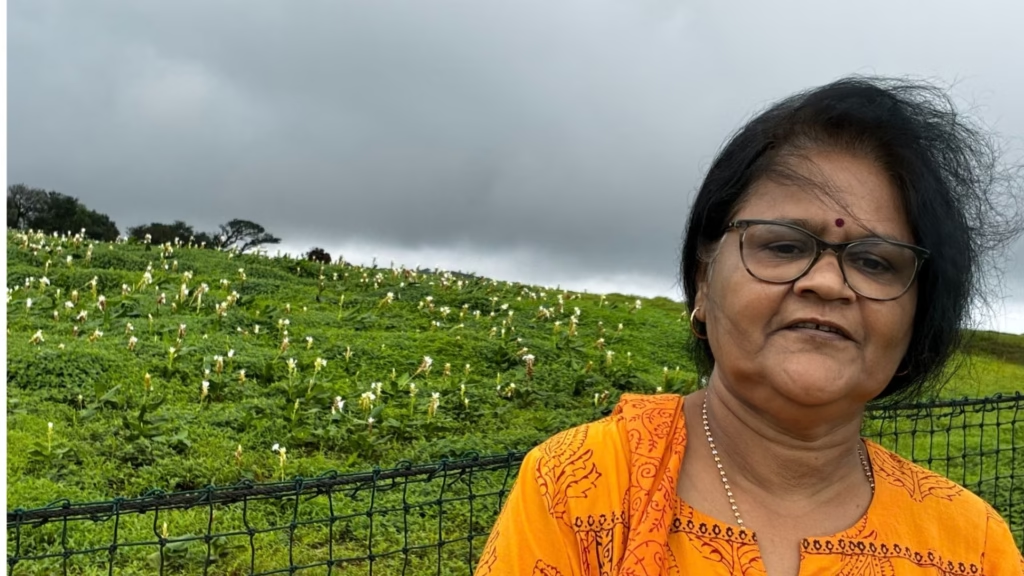
When the monsoon arrives, the seemingly bare earth awakens. There are no manicured gardens here, no carefully arranged flowerbeds, no gardener directing nature where to grow. There is only rock, rain, grass and the quiet alchemy of the monsoon. The earth awakens for a few precious weeks and almost without warning, the landscape changes. The green gives way to a mosaic of flowers. It becomes a vast natural canvas splashed with yellow, pink, white, blue and violet. In 2012, this remarkable ecosystem of “Maharashtra’s Valley of Flowers” became part of the UNESCO World Natural Heritage site as part of the Western Ghats cluster.
The flowering season generally stretches from late August to early October, although the exact spectacle changes with the monsoon. One visit may reveal a predominance of turmeric blooms. Sometimes yellow Sonki, with its cheerful yellow blossoms, lighting up the grasslands like tiny suns, would lure the visitors. A fortnight later, pinks, whites and purples may have taken over. Blue Cyanotis, purple Utricularia, orchids and innumerable tiny flowers appear almost as if painted by an invisible artist. Delicate Smithia, often called the Mickey Mouse flower, also adds its whimsical presence. The insectivorous Drosera adds another touch of wonder—a plant that survives by trapping insects in this apparently delicate world. The flowers belong to the wild, seasonal rhythm of the plateau.
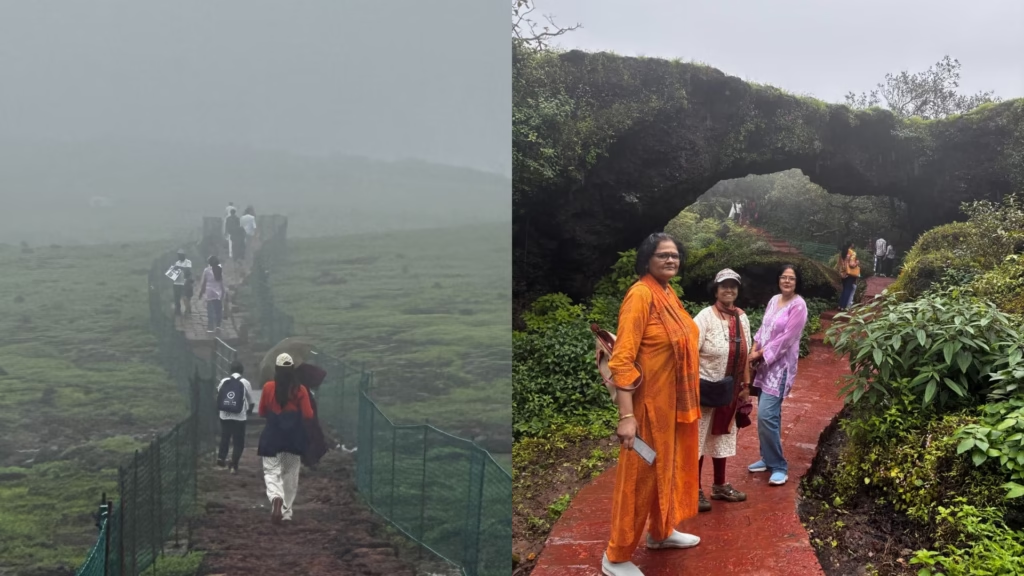
The best way to experience Kaas is on foot. Rather than simply standing at a viewpoint and photographing the floral carpet, visitors can walk along the designated and curated trails through the flowering zones. During these leisurely strolls, it’s inevitable that one feels suspended between cloud and stone. These walks encourage one to slow down—to notice the tiny blossoms at one’s feet, the butterflies hovering over them and the mist moving across the distant hills. The walks are not strenuous treks in the conventional sense, but monsoon conditions can make the ground slippery and uneven. Good footwear, rain protection and a little patience are essential. The reward is not merely the destination but the discovery of a miniature universe unfolding with every few steps.
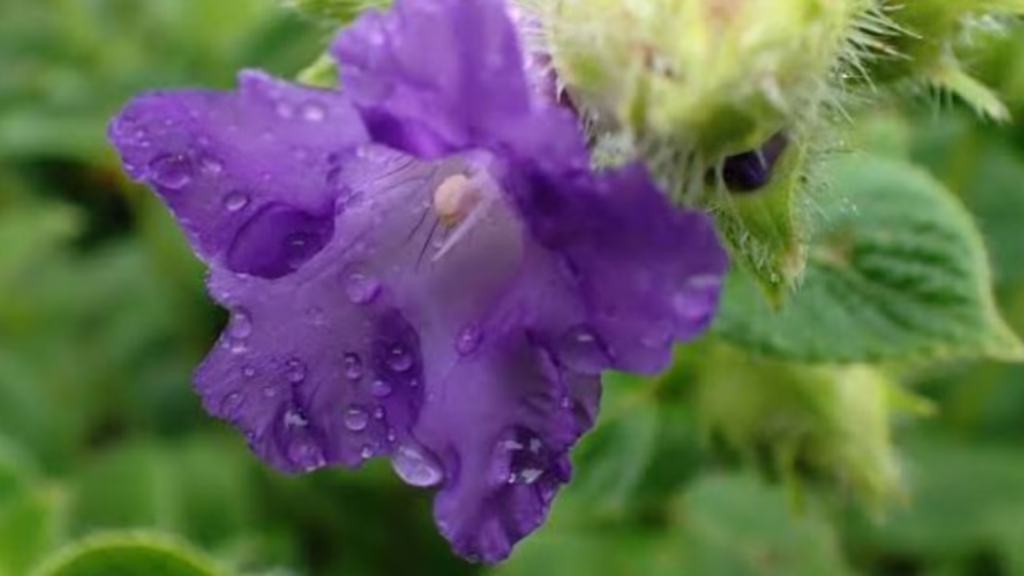
One of the guards posted on the trail brought our attention to a particularly magical phenomenon among all these botanical wonders – the Topli Karvi, a blue-violet flowering Curated trails Topli Karvi, blooms once in 7 years Tree-bridge across the trail shrub. Unlike most seasonal flowers, Karvi has a remarkably long rhythm. It can flower in spectacular profusion only about once every seven years. For years it grows quietly, almost unnoticed. Then, when its appointed season arrives, the landscape can be transformed into a haze of blue and violet.
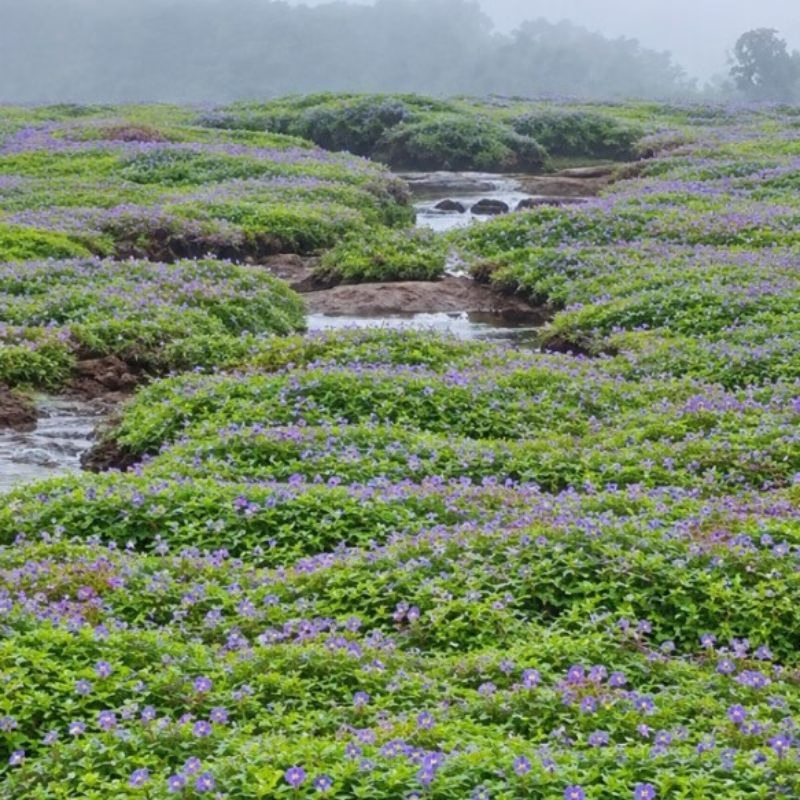
The real magic is that Kaas never looks quite the same twice—not even within the same season. Different species flower at different moments, so the colour of the plateau keeps changing. One week may belong to yellow; another may bring violet, pink or white. The flowering is closely linked to the rhythm and intensity of the monsoon.
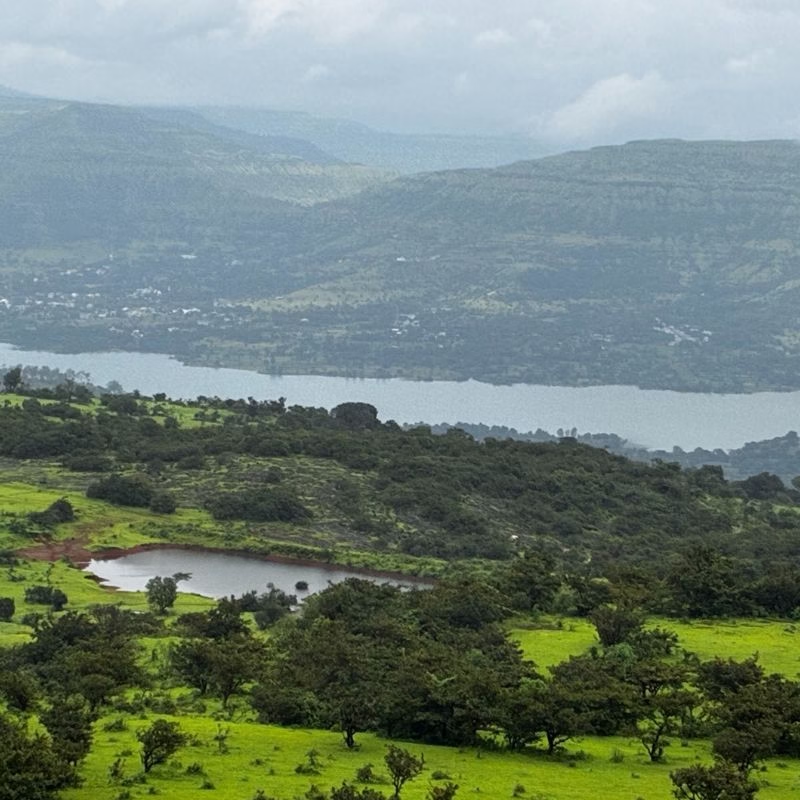
Beyond the floral meadow itself lies the serene Kanher Dam, where migratory birds pause during their seasonal flights.
To experience Kaas is to understand the fragile harmony of nature: a harsh basalt landscape transformed by water, time, and patience into one of the world’s most enchanting wildflower sanctuaries.
Perhaps the most moving thing about Kaas is its impermanence. The flowers do not bloom for our convenience. They appear when the rains, soil and temperature align—and disappear when their brief season is over. That is why a walk across Kaas feels almost like walking through a fleeting dream. The plateau teaches us that nature does not need permanence to create wonder. A flower may bloom for a few days, a magnificent carpet may last only a few weeks, and the rare Topli Karvi may wait seven years for its moment. But when that moment comes, the earth remembers how to celebrate!!
READ MORE TRAVELOGUES WRITTEN BY JAYANTHI:
-
Bewitched in Bangkok – Travelogue by Jayanthi Chandrasekaran
-
Echoes of Stone, Water, and Fire: A Travelogue of Luzon
-
Enchanting Cliffs in Emerald Isle – The Cliffs of Moher in Ireland!
-
Karwar, Where Time Stands Still
-
Dudhsagar Falls: Nature’s Hidden Gem in Goa!Dudhsagar Falls: Nature’s Hidden Gem in Goa!
- Irresistible Rosslyn Chapel, Located in Scotland!