 CHAT WITH US NOW!

Read this Luzon travelogue written by traveller Jayanthi Chandrasekaran to discover the Philippines. Explore historic Intramuros in Manila, shoot rapids at Pagsanjan Falls, and see Taal Volcano.
The Philippines is an archipelago consisting of 7,100 islands, of which three major island groups are Luzon in the north, Visayas in the middle and Mindanao further down in the South. My journey through the northern Philippines (Luzon), specifically the old town of Manila, Pagsanjan waterfalls and the highland of Tagatay, unfolded like a beautifully illustrated history book, each destination revealing a different chapter of the country’s rich heritage and breathtaking landscapes.
Old Town of Manila
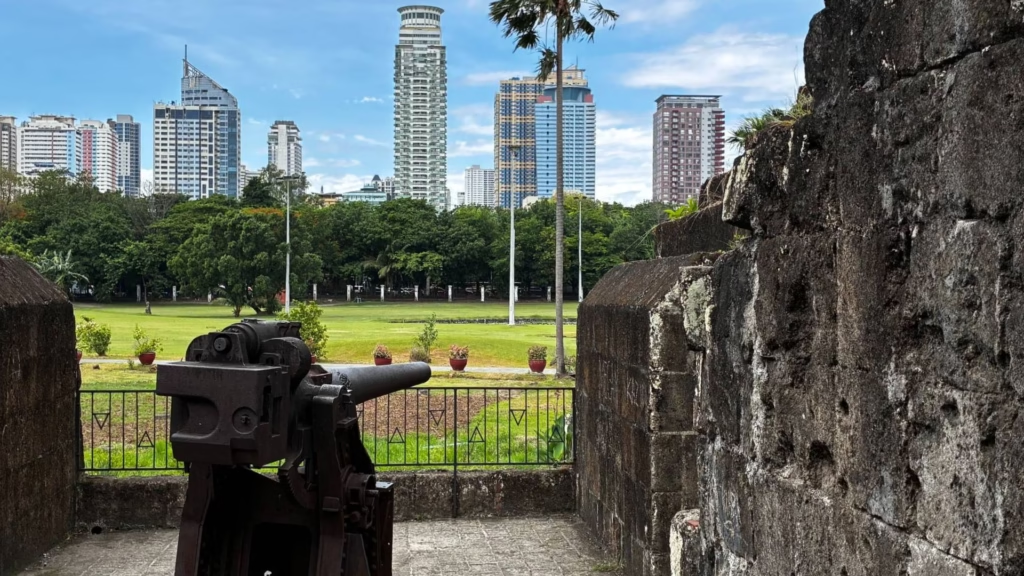
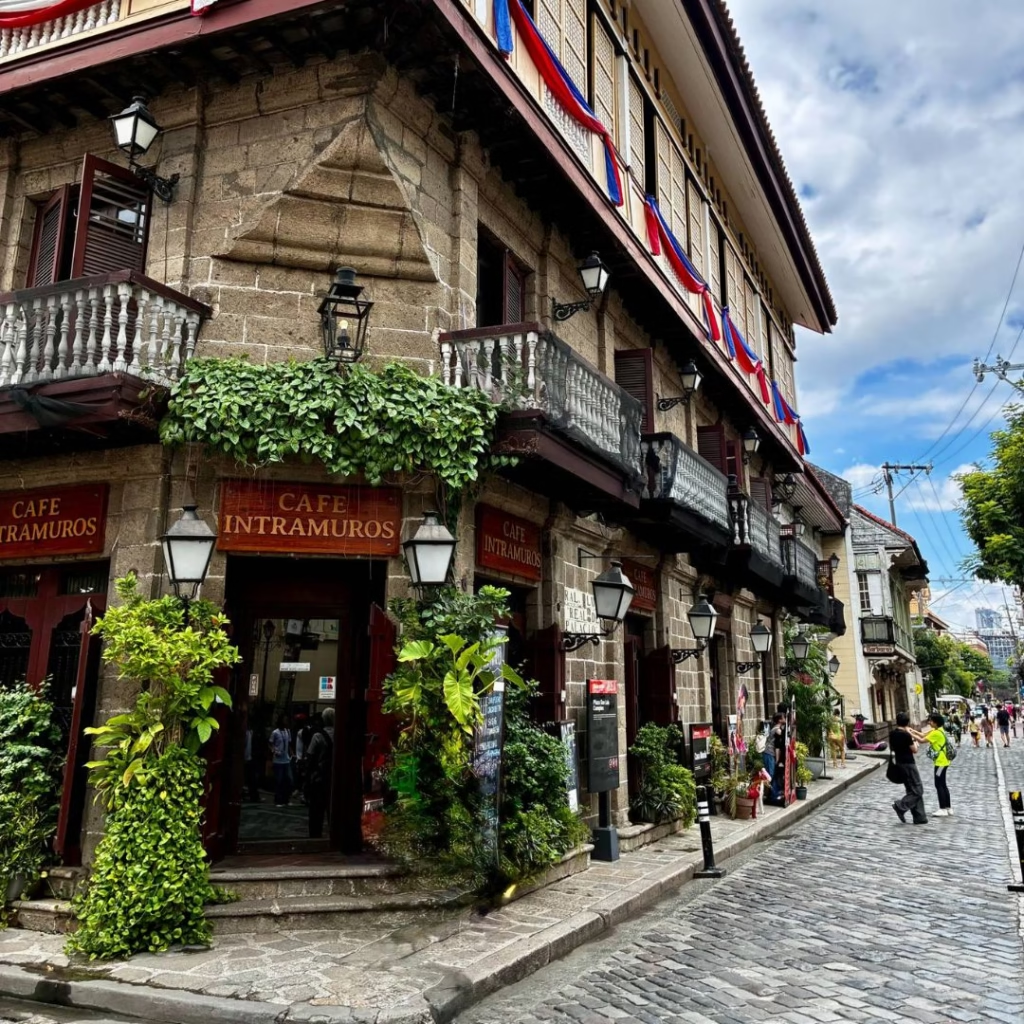
As I entered the old Manila area called the Intramuros, meaning “The Walled City,” I felt the past lingering in every cobblestone street. Founded in 1571 by the Spanish, Intramuros served as the political, military, and religious centre of the country during colonial rule. Massive stone ramparts (40 feet in width), arched gateways, and horse-drawn carriages transport visitors to an era when Manila was the jewel of Spain’s Far Eastern empire.
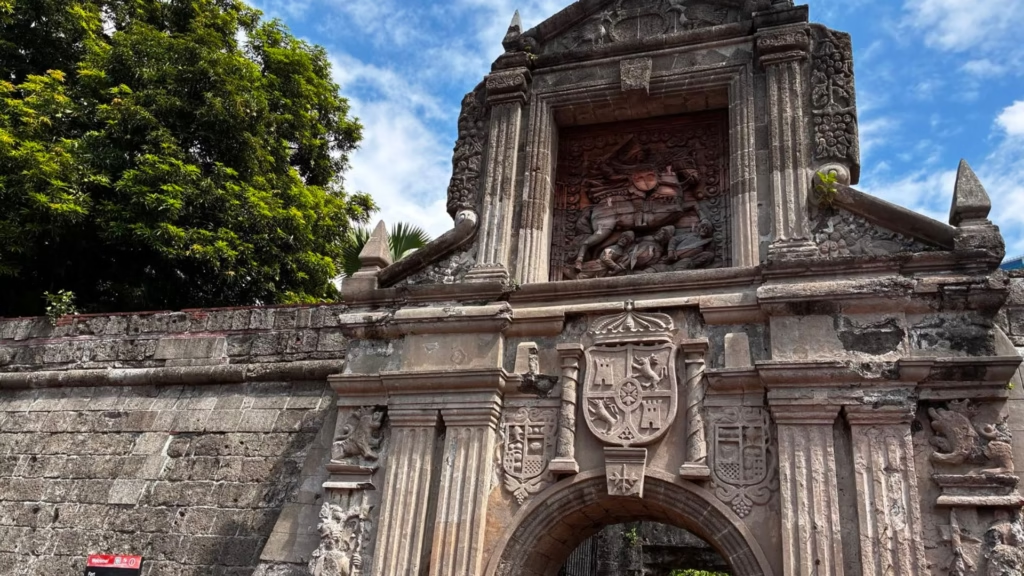
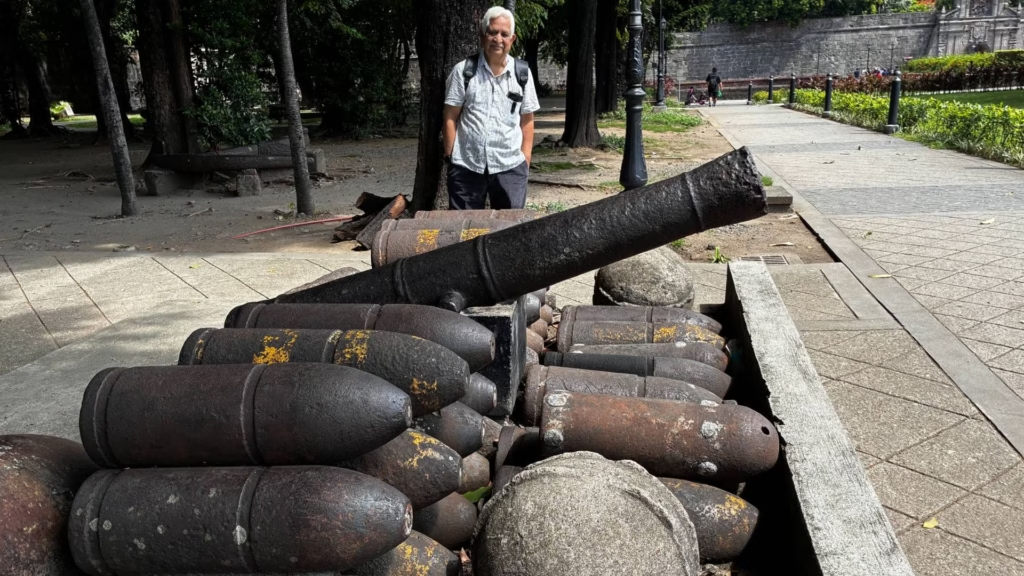
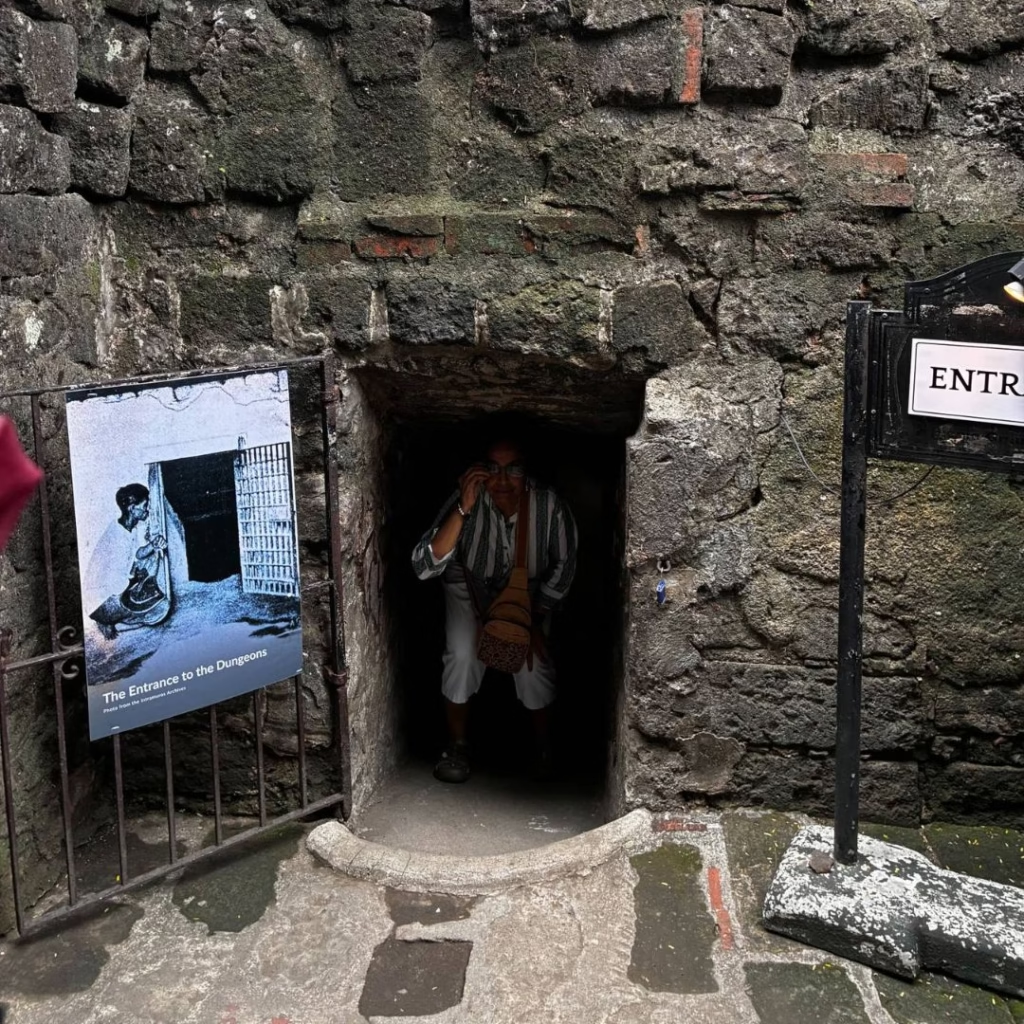
Fort Santiago guards the mouth of the Pasig River with solemn dignity, its damp dungeons and giant-sized ammunition still whispering tales of sacrifice. Once a military fortress and later a prison, its walls silently narrate stories of colonial rule and the sacrifices of Filipino patriots.
Standing in the courtyard where José Rizal spent his final days before his execution, I was reminded of our Nation’s Independence struggles. This national hero of the Philippines is a brilliant polymath and physician; his powerful writings exposed the abuses of Spanish colonial rule. His execution at age 35 galvanised the Philippine Revolution and inspired the nation’s eventual independence. The very building where he spent his final night in the Intramuros has been turned into a shrine housing his personal belongings, books, artworks, and original manuscripts.
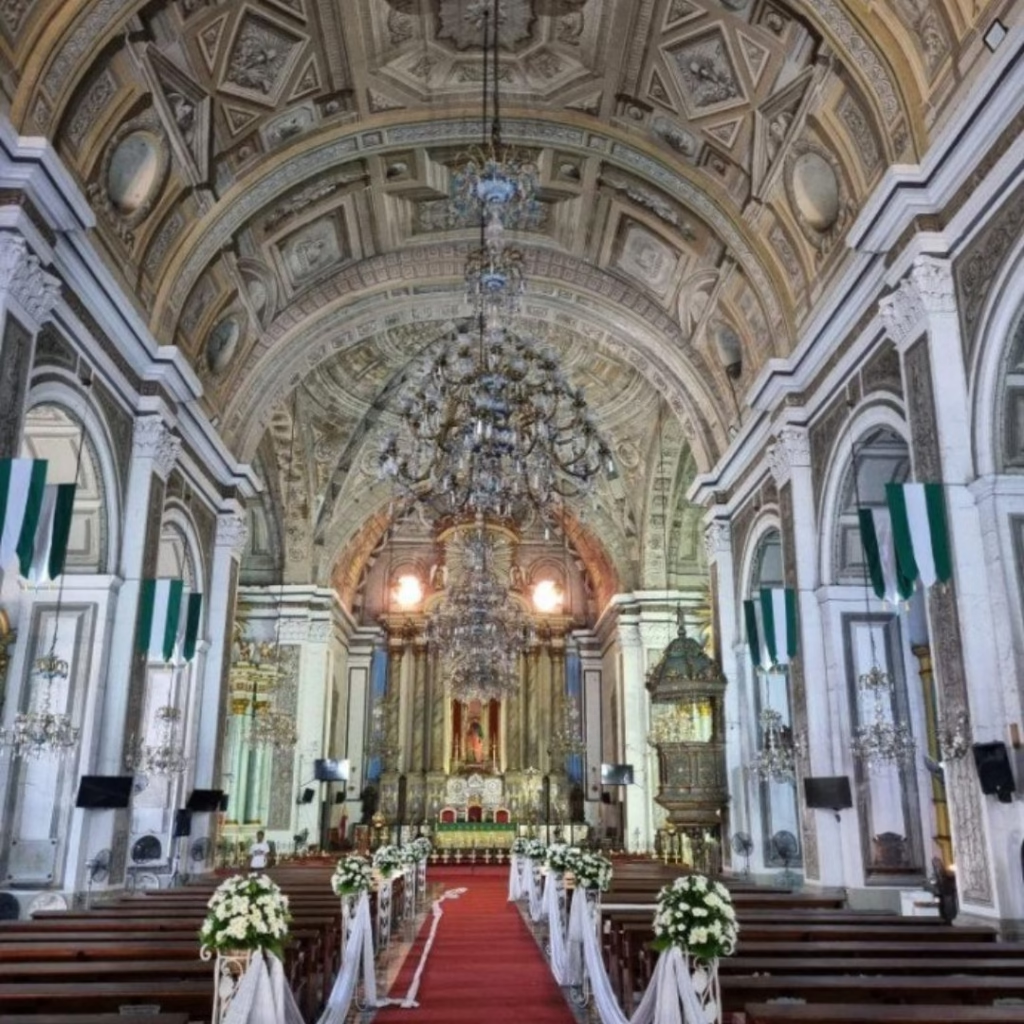
The Intramuros also houses the majestic San Augustin Church. Its ornate interiors of intricate baroque vaulting and centuries-old religious relics stand as a testament to resilience, having survived earthquakes and wars. Wandering through these historic streets, where horse-drawn calesas still clatter softly against the stones, one feels the strength of heritage—a beautiful, deeply weathered tapestry woven from faith, conquest, and an enduring cultural identity.
Pagsanjan Falls, ‘Hell of a journey’ to a Heaven and back
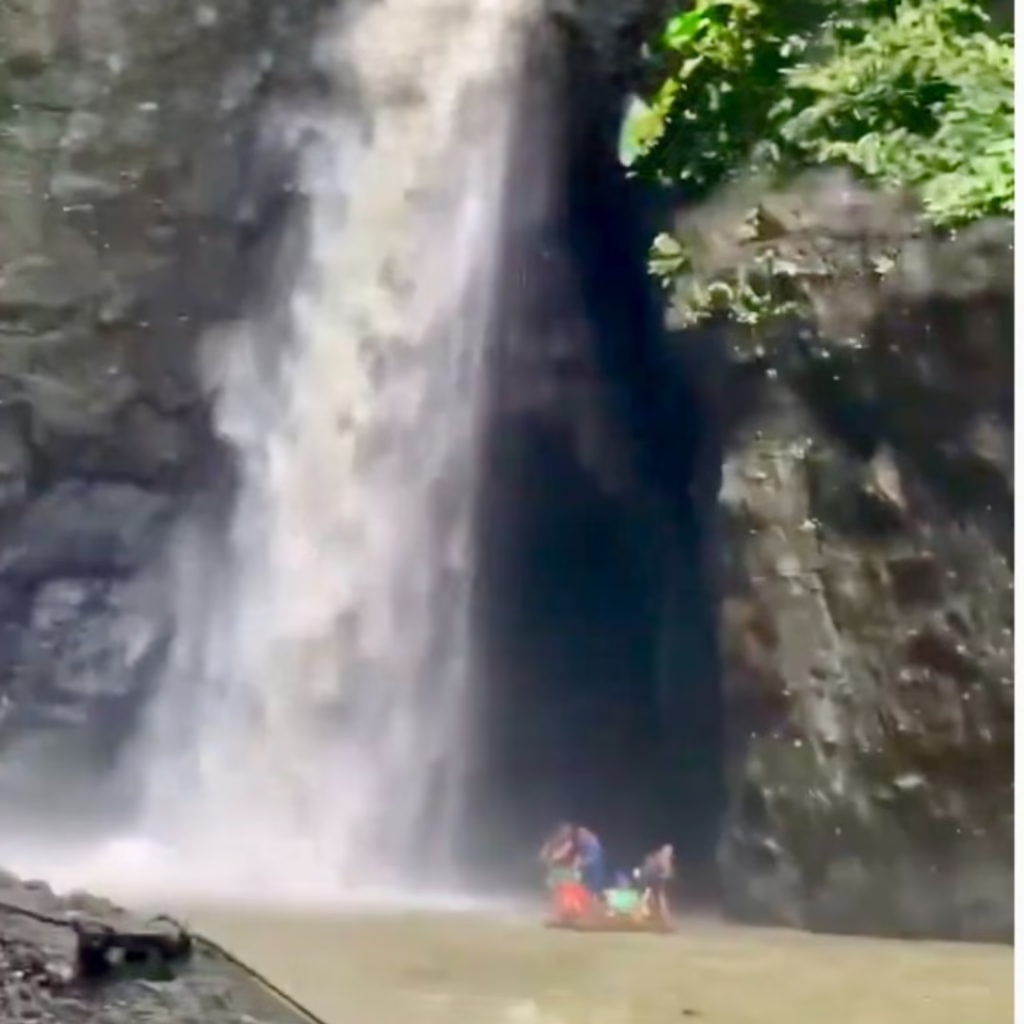
The drive from Manila to the waterfalls (about 2h) itself was scenic, passing through lush countryside dotted with coconut palms, rice fields, and sleepy villages. The journey to reach the falls involves taking a canoe up the Bumbungan (or Pagsanjan) river, and “shooting the rapids” while expert boatmen navigate the thrilling currents and rocky gorges. To say the least, the ride is not merely a sight to behold, but an exhilarating physical pilgrimage.

Let me explain – The river winds through towering cliffs draped in tropical vegetation. Huge boulders, sculpted smooth by centuries of flowing water, lay scattered across the riverbed like giant marbles. The adventure began when we climbed aboard a slender, brightly painted wooden canoe, wearing helmets and life jackets. The canoe was expertly manoeuvred by two seasoned boatmen, whose skill was nothing short of extraordinary. The upstream voyage into the deep, vertical gorge is a masterclass in human endurance and ‘riversmanship’. As the current grows fierce, the waterways become increasingly cluttered with massive, slippery boulders. Here, the boatmen launch into action; they push, pull, balance, and occasionally leap onto slippery rocks, placing their bare feet to propel the canoe through narrow passages and sometimes physically hoisting and pushing the canoe upstream over shallow rapids, against the roaring torrent. It is a thrilling, rhythmic battle between human resolve and elemental force, played out in the cool shadow of towering cliffs draped in lush ferns and weeping vines.
Every bend reveals another picturesque scene—a curtain of hanging vines, a cluster of vibrant wildflowers, or birds darting across the emerald canopy. The teamwork of the two boatmen was mesmerising. Their effortless coordination transformed what seemed an impossible task into an elegant performance. It was impossible not to admire their strength, endurance, and intimate knowledge of every rock and current along the river.
Finally, the sound of rushing water grew louder until the magnificent Pagsanjan Falls burst into view. A powerful white torrent plunges dramatically into a deep emerald pool, filling the air with cool mist. A primitive bamboo raft waits to carry travellers directly behind the falling curtain of water into the damp sanctuary called the Devil’s Cave. The safety norms of the Western world have long been washed away in the currents. To pass beneath the falls is an intense, elemental baptism; the roaring cascade enveloped us in a world of spray and echo. The world disappeared behind an absolute, deafening wall of rushing water, leaving us drenched, exhilarated, and profoundly humbled by the raw, unbridled momentum of the natural world.
Unlike the strenuous paddle upstream, going back is a fast, exhilarating white-water experience. The boatmen skilfully navigate the canoe rapidly downstream through several sets of heart-pumping, turbulent rapids.
Tagatay
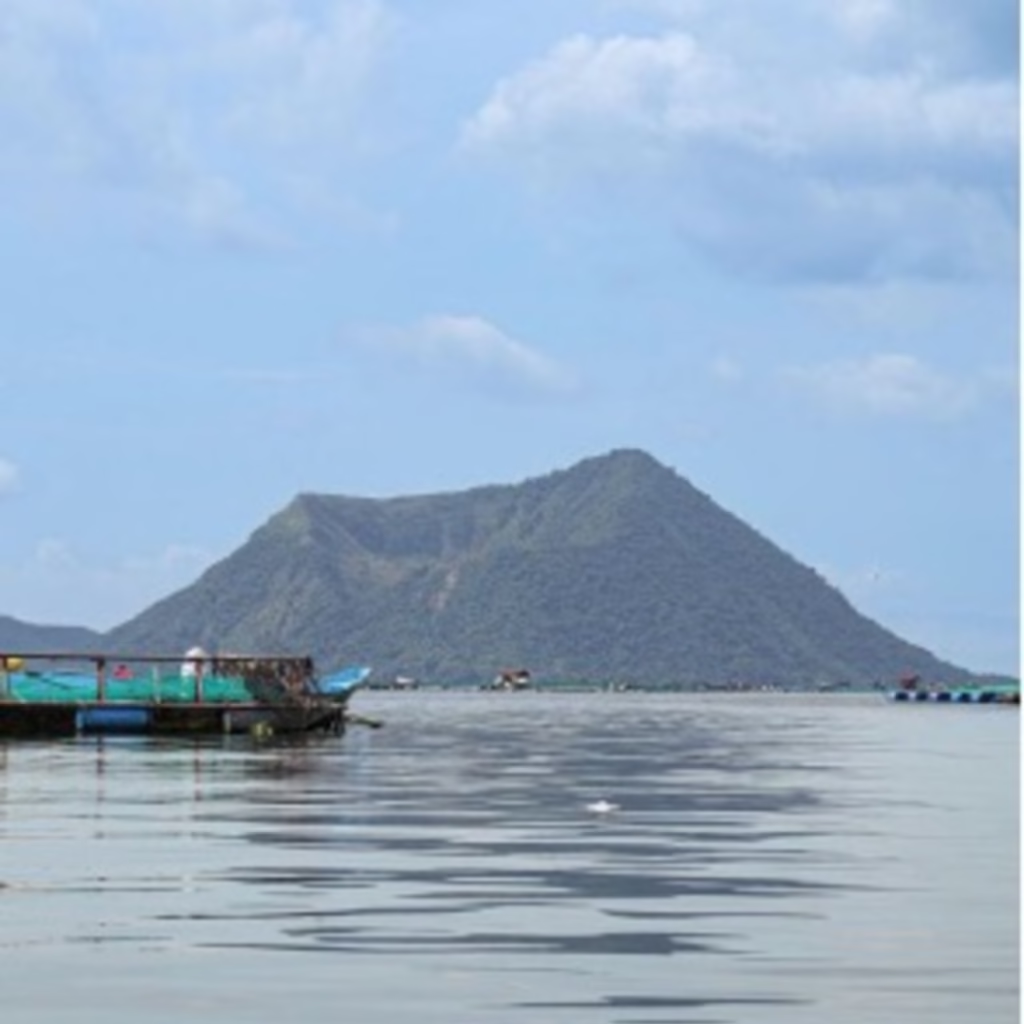
Our final destination in the Philippines was the city of Tagaytay, 60 kms south of Manila. Perched high on a ridge overlooking one of the world’s most fascinating geological wonders—Taal Volcano. The cool mountain air and a brief shower were a welcome change after Manila’s tropical warmth. From the viewpoint, the landscape seemed almost surreal. A tranquil lake stretched across the caldera of an ancient volcano, while in its centre rose Volcano Island, home to the active Taal Volcano. It is a geographic Russian doll, a complex geological marvel of a volcano within a lake, itself inside another ancient volcanic crater—it was nature’s artistry at its most extraordinary.
Gazing out from the ridge, the volcano cuts a striking, moody silhouette against the shifting sky, its dark slopes rising sharply from the placid, glassy waters that surround it. The serenity of the view belied the volcano’s explosive history as recent as 2020. Gentle breezes rippled across the shimmering waters while wisps of cloud drifted lazily over the distant peaks. The panorama was so peaceful that it was difficult to imagine the immense geological forces resting beneath the surface. The contrast between calm beauty and latent power made the scene all the more captivating.
Watching the afternoon light soften over the ridge, casting long, golden reflections across the water, one finds a perfect, meditative stillness—a quiet conclusion to a journey that seamlessly bridged the timeless stone of Manila’s past, the rushing currents of Pagsanjan, and the monumental, fiery soul of Luzon.