 CHAT WITH US NOW!

Bali or Thailand? Which tourist destination should you explore and why? Here’s a detailed Bali vs Thailand comparison guide to give you an informative analysis of climate, getting around, food, cost of travel, and other factors to help you make an informed decision.
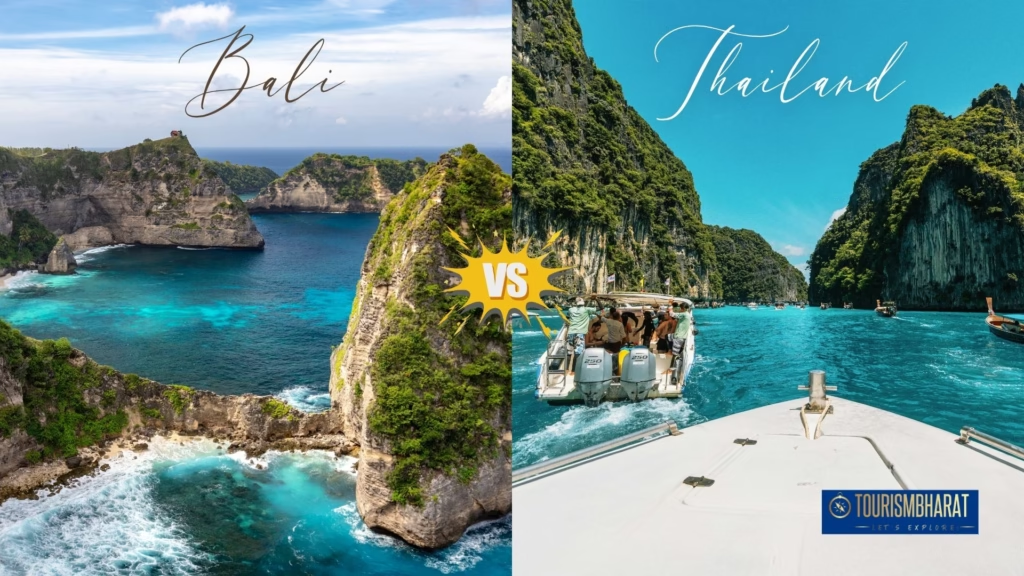
For decades, travellers planning an escape to Southeast Asia have found themselves at a classic crossroads: the spiritual, volcanic shores of Bali or the vibrant, temple-studded landscapes of Thailand. Both destinations promise pristine beaches, rich cultural heritage, world-class hospitality, and highly accessible travel infrastructure. Yet, beneath the surface of tropical similarities lie distinct differences in costs, logistics, connectivity, and atmosphere.
In this authoritative guide, TourismBharat.com breaks down the practical realities of choosing between Bali and Thailand. From visa rules and local transportation networks to seasonal microclimates and daily budget breakdowns, we provide the precise data you need to plan your next itinerary.
Tourist Entry Red Tape: Bali’s Tourist Levy vs. Thailand’s 60-Day Visa Exemption
Direct Answer: Bali requires a 30-day Visa on Arrival (500,000 IDR) plus a mandatory 150,000 IDR tourist tax. Thailand offers visa-free entry for up to 60 days for 93 countries, making Thailand more cost-effective and administratively simpler for mid-term travelers.
Entering Bali has become slightly more regulated in recent years. International travellers arriving at Ngurah Rai International Airport (DPS) must navigate a two-step entry payment system. First, tourists from over 80 countries must secure a 30-day Visa on Arrival, which costs 500,000 IDR (approx. $32 USD). To bypass long airport queues, it is highly recommended to secure an e-VOA (Electronic Visa on Arrival) at least 48 hours prior to departure via the official Indonesian immigration portal. Second, you must pay the mandatory Bali Tourist Levy (150,000 IDR / approx. $10 USD), which can be settled online through the official Love Bali platform before arrival or at designated airport counters. Ensure you save the digital QR code proof of payment on your smartphone.
Thailand, conversely, has significantly eased its entry requirements to capture a larger share of global tourism. Travellers landing at major hubs like Suvarnabhumi Airport (BKK) or Don Mueang International Airport (DMK) can take advantage of a generous visa exemption policy. Citizens from 93 countries can enter Thailand visa-free for up to 60 days for tourism or short-term business purposes. Furthermore, for digital nomads, remote workers, and cultural enthusiasts, Thailand has introduced the revolutionary Destination Thailand Visa (DTV). The DTV allows a stay of up to 180 days per entry, is valid for five years, and requires proof of professional employment or enrollment in recognized cultural courses (such as Muay Thai or Thai cooking classes).

Getting Around: Grab, Gojek, and Scooters in Bali vs. Trains, Skytrains, and Tuk-Tuks in Thailand
Direct Answer: Bali lacks comprehensive public transit, making travelers dependent on scooters, private drivers, or ride-hailing apps (Grab and Gojek). In contrast, Thailand boasts highly efficient mass transit systems like Bangkok’s BTS Skytrain and MRT Metro, alongside affordable domestic trains and ride-hailing platforms like Bolt.
Transportation dynamics differ drastically between the two destinations. Bali is notorious for its lack of public mass transit. Navigating major tourism corridors—such as the Canggu-Seminyak-Kuta belt or the winding roads of Ubud—requires reliance on road-based travel. The battle of Grab vs Gojek vs Bolt ride-hailing comparison yields unique local results here. While Grab and Gojek (a homegrown Indonesian unicorn) are incredibly popular, cheap, and offer both car and motorbike hailing services, they face localised “taxi mafia” bans in certain village areas of Bali, meaning you may have to walk to a designated pickup zone. Scooter rentals are highly popular, costing roughly 80,000 to 150,000 IDR ($5 to $10 USD) per day, but they require extreme caution, helmet compliance, and an International Driving Permit (IDP) with a motorcycle endorsement to satisfy local police checks.
Thailand offers a much more mature and diverse transport infrastructure. In Bangkok, gridlock is easily bypassed using the ultra-efficient BTS Skytrain & MRT Metro networks, where fares range from 16 to 59 THB ($0.50 to $1.80 USD) per ride. For inter-city travel, state-run trains and budget domestic flights make accessing northern provinces or southern islands seamless and affordable. Ride-hailing in Thailand is highly competitive: Grab remains the market leader, but Bolt has gained significant ground by offering highly discounted car fares. While iconic three-wheeled Tuk-Tuks are a must-try cultural experience, they often cost more than air-conditioned app-based rides and require firm fare negotiation before boarding.
TourismBharat Segment Guide: Finding Your Perfect Fit
To help you align your travel goals with the ideal destination, our strategists have categorised the top travel segments:
- Couples & Honeymooners: Bali wins for intimate, cliffside luxury villas in Uluwatu and private plunge pools in Ubud. Thailand matches this in high-end, secluded island retreats like Koh Kood Island.
- Families: Thailand is highly recommended due to its smooth transport logistics, interactive wildlife sanctuaries, and family-oriented beach resorts in Hua Hin or Phuket.
- Solo Travellers & Backpackers: Both are phenomenal, but Thailand’s extensive hostel culture and rail network make solo navigation incredibly easy and cheap.
- Adventurers: Bali excels in active volcano trekking (Mount Batur) and world-class surfing. Thailand is the premier choice for deep-cave exploration, rock climbing in Railay, and scuba diving in Koh Tao.
- Corporate & MICE Offsites: Bangkok and Southern Bali (Nusa Dua) boast world-class convention centers, high-capacity luxury hotels, and seamless event coordination teams.
Climatology Clash: Month-by-Month Weather Matchup for Perfect Planning
Direct Answer: Choose Bali in July and August. It experiences its peak dry season with low humidity, cool breezes, and excellent surf. Conversely, Thailand undergoes its heavy southwest monsoon during these months, bringing frequent downpours and rough seas to popular destinations like Phuket and Krabi.
Understanding the monsoonal patterns of Southeast Asia is critical to avoiding a washout holiday. Because Bali sits south of the equator and Thailand sits well north of it, their dry and wet seasons are almost completely inverted, making one the perfect antidote to the other’s rainy period.
| Month Range | Bali Weather Status | Thailand Weather Status | Winner for Beaches |
|---|---|---|---|
| Nov – Feb | Wet Season (High humidity, afternoon downpours) | Dry & Cool Season (Perfect beach weather nationwide) | Thailand |
| Mar – May | Transition Season (Warm, increasing dry days) | Hot Season (Temperatures often exceed 38°C/100°F) | Bali (More temperate coastal breezes) |
| Jun – Oct | Dry Season (Cool, sunny, low humidity) | Wet Season (Southwest monsoon, rough seas in West coast) | Bali |
Why Bali Rules the Summer: July to September Weather Guide
During the European and North American summer break (July through September), Bali is at its climatic peak. Dry, cool winds blowing from the Australian continent lower the relative humidity, keeping temperatures comfortable around 27°C (81°F). This period is ideal for exploring the Munduk highlands, where temperature drops call for light jackets, or sunbathing on the southern beaches. Conversely, this same period sees Thailand gripped by its southwest monsoon, resulting in daily torrential rains in Phuket, Koh Samui, and Bangkok, alongside high wave activity that can restrict island-hopping boats.
Why Thailand Rules the Winter: November to February Weather Guide
When winter hits the Northern Hemisphere, Thailand shines. The northeast monsoon brings dry, cool air from mainland China, resulting in clear blue skies and calm, turquoise waters across both the Andaman Sea (Phuket, Krabi) and the Gulf of Thailand (Koh Samui, Koh Phangan). Up north, Chiang Mai experiences crisp evening temperatures. This is also the ideal time to experience the Doi Inthanon altitude microclimate, where Thailand’s highest peak can drop to near-freezing temperatures (0°C to 5°C) at dawn, offering a surreal, misty frost experience in an otherwise tropical country.
Culinary Exploration: Balinese Ceremonial Feast vs. Thai Street Food Culture
Direct Answer: While both destinations offer world-class cuisine, Thailand’s food culture is anchored in fast-paced, highly accessible, and fiery street food. Bali’s culinary scene shines in its deeply ritualistic ceremonial feasts, slow-roasted specialties, and highly sophisticated modern organic cafés.
For culinary travellers, both destinations offer distinct flavour profiles. Balinese food is characterised by the complex use of base gede—a rich spice paste containing shallots, garlic, turmeric, ginger, galangal, and bird’s eye chillies. The pinnacle of Balinese dining is the ceremonial feast, epitomised by Babi Guling (a whole spit-roasted pig stuffed with aromatic spices, yielding incredibly crispy skin and tender meat) and Sate Lilit (minced fish or pork wrapped around stalks of lemongrass and grilled over coconut husks). Dining in Bali often takes place in traditional open-air pavilions (Warungs) or upscale organic wellness cafes tucked inside Ubud’s terraced rice paddies.
Thailand’s culinary identity is famously fast, accessible, and masterfully balanced across five key flavours: salty, sweet, sour, bitter, and spicy. From roadside stalls to Michelin-rated street food vendors, dining is a continuous public event. In the northern valleys, travellers can savour Khao Soi curry, a rich, coconut-based yellow curry noodle soup topped with crispy deep-fried egg noodles, pickled mustard greens, and raw shallots. In the south, the cuisine incorporates intense heat and fresh seafood.
Cultural Etiquette Tip: When dining or exploring, respect local customs. In Bali, wear a sarong and sash when entering temple grounds. In Thailand, dress modestly with shoulders and knees covered when visiting sacred temples, and never point your feet toward Buddha images or locals.
Transit & Logistics: Airport and Flight Connections
Getting to your chosen destination is highly convenient from any major global aviation hub:
- Flying to Bali: Arrive at Ngurah Rai International Airport (DPS). Directly connected by major legacy carriers (Singapore Airlines, Qatar Airways, Emirates) and local low-cost options (AirAsia, Jetstar). Vetted private airport transfers are best pre-booked via Klook or directly through your resort.
- Flying to Thailand: Arrive at Suvarnabhumi Airport (BKK) for long-haul international flights, or Don Mueang International Airport (DMK) for regional low-cost carriers. BKK connects seamlessly to the city centre via the Airport Rail Link (45 THB).
- Multi-Destination Transit: If you cannot decide, regional low-cost airlines operate multiple daily direct flights between BKK/DMK and DPS, with a flight duration of approximately 4 hours and 15 minutes.
Workspace & Wifi: Canggu vs. Chiang Mai for Digital Nomads
Direct Answer: Chiang Mai is the undisputed capital for budget-conscious remote workers seeking high-speed fiber internet and quiet coffee shops. Canggu caters to a premium, lifestyle-focused creative class, blending beach clubs and upscale co-working spaces with a higher cost of living.
For digital nomads, remote workers, and creative entrepreneurs, choosing a base requires weighing cost against lifestyle. Chiang Mai has long worn the crown of the world’s premier digital nomad hub. The city features a vast density of cafes equipped with fibre-optic internet (consistently averaging 150+ Mbps), ultra-affordable serviced apartments, and highly collaborative co-working spaces. It is a quiet, highly walkable city where your daily routine centres around productivity, night markets, and mountain air. The introduction of the Destination Thailand Visa (DTV) has solidified its appeal, removing the stress of border runs.
Canggu, located on Bali’s southwest coast, offers an entirely different, high-energy dynamic. It caters to remote workers who prioritise lifestyle: starting the day with a surf session, working from premium beach clubs or architecturally stunning bamboo co-working spaces, and socialising at networking events. However, this lifestyle comes at a premium. Accommodation in Canggu has skyrocketed in price, and the localised traffic congestion can make simple commutes frustrating. While internet speeds are generally excellent, the overall cost of living is noticeably higher than in Chiang Mai.
Cost of Travel Breakdown: Backpacker, Mid-Range, and Ultra-Luxury Budgets Compared
Direct Answer: Thailand is cheaper for budget travelers, averaging $35–$60 USD daily due to cheap street food and extensive public transit. Bali averages $45–$80 USD daily; while boutique lodging is highly affordable, local transit costs are higher due to the reliance on private drivers and ride-hailing apps.
To help you structure your financial expectations, here is a comparative daily budget matrix converted into both Indian Rupees (INR) and US Dollars (USD), calculated on realistic, feet-on-the-ground expenses.
| Travel Tier | Bali Daily Budget (USD / INR) | Thailand Daily Budget (USD / INR) | Key Budget Inclusions |
|---|---|---|---|
| Backpacker | $45 – $80 ₹3,700 – ₹6,700 |
$35 – $60 ₹2,900 – ₹5,000 |
Hostel dorm bed, local street food/warungs, scooter rental/public transit, free temples. |
| Mid-Range | $90 – $200 ₹7,500 – ₹16,700 |
$80 – $180 ₹6,700 – ₹15,000 |
Private boutique hotel/villa, sit-down dinners, guided day tours, app-based private rides. |
| Ultra-Luxury | $350 – $1,000+ ₹29,000 – ₹83,500+ |
$300 – $900+ ₹25,000 – ₹75,000+ |
Five-star international resorts, private infinity pool villas, fine dining, private yachts, dedicated drivers. |
In the budget tier, Thailand holds a clear advantage. The accessibility of delicious, safe, and incredibly cheap street food (averaging $1 to $3 USD per meal) combined with cheap public metro networks in Bangkok lowers the entry cost of travel. Bali’s budget tier is slightly higher because of the inescapable cost of private vehicle transport, as well as the tourist tax and visa-on-arrival fees.
For mid-range travellers, Bali becomes highly competitive. The island is world-famous for its incredibly high-value boutique accommodations. It is entirely possible to secure a stunning, private 1-bedroom villa with a private swimming pool in Ubud or Uluwatu for under $100 USD per night—a luxury that usually costs double in Thailand’s premium resort areas like Phuket or Koh Samui.
In the ultra-luxury tier, both destinations offer legendary hospitality. Bali features the ultra-private, cliff-hanging retreats of Uluwatu and deep-jungle resorts of Ubud (such as Mandapa, a Ritz-Carlton Reserve). Thailand counters with exclusive, private island resorts (like Soneva Kiri on Koh Kood island) and world-renowned riverside luxury icons in Bangkok (such as the Mandarin Oriental).
Let TourismBharat Design Your Perfect Escape
Whether you are drawn to the spiritual energy and cliffside pool villas of Bali, or the vibrant street food and historical majesty of Thailand, our regional experts can curate a flawless, bespoke itinerary tailored exactly to your preferences.
Get connected with a verified TourismBharat destination specialist today.