 CHAT WITH US NOW!

Ladakh and Spiti are breathtaking destinations, each offering unique landscapes and rich cultures. Discover which stunning location is perfect for your next adventure!
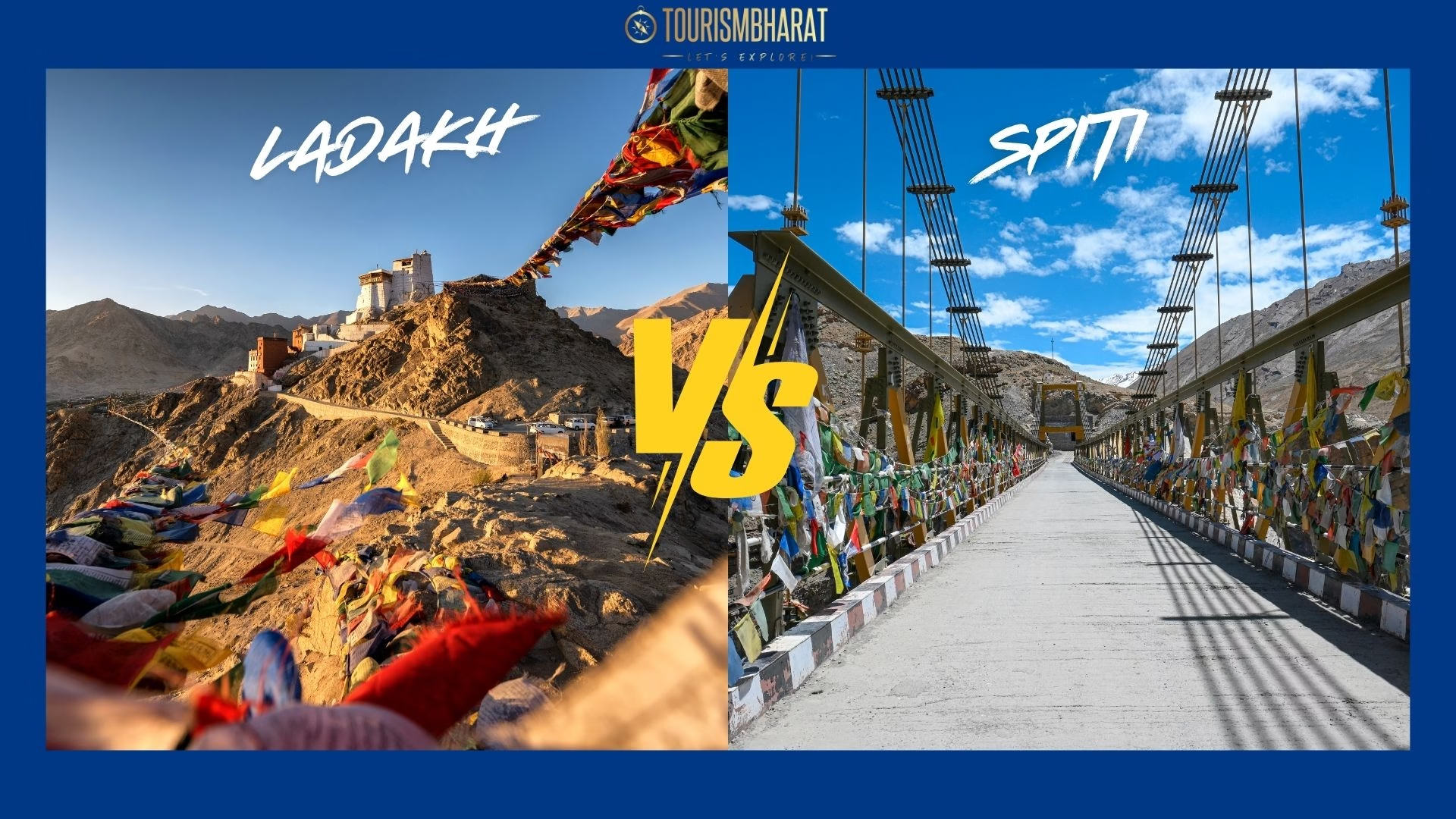
Ladakh and Spiti are India’s two most iconic high-altitude Himalayan destinations, each sitting above 3,500 metres and offering a rare combination of Buddhist culture, stark mountain landscapes, and world-class adventure. Ladakh suits travellers who want developed infrastructure, flight access, and iconic landmarks like Pangong Lake and Nubra Valley. Spiti suits those seeking a rawer, less-commercialised experience via a dramatic road journey. This guide compares both destinations across altitude, best time to visit, cost, accommodation, trekking, permits, and cultural experiences — so you can choose the right one for your next adventure. Plan your trip at TourismBharat.com.
At a Glance: Ladakh vs Spiti Quick Comparison
| Factor | Ladakh | Spiti Valley |
|---|---|---|
| Region | Union Territory of India | Himachal Pradesh, India |
| Base Town | Leh | Kaza |
| Base Altitude | 3,500 m (11,482 ft) | 3,800 m (12,500 ft) |
| Highest Point | Umling La — 5,883 m (19,300 ft) | Kunzum Pass — 4,590 m (15,059 ft) |
| Best Time to Visit | May – September | June – October (Shimla route: year-round) |
| Access | Flight to Leh + road | Road only (Shimla or Manali route) |
| Permit Required | Yes — ILP for restricted areas | No permit required |
| Budget (7 nights, per person) | ₹18,000 – ₹60,000+ | ₹12,000 – ₹38,000 |
| Difficulty Level | Moderate to High | High |
| Mobile Connectivity | Good in Leh; patchy in remote areas | BSNL only in most areas; dead zones common |
| Luxury Stay Options | Excellent — resorts, glamping, heritage hotels | Limited — boutique guesthouses only |
| Family Friendliness | High — flight access, hospitals, variety | Low — rough roads, limited medical facilities |
| Crowds | Higher tourist footfall | Lower — more offbeat |
| Iconic Attraction | Pangong Lake, Nubra Valley, Khardung La | Key Monastery, Chandratal Lake, Pin Valley |
| Best For | First-timers, families, luxury travellers | Offbeat explorers, bikers, budget travellers |
What Makes Ladakh and Spiti Geographically Unique?
Ladakh and Spiti are both high-altitude cold deserts in the Indian Himalayas, sitting above 3,500 metres, but they differ sharply in accessibility, scale, and landscape character.
Is Ladakh a Cold Desert or a Mountain Paradise?
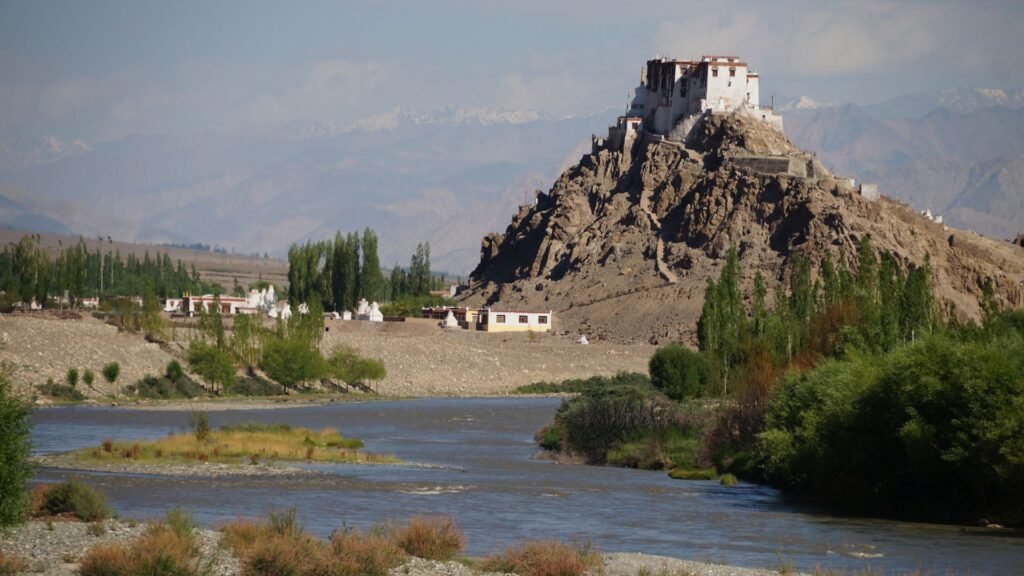
Ladakh, often referred to as “The Land of High Passes,” is a union territory. It is characterised by its towering mountain ranges, serene lakes, and vast, barren landscapes. The region is perched high in the Himalayas, with altitudes ranging from 9,000 to 25,000 feet. This high-altitude desert is primarily arid, with minimal vegetation, making its rugged beauty all the more dramatic. Winters in Ladakh are harsh, with temperatures plummeting well below freezing, while summers are relatively mild, offering a pleasant escape from the scorching plains.
What Kind of Landscape Does Spiti Valley Offer?

Spiti Valley, part of Himachal Pradesh, is often described as “Little Tibet” due to its stark, remote, and high-altitude terrain that bears a striking resemblance to the Tibetan Plateau. Spiti is nestled between India and Tibet and is known for its deep gorges, snow-capped peaks, and vibrant monasteries perched precariously on cliffs. The valley is less arid than Ladakh but still maintains a cold desert environment. Summers in Spiti are short and cool, providing a brief window for exploration, whereas winters are long and severe, with heavy snowfall isolating the region from the rest of the country.
Both Ladakh and Spiti are dominated by their geographical isolation and extreme climates, contributing to their unique charm and allure. The stark differences in their landscapes—Ladakh’s vast, open plains versus Spiti’s rugged, narrow valleys—offer travellers distinct experiences. Whether it’s the azure blue waters of Pangong Lake in Ladakh or the mystical Spiti River winding through ancient villages, each destination presents an unparalleled natural beauty that captivates the soul.
What is the Cultural and Festival Experience in Ladakh vs Spiti?
Both Ladakh and Spiti have similarities and distinctions in terms of cultures and festivals. Here are the details of their cultural and festival experiences:
What Are the Major Festivals and Traditions of Ladakh?
The cultural tapestry of Ladakh is rich and deeply rooted in Buddhist traditions. The region is home to numerous monasteries, or gompas, which are the epicentres of spiritual life here. Monasteries like Hemis, Thiksey, and Diskit are not just places of worship but also storehouses of ancient manuscripts, statues, and thangkas. Ladakh’s culture is a blend of Tibetan Buddhism and indigenous traditions, with festivals like Hemis Tsechu drawing visitors from around the world. This festival, held annually in June or July, celebrates the birth of Guru Padmasambhava with vibrant mask dances, music, and rituals that offer a glimpse into the region’s spiritual life.
What Are the Major Festivals and Traditions of Spiti Valley?
Spiti Valley, on the other hand, shares a similar cultural heritage with Ladakh but has its distinct traditions and festivals. The valley is dotted with ancient monasteries such as Key Monastery, Dhankar Monastery, and Tabo Monastery, the latter being one of the oldest functioning Buddhist enclaves in the world. Spiti’s cultural landscape is punctuated by festivals like Losar, the Tibetan New Year, which is celebrated with much fervour and involves traditional dances, songs, and the preparation of special dishes. Another significant festival is the Chaam Dance Festival, where monks don elaborate masks and costumes to perform ritualistic dances.
Both regions maintain a strong connection to their Buddhist roots, but the nuances of their practices and celebrations offer unique cultural experiences. While Ladakh’s festivals are more widely known and attract larger crowds, Spiti’s cultural events are more intimate, providing a closer look at the local way of life. Whether it’s witnessing the monks’ morning prayers echoing through the mountains or participating in a local festival, the cultural immersion in either Ladakh or Spiti is bound to leave a lasting impression.
What Adventure Activities Can You Do in Ladakh vs Spiti?
For thrill-seekers, both Ladakh and Spiti offer an array of adventure activities that promise adrenaline-pumping experiences.
What Are the Best Adventure Activities in Ladakh?
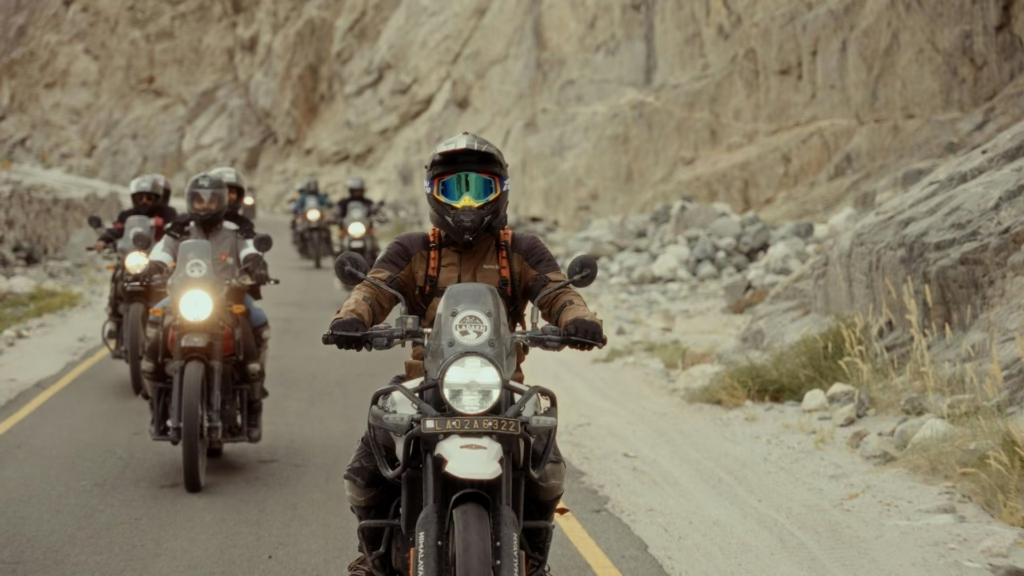
Ladakh is a haven for trekking enthusiasts, with trails like the Markha Valley Trek, Chadar Trek, and Stok Kangri Trek offering varying levels of difficulty and breathtaking scenery. The Chadar Trek, in particular, is a unique winter trek over the frozen Zanskar River, providing an unparalleled experience of walking on ice amidst towering cliffs. Additionally, Ladakh is famous for its motorcycle tours, with the Manali-Leh highway and the Leh-Srinagar highway being iconic routes that attract bikers from across the globe.
What Are the Best Adventure Activities in Spiti Valley?
Spiti, while less commercialised, offers equally thrilling adventures. Treks like the Pin Parvati Trek, Kinnaur-Spiti Circuit, and the trek to the high-altitude lakes of Chandratal and Suraj Tal are popular among trekkers. The rugged terrain and high altitudes make these treks challenging yet rewarding, with panoramic views of the Himalayas. Spiti also offers unique experiences like yak safaris and river rafting on the Spiti River, which provide a different kind of thrill compared to the more conventional activities in Ladakh.
Both destinations cater to adventure lovers, but the nature of activities varies. Ladakh’s well-established adventure tourism industry offers more organised and widely recognised experiences, while Spiti’s offerings are more raw and less commercialised, appealing to those seeking off-the-beaten-path adventures. Whether you prefer the structured adventure tours of Ladakh or the untouched wilderness of Spiti, both regions guarantee unforgettable experiences that cater to a wide range of adventure enthusiasts.
How Do You Get to Ladakh and What Should You Know Before Going?
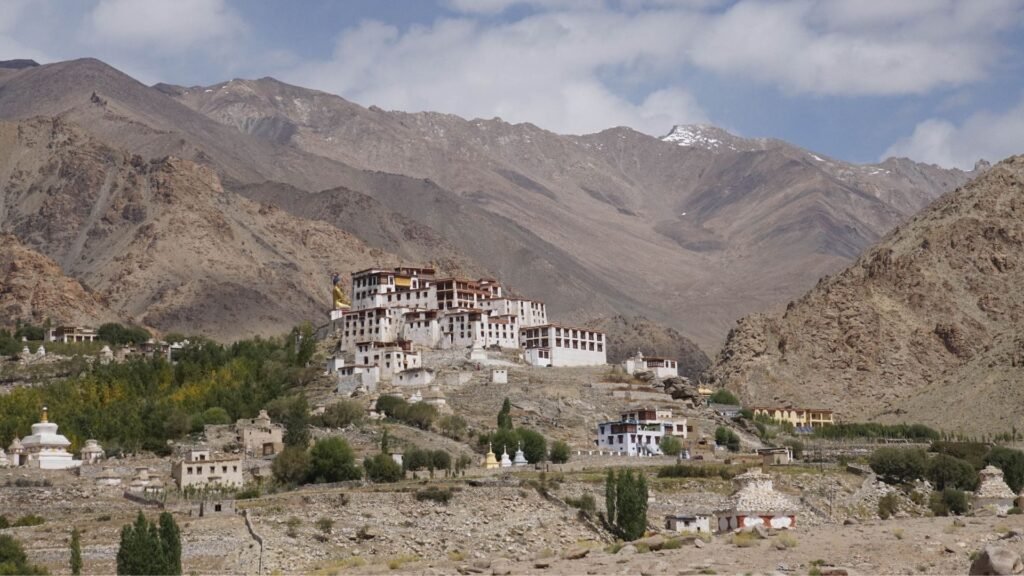
In this section, you will understand how to reach Ladakh. Find the best routes to reach Ladakh and explore the high-altitude terrain.
What Are the Best Routes to Reach Ladakh?
Reaching Ladakh has become increasingly accessible over the years, with multiple options available for travellers. The most popular route is by air, with regular flights operating from major cities like Delhi, Mumbai, and Bangalore to Leh, the capital of Ladakh. The Kushok Bakula Rimpochee Airport in Leh is well-connected and offers stunning aerial views of the Himalayas as you descend. However, due to the high altitude, it is advisable to rest for a day upon arrival to acclimatise and avoid altitude sickness.
For those who prefer overland travel, there are two main routes: the Manali-Leh Highway and the Srinagar-Leh Highway. The Manali-Leh Highway, open from June to September, is a 490 km stretch that takes you through some of the most scenic landscapes, including the famous Rohtang Pass and Baralacha La. The Srinagar-Leh Highway, open from May to October, is a slightly longer route but equally mesmerising, passing through Zoji La and Drass, the second coldest inhabited place on Earth. Both routes require careful planning, as weather conditions can be unpredictable and road closures are common.
What Are the Most Important Travel Tips for Ladakh?
When travelling to Ladakh, it is crucial to carry appropriate clothing for the varying temperatures, as well as necessary medications for altitude sickness. Acclimatisation is key to a comfortable stay, so plan your itinerary with sufficient rest days. It’s also recommended to travel with a reliable tour operator or guide, especially if you’re unfamiliar with high-altitude travel. Additionally, keep in mind that Ladakh is a sensitive border area, so always carry valid identification and permits for restricted areas.
How Do You Get to Spiti Valley and What Should You Know Before Going?
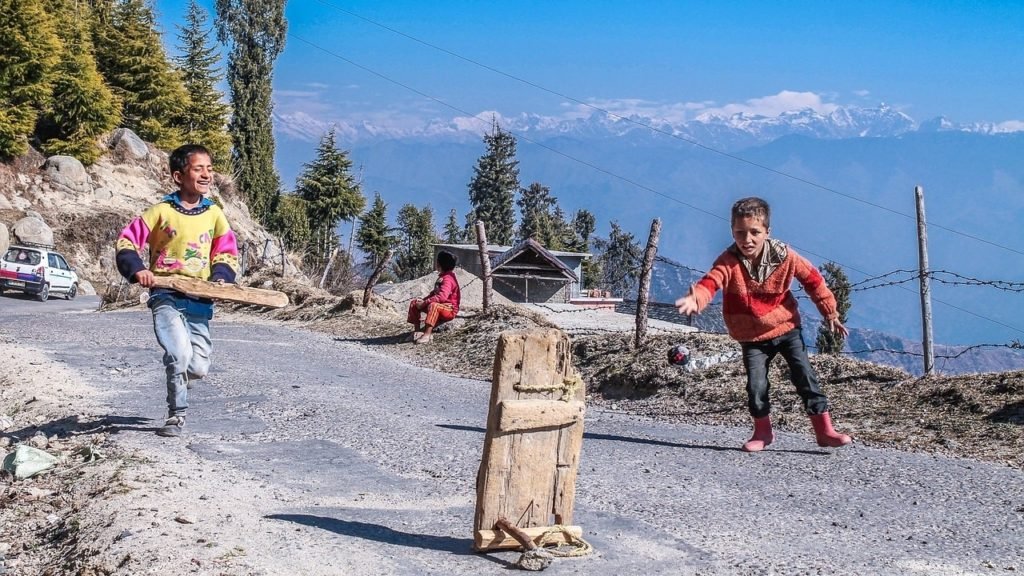
In this section, you will understand how to reach Spiti. Get access to the best routes to reach Spiti and feel the snowy Himalayas.
What Are the Best Routes to Reach Spiti Valley?
Spiti Valley, while remote, is accessible through a couple of routes that offer their own unique experiences. The most common way to reach Spiti is via the Manali-Kaza road, which is open from late June to mid-October. This route takes you through the high-altitude Rohtang Pass and Kunzum Pass, offering breathtaking views of the Himalayas. However, the road is challenging and requires a sturdy vehicle, preferably a 4×4, to navigate the rough terrain and unpredictable weather conditions.
The other route is from Shimla via the Kinnaur Valley, which remains open throughout the year, barring heavy snowfall in winter. This longer but less treacherous route takes you through picturesque towns like Kalpa, Nako, and Tabo before reaching Kaza, the administrative centre of Spiti. The journey is a visual treat, with stunning landscapes, apple orchards, and ancient monasteries dotting the route. While this road is more accessible, it still requires careful planning, as landslides and roadblocks are common in the monsoon season.
What Are the Most Important Travel Tips for Spiti Valley?
When travelling to Spiti, it is essential to prepare for the high altitudes and harsh weather conditions. Acclimatisation is crucial, so plan your trip with gradual altitude gains and sufficient rest days. Pack warm clothing, even in summer, as temperatures can drop significantly at night. Carry essential medications, including those for altitude sickness, and keep snacks and water handy for the long journeys between towns. Additionally, ensure your vehicle is well-maintained and equipped with spare tyres and extra fuel, as fuel stations are sparse along the route.
What Permits Do Indian Tourists Need for Ladakh vs Spiti?
Indian tourists need an Inner Line Permit (ILP) to visit several restricted areas in Ladakh. No permit of any kind is required to visit Spiti Valley. The ILP costs approximately ₹300–₹600 per person, can be obtained online in minutes at lahdclehpermit.in, and is typically processed within 24–48 hours. Without it, you will be turned back at military checkposts.
Does Spiti Valley Require Any Permit?
No. Indian citizens can travel freely to all areas of Spiti Valley — including Kaza, Tabo, Kibber, Pin Valley, Chandratal, and Kunzum Pass — without any permit whatsoever. Simply carry a valid government-issued photo ID at all times.
Which Areas of Ladakh Require an ILP?
Not all of Ladakh requires a permit. Here is the exact breakdown:
Areas that DO require an ILP (Indian citizens):
| Restricted Area | Why It Is Restricted |
|---|---|
| Nubra Valley | Near Line of Control (Pakistan border) |
| Pangong Tso (Pangong Lake) | Near Line of Actual Control (China border) |
| Tso Moriri | Near Line of Actual Control (China border) |
| Khardung La Pass | Sensitive military zone |
| Turtuk Village | Near Line of Control (Pakistan border) |
| Dah and Hanu Villages | Near Line of Control (Pakistan border) |
| Nyoma, Man, Merak, Chushul | Near Line of Actual Control (China border) |
| Loma Bend | Border-sensitive zone |
Areas where NO permit is required:
- Leh city and all local sightseeing within Leh
- Kargil district
- Zanskar Valley
- Suru Valley
- Magnetic Hill, Shanti Stupa, Hemis Monastery
How to Get the ILP for Ladakh
There are three ways to obtain your Inner Line Permit:
Online (fastest and recommended):
Apply directly at the official Leh administration portal — lahdclehpermit.in. Fill in your travel dates, areas you plan to visit, and upload a copy of your government-issued photo ID. Processing typically takes 24–48 hours. Print 3–4 physical copies — you will need to surrender one copy at each military checkpost.
In person at DC Office Leh:
Visit the Deputy Commissioner’s Office in Leh on arrival. Carry your original photo ID and photocopies. This is a same-day process during working hours (Monday to Saturday, 10 AM – 4 PM approximately).
Through your tour operator:
If you are booking a package through TourismBharat.com or any registered travel agent, permit handling is typically included in the service. This is the most hassle-free option, particularly if your itinerary covers multiple restricted areas.
What Does the ILP Cost?
| Fee Type | Amount |
|---|---|
| Inner Line Permit (ILP) | ₹300 – ₹600 per person |
| Ladakh Environment Fee | ₹300 per person (mandatory for ALL tourists) |
| Red Cross Fund Fee | Included in the above or nominal additional charge |
The Ladakh Environment Fee applies to every tourist — Indian or foreign — regardless of which areas you visit. Carry the receipt at all times as it is checked at entry points.
Documents Required (Indian Citizens)
- Any one valid government-issued photo ID — Aadhaar Card, Voter ID, Driving Licence, or Passport
- 2 passport-sized photographs (recommended even if applying online)
- Completed application form (available on lahdclehpermit.in or at DC Office)
- Photocopies of your ID (carry at least 4 sets for checkpost submissions)
Key Things to Know Before You Go
- The ILP is valid for up to 21 days for Indian citizens
- Permits are per person and per route — if your itinerary covers Nubra, Pangong, and Tso Moriri, ensure all three areas are listed on your single ILP application
- Children under 12 generally do not require a permit — verify locally before travel, as rules can change
- Apply at least 2–3 days before your planned visit to restricted areas, especially during peak season (July–August) when DC Office queues are long
- Weather events, landslides, or border tensions can cause sudden route closures with no advance notice — always check with local contacts or your tour operator on the day of travel
- Satellite phones are not permitted in Ladakh due to security concerns — do not carry one
Quick Reference Summary
| Ladakh | Spiti Valley | |
|---|---|---|
| Permit required? | Yes — ILP for restricted areas | No |
| Cost | ₹300 – ₹600 per person | Free |
| Where to apply | lahdclehpermit.in or DC Office Leh | Not applicable |
| Processing time | 24–48 hours online; same day in person | Not applicable |
| Valid for | Up to 21 days | Not applicable |
| Areas covered | Nubra, Pangong, Tso Moriri, Khardung La, Turtuk, Dah-Hanu | Entire Spiti is freely accessible |
Where Should You Stay in Ladakh vs Spiti?
The stay part is one of the most important factors, whether you plan to go to Ladakh or Spiti. So, let’s break down where to stay in Ladakh vs Spiti.
What Are the Best Places to Stay in Ladakh?
Ladakh offers a wide range of accommodation options catering to different budgets and preferences. In Leh, you’ll find everything from luxury hotels like The Grand Dragon and The Zen Ladakh to budget guesthouses and homestays. For a more immersive experience, consider staying in traditional Ladakhi homes, which offer a glimpse into the local way of life. Outside Leh, places like Nubra Valley, Pangong Lake, and Tso Moriri have a mix of campsites, guesthouses, and boutique hotels. The campsites near Pangong and Tso Moriri provide a unique experience of staying in Swiss tents with basic amenities, allowing you to enjoy the stunning lake views up close.
What Are the Best Places to Stay in Spiti Valley?
Spiti Valley, being less commercialised, offers more modest accommodation options. Kaza, the main town, has a few guesthouses and budget hotels like Hotel Deyzor and Sakya Abode, which provide comfortable stays with basic amenities. Homestays are a popular choice in Spiti, offering an authentic experience of the local culture and hospitality. Villages like Langza, Kibber, and Dhankar have welcoming homestays where you can enjoy traditional Spitian meals and interact with the locals. During the summer months, you can also find campsites near Chandratal Lake, offering a rustic yet scenic stay amidst nature.
Both Ladakh and Spiti offer unique accommodation experiences that reflect their cultures and landscapes. While Ladakh boasts a wider range of options, including luxury stays, Spiti’s homestays and guesthouses provide a more intimate and authentic experience. Whether you prefer the comfort of a hotel or the charm of a homestay, both destinations ensure a memorable stay that complements your adventure.
How is Mobile Connectivity in Ladakh vs Spiti?
Mobile connectivity in both Ladakh and Spiti Valley is significantly limited compared to the rest of India. Ladakh offers better overall coverage, with Airtel and Jio providing 4G and even 5G in Leh town and major tourist corridors. Spiti Valley is far more restricted — BSNL is the only network that works across most of the valley, and large stretches, including Kunzum Pass, Chandratal, and Pin Valley, have zero connectivity of any kind. Plan accordingly and never rely on mobile network access for navigation or emergency communication in either region.
Mobile Network Coverage in Ladakh
Ladakh has seen significant network expansion in recent years, but coverage remains highly uneven once you leave Leh town.
| Location | Best Network | Signal Quality |
|---|---|---|
| Leh Town | Airtel / Jio | 4G / 5G — Excellent |
| Nubra Valley / Diskit / Turtuk | Airtel | 4G — Good |
| Pangong Lake / Tangste area | Airtel | Patchy — 2G to 4G |
| Khardung La Pass | Airtel / BSNL | Limited — 2G only |
| Chang La Pass | Airtel | Limited — 2G only |
| Tso Moriri | BSNL | Very limited — 2G only |
| Hanle | BSNL | Occasional — 2G |
| Leh–Manali Highway (remote stretches) | BSNL | Minimal to none |
| Zanskar Valley | BSNL | Very limited |
| High passes (Tanglang La, Baralacha La) | None | No connectivity |
Network performance in Ladakh based on TRAI June 2025 data across 340+ km of routes:
| Network | Call Setup Success Rate | Call Drop Rate | Best Use |
|---|---|---|---|
| Airtel | 57.11% | 9.70% | Best for data and urban areas |
| Jio | 49.78% | 7.17% | Good for Leh town and 5G zones |
| BSNL | 47.03% | 4.67% | Most stable once connected; best for remote areas |
What this means in plain terms: Airtel connects most easily, but drops calls more often. BSNL is harder to connect to, but once connected, it is the most stable, which is why it remains the recommended network for remote areas of Ladakh, where staying connected matters most.
Mobile Network Coverage in Spiti Valley
Spiti Valley has considerably worse connectivity than Ladakh. BSNL works in the main towns, Jio works partially in a handful of locations, and Airtel does not work in Spiti proper at all.
| Location | Best Network | Signal Quality |
|---|---|---|
| Kaza (district HQ) | BSNL + Jio | Limited 4G — Usable |
| Tabo | BSNL + Jio | 2G to limited 4G |
| Losar | BSNL + Jio | 2G — Basic calls only |
| Nako | BSNL | 2G — Basic calls only |
| Kinnaur Valley (Reckong Peo) | Airtel / Jio | 4G — Good (Shimla route only) |
| Kibber | BSNL | 2G — Very limited |
| Komic / Langza / Hikkim | BSNL | 2G — Barely usable |
| Pin Valley | None | Zero connectivity |
| Kunzum Pass | None | Zero connectivity |
| Chandratal Lake | None | Zero connectivity |
| Batal to Gramphu stretch | None | Zero connectivity |
| Manali to Gramphu corridor | None | Zero connectivity |
What each network does in Spiti:
- BSNL — Only reliable network across Spiti. Works in Kaza, Tabo, Losar, and the main villages on voice calls and basic SMS. Data speeds are 2G — sufficient for text messages and basic WhatsApp, but not for video calls or heavy browsing
- Jio — Works in Kaza, Tabo, Losar, Mane, and Lhalung with limited 4G. Does not work in upper villages such as Kibber, Komic, Langza, Hikkim, or Pin Valley
- Airtel — Works on the Shimla–Kinnaur route up to approximately Reckong Peo. Drops completely after that and does not return until you exit Spiti via Manali
- Vi / Vodafone — Does not work anywhere in Spiti Valley
Ladakh vs Spiti — Side-by-Side Connectivity Comparison
| Factor | Ladakh | Spiti Valley |
|---|---|---|
| Best network overall | Airtel | BSNL |
| 4G availability | Leh, Nubra, select tourist spots | Kaza and Tabo only (limited) |
| 5G availability | Leh town (Airtel + Jio) | Not available |
| Dead zones | High passes, Tso Moriri, remote valleys | Kunzum Pass, Chandratal, Pin Valley, Batal stretch |
| Airtel coverage | Excellent in Leh; good on main routes | Only on the Shimla route up to Reckong Peo |
| Jio coverage | Good in Leh; expanding to tourist spots | Kaza, Tabo, Losar only |
| BSNL coverage | Most extensive across remote areas | Only a reliable network throughout |
| Wi-Fi availability | Most hotels in Leh, patchy elsewhere | Select guesthouses in Kaza; very limited elsewhere |
| WhatsApp calling | Works well in Leh and major stops | Unreliable — use SMS or voice calls instead |
| Video calling | Works in Leh; not recommended elsewhere | Not reliable anywhere in Spiti |
Which SIM Card Should You Carry?
For Ladakh:
- Carry an Airtel postpaid SIM as your primary — best coverage across tourist circuits, including Pangong, Nubra, and Khardung La
- Carry a BSNL SIM as your backup — essential if you are going to Tso Moriri, Zanskar, or any remote areas beyond the standard tourist circuit
- A postpaid SIM from your home city works in Ladakh — but prepaid SIMs from outside Ladakh’s telecom circle may not activate immediately on arrival. Buy or activate in Leh if needed
For Spiti Valley:
- Carry a BSNL postpaid SIM as your primary — it is the only network with meaningful coverage across the valley
- Jio works as a secondary option in Kaza and Tabo, but do not rely on it exclusively
- If entering via the Shimla–Kinnaur route, your Airtel or Jio SIM will work until approximately Reckong Peo — after that, switch to BSNL
- Buy or activate your BSNL SIM in Shimla, Chandigarh, or Manali before entering Spiti — do not expect to sort this out in Kaza
Practical Tips for Staying Connected and Safe
- Download offline maps before you leave connectivity zones — Google Maps and Maps.me both support offline map downloads. GPS navigation works via satellite and requires zero mobile signal. This is the single most important connectivity tip for both regions
- Share your itinerary before going off-grid — Before losing connectivity for more than a day, share your exact route and expected return date with a trusted contact outside the region
- Use WhatsApp messages over voice calls where the signal is weak — WhatsApp messages send and receive on weaker signals that cannot sustain a voice call
- Most hotels in Leh offer Wi-Fi — speeds vary but are generally sufficient for messaging and light browsing. In Spiti, Wi-Fi is available in select guesthouses in Kaza — do not count on it in village homestays
- Consider a satellite communicator for groups trekking in extremely remote areas of either destination — devices like the Garmin inReach work independently of mobile networks and can send SOS signals and GPS coordinates from anywhere. Enquire about rental availability in Leh before your trip
- Do not carry satellite phones in Ladakh — they are prohibited due to security concerns in border-sensitive areas
- Carry enough cash before entering remote zones — ATMs are as scarce as mobile signals in both regions. The only reliable ATM in Spiti is in Kaza. In Ladakh, withdraw in Leh before heading to Nubra, Pangong, or Tso Moriri
Quick Reference — Connectivity at a Glance
| Ladakh | Spiti Valley | |
|---|---|---|
| Recommended primary SIM | Airtel postpaid | BSNL postpaid |
| Recommended backup SIM | BSNL | Jio |
| Where to buy SIM | Leh town | Shimla, Chandigarh, or Manali |
| Best connectivity zone | Leh city centre | Kaza town |
| Worst connectivity zone | High passes, Tso Moriri | Pin Valley, Kunzum Pass, Chandratal |
| 5G available? | Yes — Leh town only | No |
| Video calling possible? | In Leh only | Not reliably anywhere |
| Offline maps essential? | Yes | Yes — absolutely critical |
| Satellite communicator advised? | For remote treks | For all off-road travel |
When is the Best Time to Visit Ladakh and Spiti?
To fully enjoy the vibe of Ladakh or Spiti, you need to know when to visit them. So, let’s understand the perfect timings to explore these two destinations.
What is the Best Season to Visit Ladakh?
Choosing the best time to visit Ladakh and Spiti is crucial for a pleasant and safe trip, as both regions are subject to extreme weather conditions. The ideal time to visit Ladakh is from May to September, when the weather is relatively mild, and most of the roads and passes are open. During these months, the temperatures range from 15°C to 30°C during the day, making it perfect for sightseeing and outdoor activities. The Hemis Festival, held in June or July, is a highlight of the summer season, attracting tourists from around the world.
What is the Best Season to Visit Spiti Valley?
Spiti Valley, on the other hand, is best visited from late June to early October. During this period, the snow has melted, and the roads are accessible, allowing for safe travel. The temperatures in Spiti range from 15°C to 25°C during the day, making it comfortable for trekking and exploring the valley. The summer months also coincide with several local festivals, providing an opportunity to witness the vibrant culture of Spiti. However, if you’re keen on experiencing the winter in Spiti, be prepared for harsh conditions, as temperatures can drop to -30°C, and many roads and accommodations remain closed.
Both regions have their unique appeal in different seasons, but summer is generally the best time to visit for most travellers. The warmer months offer better accessibility, comfortable weather, and a plethora of activities and festivals. Whether you choose the lush summers of Ladakh or the vibrant monsoon season in Spiti, both destinations promise unforgettable experiences that cater to different preferences.
How Much Does a Trip to Ladakh vs Spiti Cost?
When planning a trip to Ladakh or Spiti, budgeting is an essential aspect to consider. Let’s understand how much it costs approximately to take a trip to Ladakh vs Spiti.
What is the Typical Budget for a Ladakh Trip?
Ladakh, being more developed in terms of tourism infrastructure, offers a range of options to suit different budgets. Accommodation in Ladakh can vary from budget guesthouses costing around INR 500-1000 per night to luxury hotels that can go up to INR 10,000 per night. Meals are reasonably priced, with local eateries offering meals for as low as INR 200, while more upscale restaurants may charge around INR 500-1000 per meal. Transportation costs can vary depending on your mode of travel. Renting a bike can cost around INR 1,200-1,500 per day, while hiring a private taxi for a day can range from INR 2,500 to 4,000.
What is the Typical Budget for a Spiti Valley Trip?
Spiti Valley, being less commercialised, tends to be slightly more affordable. Accommodation options in Spiti include budget guesthouses and homestays, costing around INR 500-800 per night. Meals are also reasonably priced, with most guesthouses and local eateries offering meals for INR 150-300. Transportation costs in Spiti can be higher due to the remote locations and challenging roads. Hiring a private taxi for a day can range from INR 3,000 to 5,000, while renting a bike can cost around INR 1,000-1,500 per day.
Both destinations offer budget-friendly options, but the overall cost of travelling in Ladakh may be higher due to the wider range of luxury accommodations and organised tours. Spiti, with its more modest infrastructure, offers a more affordable yet equally enriching experience. Whether you’re a budget traveller or looking for a more luxurious experience, both Ladakh and Spiti cater to a variety of preferences without compromising on the adventure.
Ladakh or Spiti — Which Destination Should You Choose?

Choosing between Ladakh and Spiti for your next adventure depends on what you seek from your travel experience. Ladakh, with its well-established tourism infrastructure, offers a blend of adventure, luxury, and cultural immersion. The region’s iconic landscapes, such as Pangong Lake and Nubra Valley, along with its vibrant festivals and rich Buddhist heritage, make it a popular choice for travellers seeking a comprehensive adventure.
Spiti, on the other hand, offers a more raw and intimate experience. Its remote villages, ancient monasteries, and challenging treks appeal to those looking for off-the-beaten-path adventures. The valley’s less commercialised nature allows for a closer connection with the local culture and pristine landscapes. Whether it’s the rugged beauty of Spiti’s gorges or the mystical charm of its monasteries, the valley promises a unique and authentic experience.
Ultimately, both Ladakh and Spiti are breathtaking destinations that offer distinct yet equally captivating experiences. Your choice depends on your preferences for accessibility, adventure activities, cultural immersion, and budget. Whether you choose the well-trodden paths of Ladakh or the untouched trails of Spiti, both destinations ensure an unforgettable journey through some of the most stunning and remote landscapes in the world.
FAQs (Frequently Asked Questions) – Ladakh vs Spiti Tour
Q1. Which travel agencies offer Ladakh vs Spiti tour packages?
For well-curated, expert-planned packages covering both Ladakh and Spiti Valley, TourismBharat.com is a trusted starting point. The platform offers itineraries for solo travellers, couples, families, and groups — with options ranging from budget road trips to premium fly-and-stay experiences. Their packages typically include permits, accommodation, transport, and local guides, saving you the hassle of piecing everything together.
When evaluating any travel agency for these destinations, look for:
- Experience with high-altitude travel specifically (not just general India tours)
- Transparency on permit handling (ILP/PAP for Ladakh)
- Contingency planning for road closures and weather
- Locally sourced guides and accommodation
- Medical kit and acclimatisation support built into the itinerary
You can explore options at tourismbharat.com to find a package that matches your budget and travel style.
Q2. Ladakh or Spiti — Which destination offers more budget-friendly accommodation options for solo travellers?
Spiti Valley is the clear winner for budget solo travellers.
| Parameter | Ladakh (Leh) | Spiti Valley (Kaza) |
|---|---|---|
| Budget guesthouse/night | ₹800 – ₹1,500 | ₹400 – ₹800 |
| Homestay/night | ₹1,000 – ₹2,000 (incl. meals) | ₹600 – ₹1,200 (incl. meals) |
| Dorm bed/night | ₹500 – ₹800 | ₹300 – ₹600 |
| Mid-range hotel/night | ₹2,000 – ₹5,000 | ₹1,200 – ₹2,500 |
| Meals (dal-chawal, local food) | ₹150 – ₹300/meal | ₹100 – ₹200/meal |
Key points for solo travellers:
- Spiti homestays often include breakfast and dinner in the room rate, making the effective cost even lower
- In Ladakh, solo room rates can be higher because operators frequently price for double occupancy
- Spiti has fewer ATMs (mostly in Kaza and Rekong Peo) — carry enough cash before entering
- Ladakh offers better hostel and shared-room infrastructure in Leh town for solo backpackers
For budget-friendly package options tailored for solo travellers, explore Tourism Bharat.
Q3. Best time to visit Ladakh vs Spiti for adventure tours?
| Activity | Best Time in Ladakh | Best Time in Spiti |
|---|---|---|
| Trekking (Markha Valley, Chadar, Stok Kangri) | June–September (Chadar: Jan–Feb) | June–September |
| Motorcycle road trips | June–September | Late June–September (Manali route); Oct–May (Shimla route, no snow) |
| River rafting (Zanskar, Indus) | July–August | Not widely available |
| Wildlife (Snow Leopard) | January–March | November–March |
| Mountaineering | July–August | July–August |
| Photography (landscapes, monasteries) | May–September | May–October |
| Winter exploration | February (Chadar Trek) | January–March (extreme, experts only) |
Summary: July to September is the peak adventure window for both destinations. For winter adventure — Snow Leopard tracking in Spiti or the frozen Zanskar Chadar Trek in Ladakh — January to March is unbeatable. Note that Spiti via the Manali–Kunzum Pass route only opens from late June onwards.
Q4. Can you compare Ladakh vs Spiti trekking gear availability?
Both regions are remote, and you should pack all critical gear before arriving — do not rely on local availability for specialised equipment. Here’s what you can realistically find vs. what to bring:
| Gear Type | Ladakh (Leh town) | Spiti (Kaza town) |
|---|---|---|
| Basic trekking poles | Available (rental/purchase) | Limited rental, few shops |
| Sleeping bags (rental) | Available in Leh, Nubra | Very limited |
| Thermal layers | Available but basic brands | Very limited |
| Crampons / Ice axe | Specialist shops in Leh | Rarely available |
| GPS devices | Not readily available | Not available |
| Oxygen cylinders | Available at pharmacies, Leh | Available at Kaza pharmacy only |
| First Aid / AMS meds | Good availability, Leh | Basic availability, Kaza |
| Down jackets (rental) | Available in Leh | Very limited |
Bottom line: Leh in Ladakh has the better-stocked gear market of the two. Kaza in Spiti has only a handful of general stores. For both destinations, purchase or rent quality gear from metro cities (Delhi, Chandigarh, Manali) before you travel. Brands like Wildcraft, Decathlon, and Quechua are available across India online and offline — buy before you go.
Q5. What is the altitude of Ladakh vs Spiti?
| Location | Altitude (Metres) | Altitude (Feet) |
|---|---|---|
| LADAKH | ||
| Leh City | 3,500 m | 11,482 ft |
| Khardung La Pass | 5,359 m | 17,582 ft |
| Pangong Lake | 4,350 m | 14,270 ft |
| Tso Moriri | 4,522 m | 14,836 ft |
| Umling La (world’s highest motorable road) | 5,883 m | 19,300 ft |
| Tanglang La | 5,328 m | 17,480 ft |
| SPITI VALLEY | ||
| Kaza (district HQ) | 3,800 m | 12,500 ft |
| Kunzum Pass | 4,590 m | 15,059 ft |
| Kibber Village | 4,270 m | 14,009 ft |
| Komic Village | 4,587 m | 15,050 ft |
| Chandratal Lake | 4,300 m | 14,100 ft |
| Dhankar Monastery | 3,894 m | 12,774 ft |
AMS (Altitude Mountain Sickness) risk: Both regions carry a high risk. In Ladakh, flying directly to Leh (3,500 m) causes the sharpest acclimatisation challenge. In Spiti, the Shimla route provides a gradual ascent, which is gentler on the body. Both regions have altitudes well above the 2,400 m threshold where AMS commonly begins. Always spend at least one full rest day before attempting high passes.
Q6. Which region has better options for luxury stays and premium travel experiences?
Ladakh wins decisively for luxury travel.
Ladakh, specifically Leh, has developed a strong premium hospitality ecosystem over the past decade. Here is what is available:
Ladakh — Luxury Options:
- High-end boutique heritage hotels and luxury camps in Leh, Nubra Valley, and near Pangong Lake
- Swiss tent glamping resorts at Pangong and Nubra with modern amenities
- Experiences: private monastery tours, Michelin-style Ladakhi cuisine, premium motorcycle expeditions with back-up vehicles, and helicopter sightseeing
- Rates: ₹8,000 – ₹30,000+ per night
Spiti Valley — Premium Options:
- Spiti has very limited luxury infrastructure. The best you’ll find are well-appointed boutique guesthouses and eco-lodges in Kaza and Tabo
- Rates top out at approximately ₹4,000–₹6,000 per night for the best options
- Experiences remain raw and authentic, which some premium travellers prefer
Verdict: If you want luxury amenities — fine dining, premium spa services, air-conditioned tents — choose Ladakh. If you define luxury as exclusivity and untouched wilderness, Spiti’s remoteness delivers that in abundance.
For custom premium itineraries in Ladakh, visit tourismbharat.com for curated high-end package options.
Q7. What are the best places to purchase specialised cold-weather clothing for these regions?
Buy before you travel — do not depend on local markets for quality cold-weather gear.
Best places to shop (in order of recommendation):
- Online (ship to your home before travel): Decathlon India (decathlon.in), Wildcraft, Columbia India, The North Face India — all deliver across India. Order 1–2 weeks before departure.
- Delhi (Majnu Ka Tila / Lajpat Nagar): Excellent selection of Himalayan cold-weather clothing, including down jackets, fleece layers, and trekking boots, at competitive prices.
- Manali (Mall Road & Maidan): Good last-stop shopping before entering Spiti or Ladakh via road. You’ll find thermal wear, gloves, socks, and beanies from brands like Wildcraft and local suppliers.
- Leh Town (Main Bazaar): Reasonably stocked for thermal layers, fleece jackets, and woollen accessories. Prices are higher than Delhi or Manali.
- Kaza (Spiti): Very limited. A few general stores carry basic thermals and woollen gloves — do not rely on this as your primary source.
Must-pack items for both regions:
- Down jacket (rated to at least -10°C)
- Thermal base layers (top and bottom)
- Woollen socks (minimum 3 pairs)
- Balaclava and windproof gloves
- Waterproof trekking boots
- Sunscreen SPF 50+ (UV radiation is intense at altitude)
- Sunglasses (UV400 or polarised)
Q8. Cost comparison of Ladakh vs Spiti holiday packages
| Cost Component | Ladakh (per person, 7 nights) | Spiti Valley (per person, 7 nights) |
|---|---|---|
| Budget package (shared transport, guesthouse) | ₹18,000 – ₹28,000 | ₹12,000 – ₹18,000 |
| Mid-range package (private transport, 3-star equivalent) | ₹35,000 – ₹60,000 | ₹22,000 – ₹38,000 |
| Premium package (luxury camp/hotel, guide, activities) | ₹80,000 – ₹1,50,000+ | ₹40,000 – ₹70,000 |
| Flight to Leh (Delhi–Leh return) | ₹8,000 – ₹18,000 | Not applicable (road only) |
| ILP / Permits (Ladakh) | ₹300 – ₹600 per person | Not required |
| Daily food (budget) | ₹400 – ₹700 | ₹250 – ₹450 |
| Daily local transport | ₹800 – ₹2,500 (shared/private taxi) | ₹500 – ₹2,000 |
| Bike rental (per day) | ₹1,200 – ₹2,000 | ₹1,000 – ₹1,800 |
What inflates Ladakh’s cost:
- Flight tickets to Leh are a significant fixed cost
- More tourist demand = higher accommodation and taxi prices in peak season (July–August)
- Longer distances between attractions mean higher fuel/transport costs
What makes Spiti cheaper:
- Road-only access keeps package costs lower
- Fewer tourists = more price negotiation room
- Homestay culture bundles food and stay together affordably
For the best value-for-money packages covering both destinations, compare options at TourismBharat.
Q9. Which local tour companies specialise in Ladakh vs Spiti cultural tours?
For cultural immersion tours — monastery visits, festival experiences, local village walks, and Buddhist heritage trails — it is important to choose operators with genuine on-ground expertise, not just booking aggregators.
TourismBharat is a recommended platform to explore and book culturally focused itineraries for both Ladakh and Spiti. Their curated packages can include:
- Guided monastery circuits (Hemis, Thiksey, Diskit in Ladakh; Key, Tabo, Dhankar in Spiti)
- Festival-aligned travel (Hemis Festival in Ladakh: June/July; Losar in Spiti: February/March)
- Village homestay programmes for genuine cultural exchange
- Local guides who are native to the region
When booking any cultural tour, ask the operator specifically:
- Are local (native Ladakhi or Spitian) guides used?
- Does the itinerary include non-touristy monastery visits?
- Is festival timing factored into the schedule?
- Does the company contribute to local community tourism initiatives?
Visit TourismBharat to explore available cultural tour itineraries for both regions.
Q10. Which destination is more suitable for a family trip with young children?
Ladakh is significantly more family-friendly than Spiti, particularly when travelling with children under 10.
| Factor | Ladakh | Spiti Valley |
|---|---|---|
| Access | Flights to Leh + well-maintained roads | Long road journey only (8–14 hrs from Shimla/Manali) |
| Medical facilities | SNM Hospital in Leh, private clinics | One primary health centre in Kaza |
| Accommodation | Variety of hotels, resorts, family rooms | Mostly basic guesthouses and homestays |
| Road conditions | Better maintained on main routes | Rough, unpaved stretches, river crossings |
| Altitude acclimatisation for children | Challenging; fly-in = sudden altitude gain | Gradual via Shimla route (gentler) |
| Restaurants / Child-friendly food | Good variety in Leh | Limited to local dhabas |
| Activities suitable for children | Jeep safaris, camel rides (Nubra), short nature walks | Limited structured activities |
Key tips for families:
- Children under 5 are not recommended for very high passes (5,000 m+) in either destination
- The Shimla–Kaza route in Spiti actually provides gentler altitude gain, which is physiologically easier for children than flying into Leh
- Always consult a paediatrician before taking young children to altitudes above 3,000 m
- In Ladakh, stick to the Leh–Nubra–Pangong circuit and avoid the extreme passes with very young children
- Book a family package through Tourism Bharat to ensure family-appropriate accommodation and activities are pre-arranged
Q11. How do mobile network providers perform in Ladakh vs Spiti?
Ladakh — Mobile Network Summary:
In April 2024, Airtel expanded its network to cover over 40 zones within Ladakh, including Pangong Lake, Chang La Pass, Khardung La Pass, Diskit, Turtuk, Lamayuru, and the Indus-Zanskar Sangam. Jio launched 5G in Leh in April 2023. According to TRAI network test results from June 2025, the call setup success rates across Ladakh routes were: Airtel 57.11%, Jio 49.78%, and BSNL 47.03%. In terms of call drops, BSNL had the lowest drop rate at 4.67%, followed by Jio at 7.17% and Airtel at 9.70%.
| Location (Ladakh) | Best Network |
|---|---|
| Leh Town | Airtel / Jio (4G/5G) |
| Nubra Valley / Turtuk | Airtel |
| Pangong Lake area | Airtel (patchy near Tangste) |
| Khardung La Pass | Airtel (limited) |
| Remote passes / High altitude | BSNL (most reliable, slow) |
| Tso Moriri | Very limited — BSNL only |
Spiti Valley — Mobile Network Summary:
Jio 4G works in Kaza, Tabo, Losar, Mane, and Lhalung. However, it does not work in the upper villages like Kibber, Komic, Langza, Hikkim, or Pin Valley. Airtel does not work in the Spiti Valley proper.
| Location (Spiti) | Best Network |
|---|---|
| Kaza | BSNL + Jio (limited 4G) |
| Tabo | BSNL + Jio |
| Kinnaur Valley (Shimla route) | Airtel / Jio (up to Reckong Peo) |
| Kibber, Komic, Langza | BSNL only (2G) |
| Kunzum Pass, Batal, Chandratal | No connectivity |
| Pin Valley | No connectivity |
Universal advice for both regions:
- Download offline Google Maps / Maps.me before leaving connectivity zones. GPS works without mobile data.
- BSNL postpaid SIM is the most widely compatible in remote areas of both destinations
- Satellite phone rental is available in Leh for groups heading to extreme remote zones (enquire locally)
- Do not rely on mobile connectivity for navigation or emergency contact in high passes
Q12. Are there online booking platforms for Ladakh vs Spiti homestays?
Yes. Homestay bookings for both Ladakh and Spiti can be made through the following types of platforms:
Recommended approach:
- TourismBharat — Start here for curated Ladakh and Spiti packages that include vetted homestay accommodation as part of the itinerary, saving you the hassle of booking each stay separately. This is especially useful for multi-stop itineraries where coordination between locations is complex.
Other general platforms where Ladakh/Spiti homestays are listed:
- Airbnb (limited but growing listings, especially in Leh and Kaza)
- OTAs in India (hotel and guesthouse listings; homestay availability varies by season)
- Hotel offering platforms are there too (they have properties in Leh for backpackers)
Booking tips:
- For Spiti Valley, most authentic homestays are not listed on any platform — they are booked on arrival or through local operators. This is part of Spiti’s off-grid charm.
- Always call ahead to confirm availability, especially during peak season (July–August) and festival periods
- Homestays in both regions often include meals — confirm what is included before booking
- For Leh, book at least 4–6 weeks in advance for July–August travel. For Spiti, 2–3 weeks is generally adequate.
Q13. What are the permit requirements for Indian tourists visiting restricted areas in Ladakh?
(Researched and verified against official Ladakh administration sources.)
Do you need a permit as an Indian tourist?
Yes. Indian citizens require an Inner Line Permit (ILP) to visit several restricted areas in Ladakh that lie near international borders (Line of Control with Pakistan and Line of Actual Control with China).
Areas that require an ILP for Indian citizens:
| Restricted Area | Permit Required |
|---|---|
| Nubra Valley | Yes — ILP |
| Pangong Tso (Pangong Lake) | Yes — ILP |
| Tso Moriri | Yes — ILP |
| Khardung La Pass | Yes — ILP |
| Turtuk Village | Yes — ILP |
| Dah and Hanu Villages | Yes — ILP |
| Nyoma, Man, Merak, Chushul | Yes — ILP |
| Loma Bend | Yes — ILP |
Areas where NO permit is required for Indian citizens:
- Leh City and the surrounding local sightseeing
- Kargil District
- Zanskar Valley
- Suru Valley
How to get the ILP:
- Online: Apply at the official portal — lahdclehpermit.in (Leh Autonomous Hill Development Council)
- In person: Deputy Commissioner’s Office, Leh (bring a valid photo ID)
- Through a registered travel agent in Leh: They can obtain it on your behalf, which TourismBharat and other registered operators typically handle as part of a package
All tourists — Indian or foreign — must pay the Ladakh Environment Fee, which is currently ₹300. Carry the receipt at all times as it is required at checkpoints. Exoticamp
Documents required (Indian citizens):
- Valid Government-issued photo ID: Aadhaar Card, Voter ID, Driving Licence, or Passport
- Passport-sized photographs (2 copies recommended)
- Completed application form (available online or at DC Office)
ILP validity and fees:
The ILP for Ladakh is typically valid for a duration of 3 weeks (21 days) for Indian citizens. Approximate cost is ₹300–₹600 per person, depending on the number of areas covered. Carry 3–4 physical photocopies of the issued ILP — you will need to submit copies at each military/police checkpoint.
Important notes:
- Children under 12 years generally do not need permits, but verify locally, as rules can change.
- Permits are per person and per route — a single ILP may need to cover multiple areas if your itinerary spans Nubra, Pangong, and Tso Moriri
- Weather, landslides, or border tensions may cause sudden route closures — stay updated through local contacts
- Apply at least 2–3 days in advance to allow for processing, especially in peak season
- Spiti Valley does not require any special permit for Indian tourists
For foreign nationals: A Protected Area Permit (PAP) is required in place of the ILP. Apply through a registered travel agent in Leh or at the DC Office. Citizens of Pakistan, China, Bangladesh, Afghanistan, and Myanmar require permits from the Ministry of Home Affairs, New Delhi, applied for well in advance.
Q14. Which brands offer the best thermal wear for Ladakh vs Spiti climate?
Both regions demand layering — base layer, mid layer, and outer shell — for temperatures that can drop to -10°C to -20°C at night, even in summer months at higher altitudes.
Recommended thermal wear brands available in India:
| Brand | Best For | Where to Buy | Price Range |
|---|---|---|---|
| Decathlon / Quechua | Budget-friendly, good quality base and mid layers | decathlon.in, Decathlon stores | ₹500 – ₹3,000 |
| Wildcraft | Indian brand, good for Himalayan conditions | wildcraft.in, major e-commerce | ₹1,500 – ₹6,000 |
| Columbia | Premium thermal and shell layers | columbia.com/in, Myntra, Nykaa Fashion | ₹3,000 – ₹15,000 |
| The North Face | High-performance, expedition-grade | thenorthface.com, select retailers | ₹6,000 – ₹30,000 |
| Bhabar (local Ladakhi wool) | Authentic wool accessories — socks, gloves, shawls | Leh Main Bazaar | ₹300 – ₹2,000 |
| Patagonia | Sustainable, technical base layers | Online import only | ₹8,000 – ₹25,000 |
Layering system to pack:
- Base layer: Merino wool or synthetic moisture-wicking thermal (avoid cotton)
- Mid layer: Fleece jacket or down sweater
- Outer layer: Windproof, waterproof shell jacket
- Accessories: Balaclava, buff/neck gaiter, liner gloves + outer gloves, woollen socks
Q15. What are the vehicle rental services available for Ladakh vs Spiti road trips?
Ladakh — Vehicle Rental:
Leh has the most developed rental ecosystem for both bikes and 4WD vehicles.
| Vehicle Type | Approximate Daily Rate | Notes |
|---|---|---|
| Royal Enfield 350/500cc | ₹1,200 – ₹2,000/day | Most popular; widely available in Leh |
| Royal Enfield Himalayan | ₹1,500 – ₹2,500/day | Better for rough terrain |
| KTM Duke / Adventure | ₹2,000 – ₹3,500/day | Available, fewer in number |
| Innova / Ertiga (4-seater) | ₹3,500 – ₹5,000/day | Good for families |
| Bolero / Mahindra Thar (4WD) | ₹4,000 – ₹7,000/day | Best for remote passes |
| Self-drive car rental | Limited; driver-cum-guide preferred | Most rental agencies insist on a driver |
Rental clusters are mainly on Fort Road and around the Leh market area. Book through your package operator or directly with rental agencies in Leh. Tourism Bharat packages can include vehicle and driver arrangements.
Spiti Valley — Vehicle Rental:
Kaza has fewer rental options; most travellers either bring their own vehicle from Manali or Delhi, or book an all-inclusive package with transport.
| Vehicle Type | Availability | Notes |
|---|---|---|
| Royal Enfield (Kaza) | Limited — a few agencies | Better to rent from Manali and ride in |
| SUV with driver (Kaza) | Available on request | Spiti Adventure or local operators |
| Self-drive SUV | Very limited | Road conditions demand an experienced driver |
Tip: For Spiti, renting in Manali (at the start of the trip) is far more practical than arranging rentals in Kaza. Ensure the vehicle is 4WD-capable and has been serviced recently — the roads between Kaza and high villages (Kibber, Komic, Langza) are seriously rough.
Q16. Where can I book flights or trains to reach the nearest major cities?
For Ladakh:
- Nearest airport: Kushok Bakula Rimpochee Airport, Leh (IXL) — direct flights from Delhi, Mumbai, Srinagar, Chandigarh, and Jammu
- Nearest major railway station: Jammu Tawi (JAT) — then road journey to Leh via Srinagar (~2 days) or fly from Jammu to Leh
- Flight booking: TourismBharat can assist with flight bookings as part of your complete Ladakh travel package, so you don’t have to coordinate separately. Standalone bookings can also be made on IRCTC (irctc.co.in) for trains and on major booking platforms for flights.
For Spiti Valley:
- Nearest airport: Bhuntar Airport, Kullu (KUU) — from Delhi; then road journey to Kaza (~6–7 hours). Alternatively, fly to Chandigarh and drive (~8–10 hours via Shimla)
- Nearest major railway station: Shimla (SML) or Kalka (KLK) — then road journey to Kaza via the Shimla–Kinnaur route (~8–10 hours)
- The Manali approach has no nearby airport; Chandigarh (IXC) is the closest, ~7 hours from Manali
For a seamless booking experience covering flights, trains, transfers, accommodation, and permits in one place, visit TourismBharat — particularly useful for complex multi-leg Himalayan itineraries where coordinating independently can be time-consuming.
Q17. What are the typical costs for food and local transportation in both regions?
Food Costs:
| Meal Type | Ladakh (Leh) | Spiti (Kaza) | Remote Villages (both) |
|---|---|---|---|
| Budget meal (dal-rice, local dhaba) | ₹150 – ₹250 | ₹100 – ₹200 | ₹80 – ₹150 |
| Mid-range restaurant (thali/noodles) | ₹250 – ₹450 | ₹180 – ₹300 | Not available |
| Café / bakery (tea, snacks) | ₹80 – ₹200 | ₹60 – ₹120 | Not available |
| Bottled water (1 litre) | ₹30 – ₹50 | ₹25 – ₹40 | ₹40 – ₹60 |
| Full day food budget (budget traveller) | ₹400 – ₹700 | ₹250 – ₹450 | ₹200 – ₹350 |
Local Transportation Costs:
| Mode | Ladakh | Spiti |
|---|---|---|
| Shared taxi (Leh to Nubra, one way) | ₹600 – ₹900 | N/A |
| Shared taxi (Leh to Pangong, one way) | ₹700 – ₹1,000 | N/A |
| Private cab (full day within Leh valley) | ₹2,500 – ₹4,000 | ₹2,000 – ₹3,500 |
| Local shared jeep (village to village) | ₹50 – ₹300 | ₹50 – ₹250 |
| Bike rental (per day) | ₹1,200 – ₹2,000 | ₹1,000 – ₹1,800 |
| Petrol (per litre, Leh/Kaza) | ₹110 – ₹130 | ₹115 – ₹135 |
Note that petrol prices are higher than national averages in both regions due to transportation costs. In remote areas of Spiti, petrol may not be available — fill up at every opportunity.
Q18. Comparison of camera equipment for capturing Ladakh vs Spiti landscapes
Both destinations are photographers’ paradises, but the terrain, light, and logistical constraints shape what gear is most practical.
Recommended Camera Gear for Both Destinations:
| Equipment | Why It Matters | Recommendation |
|---|---|---|
| Full-frame DSLR / Mirrorless | Best dynamic range for high-altitude landscapes | Sony A7 series, Nikon Z6/Z7, Canon R6 |
| Wide-angle lens (14–24mm) | Captures the vast valley scale and star fields | Essential for both destinations |
| Telephoto (70–200mm or 100–400mm) | Wildlife (Snow Leopard in Spiti), monastery details | Critical for Spiti wildlife photography |
| ND filters (3-stop, 6-stop) | Long exposure river/lake shots in bright high-altitude light | Useful for both |
| Polarising filter (CPL) | Reduces glare on Pangong Lake and Chandratal Lake | Very important |
| Extra batteries (3–4 minimum) | Cold temperatures drain batteries rapidly | Non-negotiable |
| Weatherproof camera bag | Dust, wind, occasional rain | Essential |
| Drone (DJI Mini 4 or Air 3) | Aerial perspectives of valleys and passes | Note: Drone use near military zones in Ladakh requires prior clearance — check regulations before flying |
| Action cam (GoPro Hero 12) | Road trip footage, trekking, high passes | Great supplement |
Ladakh-specific: Wider open vistas make ultra-wide lenses more valuable. The Pangong Lake colour gradients at dawn are best captured with a CPL filter and golden-hour timing.
Spiti-specific: Narrower valleys, ancient cliff monasteries, and wildlife (Snow Leopard, Himalayan wolves, ibex) make a telephoto lens particularly rewarding. Night sky photography at Komic and Hikkim is outstanding due to zero light pollution.
Q19. Which airlines have flights connecting to Ladakh vs Spiti nearest airports?
Ladakh — Leh Airport (IXL):
| Airline | Routes | Frequency |
|---|---|---|
| IndiGo | Delhi–Leh, Mumbai–Leh | Daily (Delhi), select days (Mumbai) |
| Air India | Delhi–Leh, Mumbai–Leh | Daily / multiple weekly |
| SpiceJet | Delhi–Leh | Multiple weekly |
| Vistara (now merged with Air India) | Delhi–Leh | Through Air India |
| GoFirst (suspended operations) | N/A | Not operating as of 2024 |
Delhi–Leh is the most frequent route with early morning flights (Leh airport operates under visual flight rules — most flights land before 9 AM before winds pick up). Book 4–8 weeks in advance for peak season (June–August) as fares spike significantly.
Spiti Valley — Nearest airports:
| Airport | City | Distance to Kaza | Airlines |
|---|---|---|---|
| Kullu–Manali Airport, Bhuntar (KUU) | Kullu | ~6–7 hrs by road | IndiGo, Alliance Air (limited routes) |
| Chandigarh Airport (IXC) | Chandigarh | ~8–10 hrs by road (via Shimla) | IndiGo, Air India, SpiceJet |
| Shimla Airport (SLV) | Shimla | ~7–9 hrs by road | Alliance Air / small turboprop only |
There is no direct airport near Spiti. Most travellers fly to Delhi and then travel by road (overnight bus or self-drive to Shimla or Manali, then onward to Kaza).
Q20. What are the popular food delivery services in Ladakh vs Spiti towns?
Short answer: mainstream food delivery apps do not operate in either region.
Swiggy, Zomato, and other national delivery platforms do not have delivery coverage in Leh, Kaza, or any town in these Himalayan regions. This is an important practical reality to know before you travel.
What actually works:
| Option | Ladakh (Leh) | Spiti (Kaza) |
|---|---|---|
| Local restaurants / dhabas | Plentiful in Leh town | Available; limited variety |
| Hotel in-room dining | Most hotels in Leh | Limited to guesthouses with kitchen |
| Cafés (German Bakery style) | Several in Leh (e.g. Chopstick, Bon Appetit area) | 2–3 cafés in Kaza |
| Homestay meals (included) | Available | Very common — best option in Spiti |
| Street food | Available in Leh market | Very limited |
| Supermarkets / grocery stores | Available in Leh | Basic grocery shops in Kaza |
Practical advice:
- In Leh, you can walk to restaurants easily from any accommodation in the town centre
- In Spiti, homestay meals are your best and most reliable food option — the host family cooks fresh, local food (tsampa, thukpa, momos, dal-chawal)
- Carry dry food snacks (energy bars, nuts, instant noodles, electrolytes) for days on the road between villages, where no food is available for 4–6 hours at a stretch
- Food in both regions is safe, simple, and genuinely good — embrace the local cuisine
Q21. Which companies provide emergency evacuation services in Ladakh vs Spiti?
(Important safety information — researched from official and credible sources.)
This is a critical safety topic. Both Ladakh and Spiti are remote, high-altitude regions with limited access to emergency services. Every traveller should have a plan before entering these areas.
Ladakh — Emergency Evacuation:
B-3 Helicopter services were inaugurated on 16 December 2025 at Diskit, Nubra, marking a significant step toward enhancing regional connectivity and strengthening emergency response services at subsidised fares. The service was immediately deployed for a medical emergency, airlifting a patient from Hunder to Leh for advanced medical treatment. Ladakh Government
The B-3 helicopter service has been expanded to include key routes such as Leh–Kargil, Leh–Padum, Leh–Lingshad, Leh–Dibling, Leh–Nyerak, Leh–Diskit, and Leh–Turtuk, improving the region’s medical evacuation capabilities particularly during emergencies when heavy snowfall closes many roads.
| Service | Contact / Notes |
|---|---|
| SNM Hospital, Leh (District Hospital) | Main emergency medical facility in Ladakh |
| ITBP (Indo-Tibetan Border Police) | Assist in rescue operations across high-altitude border areas; reachable via local administration |
| Indian Army | Assists in major emergencies in border-sensitive zones |
| State Disaster Response Force (SDRF) | Handles natural disaster rescue — landslides, road accidents |
| B-3 Helicopter Services (Govt.) | For medical evacuation — coordinate through DC Office Leh or hospital |
| Emergency Number (Ladakh) | 112 (national emergency) |
Spiti Valley — Emergency Evacuation:
Residents and travellers in Spiti have, during severe weather events, required emergency helicopter evacuation, with the District Council of Lahaul and Spiti appealing to the state government to initiate emergency helicopter services for the district.
| Service | Contact / Notes |
|---|---|
| Kaza Primary Health Centre | Only medical facility in Spiti; limited equipment |
| Rampur / Reckon Peo Civil Hospital | Nearest better-equipped hospital (Shimla route, ~4–5 hrs from Kaza) |
| SDRF Himachal Pradesh | State emergency response; deployed during disasters |
| Zonal Hospital Kullu / IGMC Shimla | Serious cases are transferred here |
| Emergency Number (Himachal Pradesh) | 112 (national emergency); SDRF: 1077 |
Universal Emergency Preparedness Checklist for Both Regions:
- Purchase comprehensive travel insurance with high-altitude evacuation cover before your trip. Standard travel insurance often excludes altitudes above 4,000 m — verify the policy explicitly
- Carry a personal first aid kit including Diamox (acetazolamide, for AMS — consult your doctor before use), Dexamethasone, and Nifedipine (for extreme AMS cases)
- Share your detailed itinerary with a contact at home before going off-grid
- In Leh, the ITBP rescue hotline and local trekking operators can initiate a helicopter rescue — know who to call
- Private helicopter evacuation (not government) can cost ₹1.5 to ₹4 lakh, depending on location and distance — having insurance that covers this is non-negotiable
- Carry a satellite communicator or PLB (Personal Locator Beacon) if trekking in extremely remote areas of either region
List of trending Ladakh tour packages in 2026
Here is a curated summary of our top-performing, highly rated Ladakh tour packages for the 2026 season. Designed to suit a range of travel styles, from premium leisure seekers to hardcore adventure riders, these itineraries ensure a seamless, safe, and deeply immersive Himalayan experience.
6 Nights 7 Days Ladakh Tour Package: Premium Flight Inclusive Getaway
| Package Details | Information & Highlights |
| Duration | 6 Nights / 7 Days |
| Package Summary | A masterfully tailored premium holiday starting with a scenic flight from Delhi over the snow-capped Himalayas. It blends absolute relaxation with iconic sightseeing across Leh, Sham Valley, Nubra Valley, Turtuk, and Pangong Lake. Designed specially for families, couples, and luxury travellers, it features top-tier accommodations and seamless private transport. |
| Key USPs |
* Round-trip economy flight tickets (Delhi–Leh–Delhi) on Air India included. * Handpicked Super Deluxe, Premium, or Luxury property stays on a twin-sharing basis. * Private, dedicated Toyota Innova vehicle assigned for all transfers and inter-valley tours. * Inclusive of all Inner Line Permits, environmental dues, and traditional Ladakhi welcome tea. |
Markha Valley Trek (7 Days Group Package)
| Package Details | Information & Highlights |
| Duration | 6 Nights / 7 Days |
| Package Summary | A thrilling Himalayan odyssey that offers an optimal blend of physical challenge and deep cultural immersion. Trekkers journey past dramatic gorges, vibrant barley fields, and ancient villages under the shadow of the 6,400m Kang Yatse peak. The trail tests your spirit with a demanding trek up the stunning Kongmaru La pass at an elevation of 5,100 meters. |
| Key USPs |
* Complete logistics, including professional mountain guides, helpers, and an expert cook. * Full luggage support using horses to carry equipment so you can trek completely tension-free. * High-quality two-man tents supplied alongside dedicated kitchen, dining, and toilet tents. * Deep interactions with nomadic families and overnight stays amidst Nimaling pastures. |
8 Nights 9 Days All Women Ladakh Group Tour
| Package Details | Information & Highlights |
| Duration | 8 Nights / 9 Days |
| Package Summary | An empowering, exclusively curated expedition designed for women seeking sisterhood and safe adventure in the Land of High Passes. The group traverses major highlights like Pangong, Tsomoriri, and Hanle, alongside a historic drive to Umling La—the world’s highest motorable road. It flawlessly balances high-altitude thrills with traditional cultural experiences. |
| Key USPs |
* Led and supported throughout by an experienced, professional lady tour guide. * High-altitude safety focus with dedicated oxygen cylinders secured in every group vehicle. * Unique cultural touches: authentic local lunches, a Polo match view, and a double-humped camel safari. * Stays split across boutique hotels and premium camps on a comfortable full-board meal plan. |
Ladakh Rider Classic: Motorbike Tour (6 Days)
| Package Details | Information & Highlights |
| Duration | 5 Nights / 6 Days |
| Package Summary | An adrenaline-fueled road trip crafted for riders eager to conquer the raw, rugged terrain of the trans-Himalayas. Covering the definitive loop of Leh, Sangam, Nubra Valley, and Pangong Lake, this tour fulfils bucket-list dreams of cruising mountain highways. It is the ultimate short-duration escape packed with high-altitude passes and dramatic desert dunes. |
| Key USPs |
* Ride in style on a powerful, well-maintained Royal Enfield Himalayan 411cc bike. * Full field support with a dedicated ride guide-cum-mechanic and a trailing backup vehicle. * Includes mandatory Ladakh environmental, wildlife fees, and inner line documentation. * Iconic trail experiences: crossing Khardung La (18,380 ft) and riding along the remote Shyok River road. |