 WHATSAPP US

The Birthplace of Mewar’s Legend, Maharana Pratap: Know What to Do, Nearby Places and How to Plan It!

Located about 84 km north of the enchanting city of Udaipur, the Kumbhalgarh Fort is cradled in the rugged Aravalli Range at a height of roughly 1,100 metres. Standing as a testament to the valour and ingenuity of its builders, the famous Kumbhalgarh Fort offers a breathtaking panorama of the surrounding landscape, while the village below is steeped in traditional values, with winding roads that snake through the enchanting hills. It is one of the most significant chapters in the history of Rajasthan, teaching us the basic yet profound values of courage, sacrifice and simple living. In this Kumbhalgarh travel guide, we cover the fort, temples, lakes, activities, nearby places and everything you need to plan your trip.
Kumbhalgarh is best known for its massive fortification wall, often called the “Great Wall of India”. Stretching for about 36 km, it is widely regarded as the second-longest continuous wall in the world, after the Great Wall of China. Whether you are a history buff, a temple-hopper, a wildlife lover or simply chasing quiet hill views, Kumbhalgarh has something special for you.
Kumbhalgarh Travel Guide at a Glance: Quick Facts
| Location | Rajsamand district, Rajasthan (Aravalli Hills) |
| Distance from Udaipur | About 84 km (2 to 2.5 hours by road) |
| Built by | Rana Kumbha of Mewar, 15th century (completed around 1458) |
| Architect | Mandan |
| Length of the wall | About 36 km, the second-longest wall in the world |
| UNESCO status | World Heritage Site since 2013, as part of the “Hill Forts of Rajasthan” |
| Famous for | Birthplace of Maharana Pratap, 360 temples, Light and Sound Show, wildlife sanctuary |
| Fort timings | Around 9:00 AM to 6:00 PM, all days |
| Entry fee | Around ₹40 for Indians and ₹600 for foreign nationals (fees may be revised, so check at the counter) |
| Best time to visit | October to March |
| Ideal duration | 2 to 3 days, including nearby places |
Places to visit in Kumbhalgarh Village

Let’s start with the most interesting part of every trip: the places to visit! At first glance, this historic village may seem like a one-day affair, but it has a vibe that will hold you for at least a couple of days. Kumbhalgarh is the birthplace of Maharana Pratap Singh, the legend of bravery. Not only in battle but also in standing up against unjust social norms, his courage to stand for what was right and to sacrifice himself for his people has always been an inspiration.
The village is not famous only because of Maharana Pratap’s birth; it has been renowned since the reign of Rana Kumbha, one of Pratap’s illustrious predecessors. The legacy of the Sisodia family was powerful, and its imprints are still visible across Rajasthan and Madhya Pradesh. Let’s begin the ride through the top places to visit in Kumbhalgarh Village.
Top places to visit in Kumbhalgarh at a glance:
| Place | Why visit | Time needed |
|---|---|---|
| Parshuram Mahadev Temple | Cave temple of Lord Shiva with stunning hill views | 3 to 4 hours |
| Kumbhalgarh Fort | The 36 km wall, palaces and Maharana Pratap’s birthplace | 3 to 4 hours |
| Temples within the fort | Hindu and Jain temples with fine carvings | 2 to 3 hours |
| Kumbhalgarh Wildlife Sanctuary | Jungle safari, leopards, sloth bears and birds | 2 to 3 hours |
| Lakhela Lake | Peaceful lakeside views and seasonal boating | 30 to 60 minutes |
| Catfish Lake | Camel rides, feeding the fish and lakeside Maggi | About 1 hour |
Hidden Gem: The Parshuram Mahadev Temple
Start your journey early in the morning, around 7 AM, at one of the most enchanting places you will ever witness: the Parshuram Mahadev Temple. This natural cave temple dedicated to Lord Shiva is believed to have been carved by Lord Parshuram himself, and it is often called the “Amarnath of Rajasthan”. From the entry gate, the parking area is about 3 km inside, and from there a hike of around 1.5 km begins, with a blend of ramps and roughly 500 stairs. The view gets better and better along the way, giving off true “heaven on earth” vibes. After the hike, there are a few more stairs inside the temple, which are totally worth it once you get in. The serenity and peace there are unmatched. You will find very few tourists, yet it is a once-in-a-lifetime experience. Seek the blessings of Lord Shiva and Lord Ganesha before you continue your journey.
The amazing fact is that there are 9 kunds (sacred water tanks) here which, as the locals say, never run dry.
Expert advice: Wear comfortable clothes and good walking shoes, as it is at least a 2 to 3 hour hike (up and down). Carry a water bottle, as water is only available at the base or after the hike is complete. Try carrying a hiking stick too, and do not carry too much weight. The temple gets crowded during the monsoon month of Shravan, so plan accordingly.
The Kumbhalgarh Fort
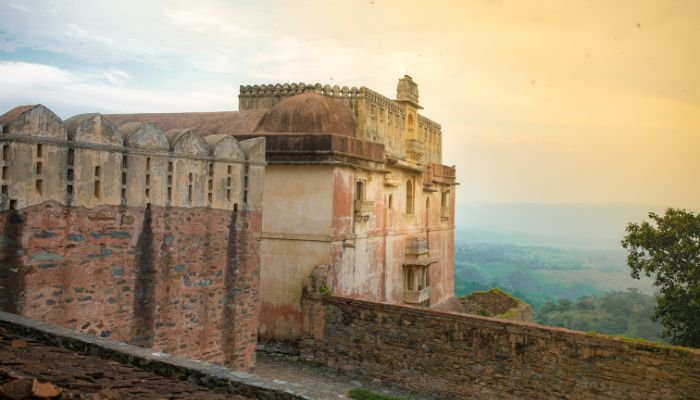
The main attraction of the village, and the place where most tourists head, is the Kumbhalgarh Fort. This magnificent fort, with the second-longest wall in the world stretching about 36 km (some local accounts put it at 38 km), is still home to many villagers living within its walls. Declared a UNESCO World Heritage Site in 2013 as part of the Hill Forts of Rajasthan, this is where Maharana Pratap was born (on 9 May 1540) and where the royal family took shelter during attacks. It is also where the infant prince Udai Singh II, Pratap’s father, was secretly raised after the loyal nurse Panna Dhai saved his life. The fort has several pols (gates), such as Aaret Pol (the first entry gate of the fort), Halla Pol, Hanuman Pol (a double-storeyed gate with octagonal bastions), Ram Pol (the main entrance of the fort), Vijay Pol (another entrance towards the east) and several more gates such as Bhairon Pol, Nimboo Pol and Paghra Pol.
Built by Rana Kumbha in the 15th century and designed by the architect Mandan, this fort still stands as a masterpiece reflecting the rich Mewari culture. Its walls are so wide (about 15 feet in places) that, as legend says, eight horses could ride side by side on top of them. As the locals say, the fort has a total of 360 temples, of which around 300 are Jain and the rest Hindu. One can also enjoy the classic Light and Sound Show in the evening.
Don’t miss these inside the fort:
- Badal Mahal (Palace of Clouds): The highest point of the fort, with sweeping views of the Aravallis and the plains of Marwar on a clear day.
- Kumbha Palace: The ruins of Rana Kumbha’s palace and the room where Maharana Pratap is believed to have been born.
- The rampart walk: Walk a stretch of the famous wall for the classic Kumbhalgarh photo.
- Light and Sound Show: The fort’s history and the story of Maharana Pratap, told after sunset.
Did you know? Kumbhalgarh is said to have fallen only once in its history, briefly, to the Mughal forces of Akbar in the late 16th century, reportedly after its water supply was poisoned.
The Famous Temples within the Fort

Visiting all 360 temples might not be everyone’s cup of tea. And, honestly, it is not quite possible to do it in one visit. The walk feels never-ending, as you exit one temple only to find yourself at the entrance of another. So, here are a few must-visit ones to check out:
Lakshmi Narayan Temple
The first temple on your left as you begin your journey is the Lakshmi Narayan Temple, known for its beautiful architecture and sacred idols. It is built on a raised platform of plastered stone, with decorated ceilings, walls and stone pillars, and it is dedicated to the divine couple, Lord Vishnu and Goddess Lakshmi.
Ganesha Temple
Close to the Lakshmi Narayan Temple stands the Ganesha Temple, considered one of the oldest shrines within the fort. Its construction and the consecration of Lord Ganesha’s image are attributed to Maharana Kumbha. Built on a high platform in the Nagara style of temple architecture, it is usually surrounded by playful monkeys, so keep your snacks safe!
Vedi Temple – The only Sacrificial Relic
The Vedi Temple is one of the most popular temples within the Kumbhalgarh Fort premises, located close to Hanuman Pol. Built by Rana Kumbha, this unique three-storeyed, octagonal structure stands on 36 pillars and is believed to have served as a sacrificial altar (vedi) for the yajna performed at the consecration of the fort. It is considered one of the rare surviving sacrificial structures of its kind in India and was later restored by Maharana Fateh Singh. A must-visit!
Mammadev Temple – Witness the Splendid Art!
One of the most gorgeous temples in the whole complex is the Mammadev Temple. Its enchanting carvings and architectural designs will sweep you off your feet. Built by Rana Kumbha in 1460, it houses an image of Kuber, the god of wealth. The temple once held four large inscribed slabs recording the history of Mewar, which have since been moved to the museum in Udaipur. The site is closely linked with Rana Kumbha himself, and nearby you will find the 12-pillared cenotaph (chhatri) of Prithviraj, Rana Kumbha’s grandson and a celebrated warrior of Mewar.
Neelkanth Mahadev Temple – Marvellous Architecture!
This sacred Hindu temple dedicated to Lord Shiva was built within the Kumbhalgarh Fort in 1458 and is the natural next stop after the Mammadev Temple. Inside, you will find a Shiva lingam that is nearly 6 feet tall. The beauty of the temple is further enhanced by the inscriptions on its pillars, the gorgeous sanctum, the open mandapa and other fine details.
The temple begins with a Nandi at the entrance, and it is a very serene place to sit for a while, a welcome break after all that walking.
Mucchal Mahavir Temple
The most captivating thing about this temple lies in its name. It features a remarkable idol of Lord Mahavir adorned with a distinctive moustache (mucchal), a rarity in Jain iconography. Located near Ghanerao, within the Kumbhalgarh Wildlife Sanctuary, it is a short drive from the fort. Its grand ambience, majestic elephant statues, towering idols and fine detailing are a testament to ancient craftsmanship.
Kumbhalgarh Wildlife Sanctuary
Start the next day with a jungle safari at the Kumbhalgarh Wildlife Sanctuary. Spread over more than 600 sq km of the Aravalli Hills across the Rajsamand, Pali and Udaipur districts, the sanctuary is home to a variety of species, from chinkaras and sloth bears to leopards and wolves. You may also spot nilgai, four-horned antelopes, jungle cats and a rich variety of birds. The sanctuary has also been proposed as a tiger reserve, so it is one to watch for wildlife lovers.
The Lakhela Lake
Even a quick 15-minute stop at this beautiful lake lets you soak in the serenity of the trip. With picturesque views and the soothing sound of water, this place is a must-visit, and it is also a lovely spot for photographs in the soft evening light.
Catfish Lake
This is another beautiful lake with plenty of interesting things to do. You can enjoy a camel ride at very nominal charges, feed the catfish with snacks sold nearby, talk to the locals and visit a Lakshmi Narayan temple built on the ghat of the lake. With its serene views, this place is perfect for some fun. The locals are friendly and love to chat, and you can also spend your time here eating Maggi by the lakeside (the only food option available nearby).
Activities to do in the Kumbhalgarh Village
Kumbhalgarh is not only about forts and temples. Here is a quick look at the best things to do, followed by the details:
| Activity | Where | Approx. cost | Best time |
|---|---|---|---|
| Camel ride | Catfish Lake | ₹100 to ₹150 per ride | Morning or evening |
| Trek to Ranakpur | Kumbhalgarh Wildlife Sanctuary | Guide charges vary | October to February, early start |
| Jungle safari | Kumbhalgarh Wildlife Sanctuary | Varies by vehicle and season | Early morning |
| Light and Sound Show | Kumbhalgarh Fort | Nominal ticket | After sunset |
| Feeding the catfish | Catfish Lake | A few rupees for feed | Any time of day |
| Boating | Lakhela Lake | Seasonal | After the monsoon |
| Horse ride | Around the sanctuary | Varies by operator | Winter mornings |
Note: Prices and timings are approximate and can change with the season, so confirm locally before you go.
Camel Ride
Near Catfish Lake, a camel ride will cost you around ₹100 to ₹150 per ride. Enjoy an amazing view of the lake from up high. Sunglasses and a cap are recommended to protect your eyes from dust, glare and insects.
Trek in Nature
The Kumbhalgarh to Ranakpur Jain Temple trek is another amazing activity. Walk through the forest and lush scenery of the sanctuary all the way to the temple. It is roughly a 4 to 6 hour endeavour and quite a tiring one, but the sunset view at the end is breathtaking and definitely worth it. Since the route passes through a protected forest, hire a licensed local guide and check the forest department’s permission requirements in advance. Do not carry a lot of stuff, but make sure to carry enough to stay in Ranakpur if you don’t feel like travelling back.
Jungle Safari
The Kumbhalgarh Wildlife Sanctuary is one of the most amazing Jungle Safari sites to visit. With amazing insights into the forest and enchanting views of wildlife, this is another must-do activity. Book the early morning slot to save your evening for the fort and to witness a wonderful sunrise. Open jeep safaris can be arranged through your hotel or local operators.
Light and Sound Show
Every evening, the Kumbhalgarh Fort comes alive with a Light and Sound Show that narrates the history of the fort and the legend of Maharana Pratap. The show usually starts after sunset, and timings shift a little with the season, so confirm them at the ticket counter when you arrive. Pre-book your tickets or reach early to get better seats, and carry a light jacket in winter, as the evenings get chilly.
Feed the Cat Fishes
Again at Catfish Lake, combine this with your camel ride. Buy fish feed from the stalls nearby. Watching the catfish rush to the surface is great fun, especially for kids.
Boating
Boating on Lakhela Lake is another fun activity. It is seasonal and there are no fixed timings, so try your luck! Your chances are best after the monsoon, when the water level is high.
Horse Ride
In the Kumbhalgarh Wildlife Reserve, try horse riding for a once-in-a-lifetime experience. With incredible views and beautiful horses around, you will fall in love with nature. The green hills here completely break the textbook image of Rajasthan as a dry, desert-only state.
Bonus: Kumbhalgarh Festival
If you are planning a December trip, time it with the Kumbhalgarh Festival, organised every year by Rajasthan Tourism against the backdrop of the fort. Expect folk music and dance performances, puppet shows, turban-tying and mehndi competitions, and the fort lit up at night. Hotels fill up fast during the festival, so book early.
Bonus: Village Walk and Local Food
Take a slow walk through Kelwara and the villages around the fort to see traditional mud houses, farms and local markets. Do try Rajasthani favourites such as dal baati churma, gatte ki sabzi, ker sangri, bajra roti and a hot mirchi vada with masala chai.
Nearby Places to add to the List

Other than Kumbhalgarh Village, here are other nearby places to visit:
| Place | Approx. distance from Kumbhalgarh | Known for |
|---|---|---|
| Haldighati | About 50 km | Battle of Haldighati, Chetak Smarak, Maharana Pratap Museum |
| Ranakpur Jain Temple | About 50 km | Marble temple with 1,444 carved pillars |
| Udaipur | About 84 km | Lakes, palaces, sunsets and rooftop dining |
| Nathdwara (Bonus) | About 50 km | Shrinathji Temple and Pichwai paintings |
| Rajsamand Lake (Bonus) | About 55 km | Historic lake with marble ghats (Nauchowki) |
Haldighati: the Remnants of Bravery of Maharana Pratap Singh
Around 50 km from the Kumbhalgarh Fort lies Haldighati, the battleground that stands as a testament to the bravery of Maharana Pratap Singh. It was here, on 18 June 1576, that Pratap fought the famous Battle of Haldighati against the Mughal army led by Raja Man Singh of Amber. The pass gets its name from its yellow, turmeric-coloured (haldi) soil, and the place holds great significance in the history of Rajasthan and Mewar.
- Chetak Smarak: A memorial to Chetak, Maharana Pratap’s loyal horse, who carried his injured master to safety.
- Maharana Pratap Museum: Exhibits, dioramas and a short film on Pratap’s life and battles.
- Rakt Talai: The site near Khamnor where the main battle is said to have been fought.
- Local tip: Haldighati is also known for its rose products, such as gulkand and rose water, sold by local farmers.
Ranakpur Jain Temple: Seek the Blessings of Lord Adinath
They say it is one of the most beautiful temples in India. While most Jain temples have great architecture, this one is definitely a wonder! Built in the 15th century by the Jain merchant Dharna Shah under the patronage of Rana Kumbha, this Śvētāmbara Jain temple is dedicated to Lord Adinath, the first Tirthankara. It is famous for its exquisite marble sculptures and its 1,444 intricately carved pillars, no two of which are said to be alike. The main sanctum houses a four-faced (Chaumukha) idol of Lord Adinath, facing the four directions.
Expert advice: The temple is usually open to non-Jain visitors from around noon to 5 PM. Dress modestly with shoulders and knees covered, and avoid carrying leather items inside. Also visit the nearby Sun Temple while you are there.
Udaipur: the most enchanting city in Rajasthan
The City of Lakes, Udaipur, is the most enchanting city in Rajasthan. Its mesmerising beauty and serene environment are incomparable. Reach by noon and start with the City Palace. Spend a leisurely couple of hours exploring and have your lunch there. Another option for lunch nearby is the old Legacy Cafe, with beautiful outdoor seating (indoor seating is also available).
Next, hurry up to Udaipur’s Shree Manshapurna Karni Mata Temple on Machla Magra hill (not to be confused with the famous Karni Mata Temple of Bikaner), and reach there by 4:30 PM to witness the most amazing sunset after visiting the temple. The temple is reached by a ropeway from Deendayal Upadhyay Park near Doodh Talai. Look around the facilities available at the top, stay till after sunset and watch the lights over Lake Pichola on your way back down in the ropeway. In the evening, catch a Rajasthani folk dance show. There are several performances near City Palace and many private ones too, and each has its own charm. The popular Dharohar show at Bagore Ki Haveli near Gangaur Ghat is a favourite, and any rickshaw driver near City Palace can guide you. Call it a night with an amazing rooftop dinner in the city.
The next day, visit the Monsoon Palace (Sajjangarh) and the Sajjangarh Biological Park. You will need your own vehicle, or you can book a shared one to reach the palace. On a misty monsoon day, you can literally see the clouds float by from the top. Then head to Saheliyon ki Bari, a beautifully adorned garden with fountains and lotus pools. Enjoy a boat ride on Fateh Sagar Lake (ask for a speed boat!) and have lunch by the water, where numerous options are available.
Bonus: Nathdwara and Rajsamand Lake
If you have an extra half-day, stop at Nathdwara, home to the revered Shrinathji Temple and the famous Pichwai paintings. Nearby, you can also see the giant Shiva statue, Vishwas Swaroopam (“Statue of Belief”), one of the tallest Shiva statues in the world. On the same route lies Rajsamand Lake, a 17th-century lake built by Maharana Raj Singh, known for its carved marble ghats at Nauchowki. Both fit in easily on a drive between Kumbhalgarh and Udaipur.
Tips to Consider while Choosing the Resort or Hotel to Stay in Kumbhalgarh Village
If you are looking for a Kumbhalgarh resort or want to stay at one of the best Kumbhalgarh hotels, either choose a place situated at a height for the best views or opt for a place overlooking Lakhela Lake at a lower altitude. Ask about Wi-Fi before booking, as there are quite a few network issues in the hills.
- Stay near the fort road: Properties around Kelwara and the fort road let you catch the Light and Sound Show without a long night drive.
- Book early in peak season: December to January, Diwali and long weekends see high demand and higher prices.
- Check the food options: Choose a property with an in-house restaurant, as dining options are limited at night.
- Ask for help with bookings: Many hotels can arrange safaris, local guides and the trek to Ranakpur.
- Pick your budget: Homestays and guesthouses in Kelwara suit budget travellers, while heritage hotels and jungle resorts along the fort road offer mid-range and luxury stays.
How to Visit and the Best Time

The best time to visit Kumbhalgarh Village is from October to March. Winter is the better option, as the summer heat here can be quite hard to endure. The monsoon (July to September) turns the Aravallis lush green and is great for photography, but be prepared for slippery trails.
| Season | Months | Weather | Good for |
|---|---|---|---|
| Winter (best) | October to March | Pleasant days, cool nights | Sightseeing, safari, trekking, Kumbhalgarh Festival |
| Summer | April to June | Very hot, often above 40°C | Budget deals, early-morning visits only |
| Monsoon | July to September | Green, misty and humid | Scenic drives and photography |
The Kumbhalgarh to Udaipur distance is approximately 84 kilometres, and the nearest airport is the Udaipur airport (Maharana Pratap Airport, Dabok). You can travel by car or hire a cab for Kumbhalgarh in advance, as finding transport in the village can be a challenge. The only alternative is to ask local tour guides, who will take you in an open safari jeep for the fort and the safari, but they mostly do not include a trip to the Parshuram Mahadev Temple.
| Mode | How to reach Kumbhalgarh |
|---|---|
| By air | Maharana Pratap Airport, Udaipur, about 100 km away (around 2.5 hours by taxi) |
| By train | Udaipur City railway station (about 84 km) or Falna railway station (about 80 km) |
| By road | Udaipur about 84 km, Ranakpur about 50 km and Jodhpur about 200 km. Taxis are the most convenient, and state buses run to Kelwara. |
Bonus: Suggested 3-Day Kumbhalgarh Itinerary
Use this simple plan from our Kumbhalgarh travel guide to make the most of a 3-day trip:
| Day | Plan |
|---|---|
| Day 1 | Early morning hike to Parshuram Mahadev Temple, afternoon at Kumbhalgarh Fort and its temples, evening Light and Sound Show |
| Day 2 | Early morning jungle safari, Lakhela Lake, Catfish Lake with a camel ride, then the trek or a drive to Ranakpur |
| Day 3 | Stop at Haldighati (and Nathdwara if time allows) on the way to Udaipur for the City Palace, Karni Mata ropeway and a lakeside dinner |
Bonus: Kumbhalgarh Travel Guide Tips for Packing and Planning
- Carry comfortable walking shoes. The fort, the temples and the Parshuram Mahadev hike all involve a lot of walking and stairs.
- Keep cash handy, as card and UPI payments may not work everywhere in the hills.
- Pack a light jacket for winter evenings and a cap, sunscreen and sunglasses for the daytime.
- Download offline maps, as mobile network coverage can be weak around the fort and sanctuary.
- Hire an authorised guide at the fort to really understand its history and legends.
- Dress modestly when visiting temples, and keep food away from the monkeys.
Kumbhalgarh Travel Guide: Frequently Asked Questions
Why is Kumbhalgarh Fort famous?
Kumbhalgarh Fort is famous for its 36 km long wall, the second-longest wall in the world after the Great Wall of China. It is also the birthplace of Maharana Pratap, a UNESCO World Heritage Site, and home to around 360 temples.
How much time is needed to explore Kumbhalgarh?
The fort alone needs 3 to 4 hours. To cover the fort, the Parshuram Mahadev Temple, the wildlife sanctuary and the lakes comfortably, plan for 2 days, or 3 days if you add Ranakpur, Haldighati and Udaipur.
What is the best time to visit Kumbhalgarh?
October to March is the best time to visit Kumbhalgarh, when the weather is pleasant for sightseeing, safaris and treks. December is especially lively because of the Kumbhalgarh Festival.
How far is Kumbhalgarh from Udaipur?
Kumbhalgarh is about 84 km from Udaipur, which takes around 2 to 2.5 hours by road. Most travellers hire a taxi from Udaipur, and it can also be done as a long day trip.
What are the Kumbhalgarh Fort timings and entry fee?
The fort is generally open from around 9:00 AM to 6:00 PM on all days. The entry fee is around ₹40 for Indians and ₹600 for foreign nationals, while the Light and Sound Show is ticketed separately. Fees can be revised, so check at the counter.
Is Kumbhalgarh worth visiting?
Yes. Kumbhalgarh combines a UNESCO-listed fort, rich Rajput history, beautiful temples, a wildlife sanctuary and quiet hill views, all just a short drive from Udaipur, making it one of the most rewarding stops in Rajasthan.
Can we do Kumbhalgarh and Ranakpur in one day?
Yes, Kumbhalgarh and Ranakpur (about 50 km apart) can be covered in one long day from Udaipur, but an overnight stay lets you enjoy the Light and Sound Show and an early morning safari without rushing.
Final Thoughts
From the soaring walls of Kumbhalgarh Fort and the peaceful cave temple of Parshuram Mahadev to jungle safaris, lakeside camel rides and the marble marvel of Ranakpur, Kumbhalgarh is far more than a day trip from Udaipur. Give it at least a couple of days, walk the ramparts at sunset and let the stories of Rana Kumbha and Maharana Pratap come alive. Bookmark this Kumbhalgarh travel guide, plan well, travel responsibly and enjoy one of the most enchanting corners of Rajasthan!