 CHAT WITH US NOW!

Here’re the top tourist attractions in Thailand that first-time visitors must explore. Bonus: multiple itineraries to consider and a guide to logistics, cultural etiquette, the best time to visit, and more!
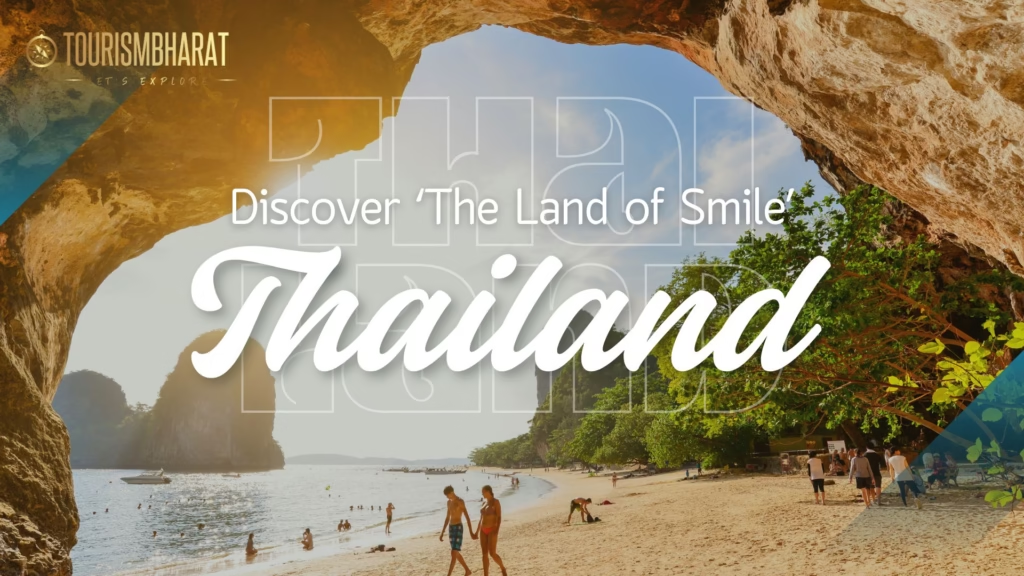
Thailand, affectionately known as the Land of Smiles, is a masterclass in travel diversity. From the neon-lit, soaring skyscrapers of Bangkok to the mist-shrouded peaks of Chiang Mai and the limestone karsts rising from the turquoise waters of the Andaman Sea, this Southeast Asian gem seamlessly bridges ancient heritage and ultra-modern convenience. Whether you are seeking spiritual solace in historic temples, diving into pristine marine ecosystems, or exploring bustling night markets, the top attractions in Thailand promise unforgettable encounters for every style of traveller.
At TourismBharat, we believe that travel should be both inspiring and seamless. This comprehensive, authoritative guide provides you with the practical transit routes, vetted seasonal data, exact cultural rules, and curated itineraries needed to plan an extraordinary Thai expedition.
Map of Top Attractions in Thailand: Regional Breakdown
Discover Thailand’s diverse regions: Central Thailand hosts majestic temples and urban hubs; the mountainous North offers rich cultural heritage and misty valleys; and the stunning South features world-renowned tropical islands, limestone cliffs, and pristine marine national parks perfect for every traveler.
Central Thailand: Historic Temples & Modern Marvels in Bangkok
Central Thailand serves as the nation’s beating heart, characterised by fertile plains, royal history, and the dazzling metropolis of Bangkok. To navigate this sprawling capital efficiently, travellers rely heavily on the BTS Skytrain and MRT networks, which cut through urban congestion to connect major shopping, dining, and historical districts directly.
At the centre of Bangkok’s spiritual identity is the Grand Palace complex, home to the highly revered Temple of the Emerald Buddha. Visitors must strictly adhere to the Wat Phra Kaew dress code rules, which demand modest clothing that completely covers both shoulders and knees; sleeveless tops, shorts, tight leggings, and ripped jeans are strictly forbidden. Beyond the capital, Central Thailand offers extraordinary natural escapes. These include the mystical Phraya Nakhon Cave in Sam Roi Yot National Park—where a gold-and-green royal pavilion sits bathed in natural sunlight filtering through a collapsed cave roof—and the breathtaking Erawan National Park in Kanchanaburi, famous for its seven-tiered, emerald-green waterfalls winding through lush jungle canopy.
Northern Thailand: Cultural Capitals of Chiang Mai & Chiang Rai
Stepping into Northern Thailand feels like entering a different era. The landscape transitions into rolling green mountains, historic teakwood temples, and a slower, deeply spiritual pace of life. Chiang Mai, the former capital of the Lanna Kingdom, is the region’s cultural anchor. Here, the air is filled with the aroma of freshly prepared Khao Soi—the region’s signature dish featuring soft egg noodles in a rich, aromatic coconut curry broth, topped with crispy fried noodles, lime, and pickled mustard greens.
Getting around Chiang Mai’s historic old city is an adventure in itself. Travellers flag down the iconic red Songthaew local transport trucks, which operate as shared taxis and offer a highly affordable, authentic way to commute between historic sites like Wat Phra Singh and the bustling night markets. Further north lies Chiang Rai, home to the striking contemporary art installations of Wat Rong Khun (the White Temple) and Wat Rong Suea Ten (the Blue Temple), both of which redefine traditional Buddhist architecture.
Southern Thailand: Iconic Beaches, Islands & Marine National Parks
Southern Thailand is a tropical paradise defined by two distinct coastlines: the Andaman Sea to the west and the Gulf of Thailand to the east. While world-renowned destinations like Phuket, Krabi, and Koh Samui draw millions with their white sands and luxury resorts, the region also preserves raw, untouched wilderness.
A prime example is the spectacular Khao Sok National Park, home to one of the world’s oldest evergreen rainforests. Here, colossal limestone karsts tower over the deep blue waters of Cheow Lan Lake, where visitors can stay in floating raft houses, kayak through hidden inlets, and spot wild elephants, hornbills, and gibbons in their natural habitat. For marine enthusiasts, the protected waters of the Similan and Surin Islands offer some of the finest scuba diving and snorkelling spots in Southeast Asia.
Practical 7-Day and 14-Day Thailand Itineraries
Our curated Thailand itineraries maximize your time: choose a 7-day route focusing on Bangkok and Chiang Mai’s culture, or a comprehensive 14-day itinerary that adds Southern islands like Phuket, Krabi, and the ancient rainforests of Khao Sok National Park.
To help you make the most of your journey, our travel experts have designed two distinct itineraries tailored to balance cultural immersion, natural exploration, and essential relaxation.
Option 1: The 7-Day Cultural Express (Bangkok & Chiang Mai)
- Day 1-2: Bangkok’s Royal Splendour – Explore the Grand Palace, Wat Pho, and Wat Arun. Cruise the Chao Phraya River and navigate the city via the BTS Skytrain.
- Day 3: Day Trip to Ayutthaya – Tour the UNESCO-listed ancient ruins of the former Siamese capital.
- Day 4: Travel to Chiang Mai – Fly or take the scenic sleeper train north. Enjoy a dinner of authentic Lanna cuisine, including Khao Soi.
- Day 5-6: Chiang Mai Temples & Highlands – Ride a Songthaew local transport to Wat Phra That Doi Suthep, visit an ethical elephant sanctuary, and shop at the Sunday Walking Street.
- Day 7: Departure – Fly back to Bangkok for your international connection home.
Option 2: The 14-Day Ultimate Kingdom Explorer
- Day 1-3: Bangkok & Surrounds – Discover urban hotspots, street food markets, and the spectacular Erawan National Park waterfalls on a day trip to Kanchanaburi.
- Day 4-7: Northern Heritage (Chiang Mai & Chiang Rai) – Delve deep into Lanna culture, tour the White Temple, and trek through northern mountain villages.
- Day 8-10: Jungle Adventure in Khao Sok – Travel south to Khao Sok National Park. Experience a night on a floating lake house, hike through ancient rainforests, and search for diverse wildlife.
- Day 11-13: Southern Island Bliss (Krabi or Phuket) – Island-hop through the Phi Phi archipelago, relax on Railay Beach, and enjoy world-class water sports.
- Day 14: Depart Thailand – Direct flight from Phuket International Airport or return flight via Bangkok.
TourismBharat Segment Guide: Which Style Fits You?
To help tailor your custom Thai holiday, find your primary travel persona below:
- Couples & Honeymooners: Luxury pool villas in Koh Samui, private longtail boat tours in Krabi, and sunset dining overlooking Wat Arun.
- Families: Interactive cooking classes, waterparks in Pattaya, and gentle wildlife encounters in Chiang Mai.
- Solo Travellers: Social hostels in Bangkok, backpacking through Pai, and yoga retreats in Koh Phangan.
- Adventurers: Deep-cave trekking to Phraya Nakhon Cave, multi-day hikes in Chiang Rai, and scuba diving in Koh Tao.
- Corporate & MICE: State-of-the-art conference facilities in Bangkok’s Sukhumvit district and team-building retreats in Phuket.
Ready to plan? Click here to connect with a TourismBharat Expert to design your bespoke vacation.
Essential Logistics: Visas, Local SIMs, and Transport Hubs
Streamline your journey with key logistics: obtain a Thai Visa on Arrival (VoA), secure a local eSIM at the airport, and leverage major transit hubs like Krung Thep Aphiwat Central Terminal and Mo Chit Bus Terminal for seamless countrywide travel.
Navigating Thailand is incredibly straightforward once you understand the primary transit hubs, arrival protocols, and connectivity options available to international visitors.
For entry, many nationalities are eligible for visa-exempt entry or can easily apply for the Thai Visa on Arrival (VoA) at major international airports, including Suvarnabhumi (BKK) and Don Mueang (DMK). Ensure your passport has at least six months of validity, and carry proof of a return flight ticket and sufficient funds in cash. Upon arrival, secure a local 5G eSIM or physical SIM card from top providers like AIS or TrueMove H at the airport terminal to ensure instant map navigation and translation capability.
Travel between Bangkok and Chiang Mai via a swift 1.15-hour flight from Don Mueang or Suvarnabhumi airports. Alternatively, book a comfortable overnight sleeper train from the state-of-the-art Krung Thep Aphiwat Central Terminal for a scenic 12-hour journey, or board a long-distance express bus departing from the bustling Mo Chit Bus Terminal.
Transit & Logistics Support by TourismBharat
Eliminate the stress of local booking platforms and language barriers. Through TourismBharat, you can instantly pre-book:
- Private, air-conditioned airport transfers with professional, English-speaking drivers.
- Fast-track VIP airport arrivals to bypass long Thai Visa on Arrival (VoA) lines.
- Point-to-point private cab rentals from Bangkok to Hua Hin, Pattaya, or Kanchanaburi.
Cultural Etiquette: Respectful Travel at Thailand’s Sacred Sites
Respect local customs by dressing modestly, removing footwear before entering temples, and understanding the significance of royal and Buddhist monuments. Secure your journey by following established rules at revered attractions like Wat Phra Kaew for an enriching, respectful experience.
Thai culture is deeply rooted in Theravada Buddhism and respect for the Royal Family. Observing proper social etiquette ensures positive interactions with locals and prevents accidental offence at sacred monuments.
To visit sacred temples like Bangkok’s Wat Phra Kaew, you must wear modest clothing that completely covers your shoulders and knees. Avoid sleeveless shirts, tight leggings, or ripped jeans. Sarongs are rentable at entrances. Remember to remove your shoes before entering any shrine hall.
Beyond the dress code, remember these essential cultural rules:
- The Head and Feet: In Thai culture, the head is considered the most sacred part of the body, while the feet are the lowest and least clean. Never touch anyone’s head, and avoid pointing your feet at people, Buddha statues, or temple shrines.
- The Wai Greeting: The traditional gesture of placing your palms together at chest level with a slight bow is called the *Wai*. Use it to show respect to monks, elders, and service staff.
- Respecting Royalty: Strictly avoid making any derogatory comments or jokes about the Thai Royal Family. Under the country’s strict Lèse-majesté laws, disrespecting the monarchy is a serious legal offence.
Best Time to Visit Thailand for Sightseeing and Festivals
The best time to visit Thailand is during the cool, dry season from November to February when weather is ideal for sightseeing. Plan your trip around iconic cultural festivals like Yi Peng, Loy Krathong, or the vibrant Songkran water festival.
Thailand’s tropical climate is characterised by three distinct seasons. Understanding these patterns helps you optimise your sightseeing plans and avoid heavy monsoon rains.
| Season | Months | Avg. Temperature | Rainfall & Humidity | Crowd Levels |
|---|---|---|---|---|
| Cool & Dry (Peak) | November – February | 24°C – 32°C | Very Low / Pleasant | High (Peak Season) |
| Hot Season (Shoulder) | March – May | 30°C – 38°C | Moderate / Dry | Moderate |
| Monsoon (Green Season) | June – October | 27°C – 33°C | High / Short Daily Downpours | Low (Great Discounts) |
Timing your trip to coincide with one of Thailand’s nationwide cultural festivals is highly rewarding. In mid-April, the entire country celebrates Songkran (the Thai New Year) with joyous, massive water fights symbolising purification and renewal. In November, the magical Loy Krathong and Yi Peng festivals take place, during which thousands of floating baskets are set adrift on waterways and illuminated lanterns are released into the night skies of Chiang Mai.
Thailand Travel Budget & Expense Estimator
To help you budget accurately, our financial team has put together a daily expense guide based on contemporary travel trends. Expenses are presented in both Indian Rupee (INR) and US Dollar (USD).
| Travel Tier | Accommodation Type | Daily Meals & Local Transport | Est. Cost per Day (INR) | Est. Cost per Day (USD) |
|---|---|---|---|---|
| Budget / Backpacker | Hostels & Guesthouses | Street Food & Songthaews/BTS | ₹1,500 – ₹3,000 | $18 – $35 |
| Mid-Range Explorer | 3-Star Hotels / Boutique Rentals | Casual Dining & Private Rides | ₹4,500 – ₹9,000 | $55 – $110 |
| Premium / Luxury | 5-Star Resorts & Private Villas | Fine Dining & Private Drivers | ₹20,000+ | $240+ |
Let TourismBharat Design Your Dream Thai Getaway
Don’t leave your holiday plans to generic search engines. Our local destination experts curate personalised, highly optimised itineraries tailored to your dates, preferences, and style.
Request a Customised Itinerary
Speak to a Specialist
Fully certified hotels, vetted local guides, and 24/7 on-the-ground assistance for peace of mind.