 CHAT WITH US NOW!

Read this great piece of travelogue written by Sangita Malhan and go through the traveller’s Arunachal Pradesh diary.

In the Lap of the Dawn-lit Mountains
The First Ray of the Sun; the LAC and the First Village of India
In November 2025, I was on a road trip to heaven. Here is how it went.
Unspoiled, undefiled and unblemished would be a fair description of the region. As my husband, friends, and I travelled through Lohit, Anjaw and Namsai districts, we were able to experience an era gone by; when the planet was still pristine, lush and virginal; the air at its freshest; Silence…sacred and audible, and Peace…truly felt. Nibaana (in Pali); Nirvana (in Sanskrit). A cessation of the dark fires that inflame us.
This story found wings when a batchmate of mine from the National Cadet Corps; now the Deputy Commissioner (DC) of Lohit, invited us to visit his district. Kesang Ngurup Damo was the first cadet from the Land of the Rising Sun to participate in a youth exchange programme between the Government of India and Canada World Youth, conducted in 1987-88. A group of 21 boys and 21 girls was selected from amongst 1700 cadets from all over the country. I was chosen from Rajasthan. We have known each other ever since.
Eight of us responded to that call from the north-east. Five of the spouses and one of the children joined. Plans were afoot. Damo made an exhaustive itinerary. We got our Inner Line Permits to the `East of the North-East’ …dawn-lit Arunachal Pradesh. On 22 November, 14 of us flew into Dibrugarh, Assam, from Hyderabad, Bangalore and Delhi. Two teachers – Renu and Vinita; Two computer engineers – Sudha and Bhanu; Two doctors – Namita and Anita; and the former’s daughter, Ojasvani, a media arts producer; Two pilots – Vijay and Tejinder; a retired army officer, Harsh; a former banker, Jaya; a corporate manager, Anu; a logistics expert, Nihar; and this scribe – a pilot-turned-journalist-turned writer, editor.
Damo had planned the trip meticulously. “A bus will pick you up at noon. Your luggage will follow in a two-ton,’’ was his message once we landed. Since we had time, a quick visit was made to the Jagannath Temple nearby. A bus from the ITBP (Indo-Tibetan Border Police Force) showed up along with a staff officer and a cameraman.
Heading for Tezu, the administrative headquarters of Lohit district, we came upon India’s longest road bridge – the Dr. Bhupen Hazarika Setu (also called the Dhola-Sadiya Bridge), built over the Lohit River, a tributary of the Brahmaputra. Nearly 9.15 kms long, and built to take on heavy military tanks, it reduces travel time by five hours; and connects Dhola in northern Assam to Sadiya in eastern Arunachal Pradesh. We got off the bus to take in the view. There was much cheer and laughter, and Hari, the official photographer, was coveted unabashedly.
By the time we reached the ITBP Guest House in Tezu around 5 pm, it was absolutely dark. The Sun had set at 4.11 pm. Damo met us with untrammelled warmth, offering each one a Khata – the traditional Tibetan Buddhist ceremonial white silk scarf. Snacks were served; rooms were assigned; and at 6 pm, we left for Lohit House, the official residence of the DC, for an evening of music, dance, and dinner. A celebration to remember.
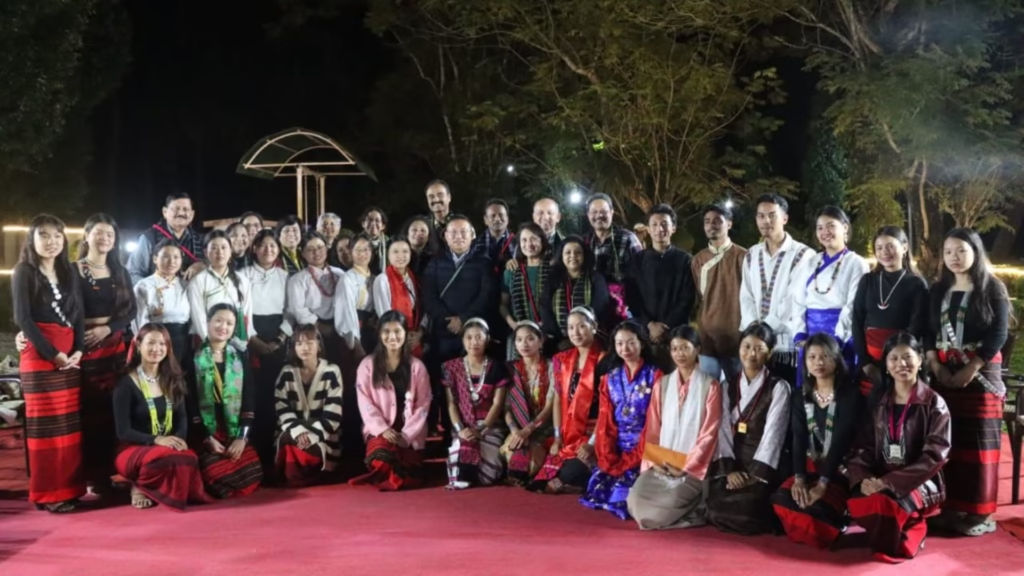
The sprawling grounds had been prepped consciously. A music system and projector had been set up. Officers from his team were present. Traditional scarves and sling bags of the Mishmi tribes, sponsored by Mohesh Chai, MLA, Tezu, were presented to us. An elaborate cultural programme followed after a clip of the team’s visit to Tawang (when Damo was DC there) in 2023 was played. Damo had also put together a welcome video for this group. The youth of the region showcased their graceful dances and songs to handsome applause. Their attractive costumes and distinct jewellery were the cynosure of several eyes. A mild shower fell but passed without event.
After the cultural presentation, we moved to a lawn where food had been set up on long wooden tables. Bamboo tubes were cooking over an open fire in one corner. Khaw Tai (sticky rice) wrapped in tong (leaves) was being steamed; soups and stews were being laid, and fish was being grilled and roasted (Paa-Pho). Traditional meals are normally served on Phung (a bamboo basket), and there is standard tableware. We were amazed to find out that many dishes had been cooked and brought in by Damo’s team members, including delicious Chambai – a dish of the local Mishmi tribe – sticky rice mixed with ginger paste and roasted black sesame seeds, served with slow-boiled meats.
There was a toy train in the garden. Lights had been put up everywhere. Home-brewed millet beer Apong, was flowing. My batchmates had started relaxing. Namita and Bhanu danced with abandon, as did Damo and Nihar. Gupta, Anu, Anita and Sudha were swaying to the music, arm in arm. The atmosphere was festive.
Brilliant singers, including Disemso Yun, the winner of Season 1 of the music talent show, Mishmi Idol, turned on their magic; mesmerising us. When the Additional Deputy Commissioner from Wakro, Apolo James Lungphi, sang the unforgettable “Dil hoom hoom kare’’ and `Ganga Behti Ho Kyun’’ in a voice that resembled the Bard of Brahmaputra – the `nectar-throated’ (Sudha Kanto) legend, Dr. Bhupen Hazarika, we held our breath.
Damo was persuaded to render the soulful Mohammed Rafi song `Meri Mohabbat Jawaan Rahegi, Sadaa Rahi hai, Sadaa Rahegi’, which he did with consummate grace and flourish. He also sang a Galo song which he used to croon – “Yo lo sin, ngoke mittr ka ru ma’’ (I am dazed by your beauty / I am lost in your presence) originally sung by Moge Doji, a legend from Arunachal Pradesh, who performed in several dialects including Nyishi, Galo, Assamese and Hindi, and who was known for bringing romance and melody into his songs.
My husband, Tejinder, who is also a melophile like Nihar, took to the mike next. They sang several songs with visible gusto. Damo invited me to sing. I had earlier recorded and brought Arunachal’s state anthem `Arun Kiron Sheesh Bhushan’ as a surprise for him. That evening, I sang `My Heart is Beating’. There was much bonhomie and high-octane revelry. When I look at the visuals from that night, I see what “letting one’s hair down’’ means. With friends, Euphoria is possible.
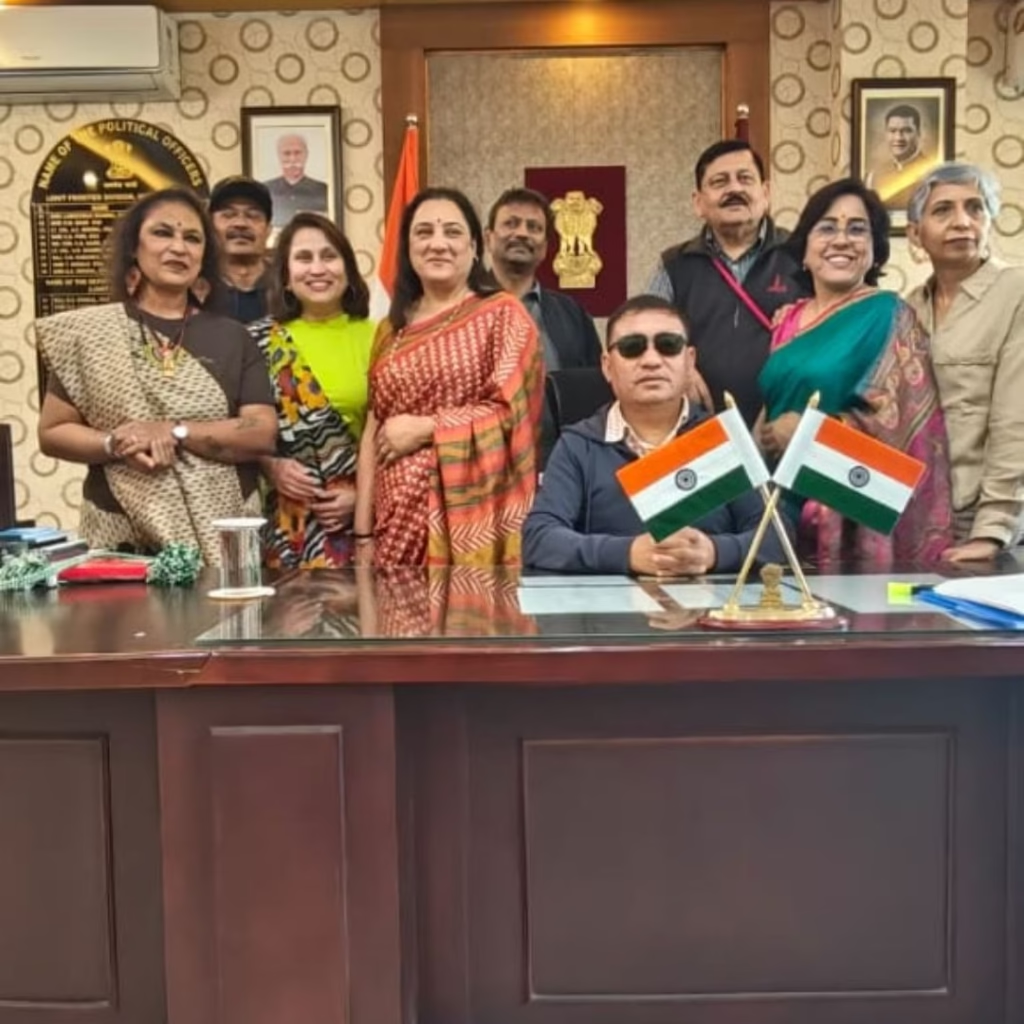
November 23, Sunday. Breakfast at the ITBP. The staff even brought each one of us hot tea. We are sincerely indebted. First on the agenda – A visit to the District Secretariat for a photograph in the DC’s office. Damo is also the recipient of the President’s Silver Medal and the Governor’s Gold Medal, and the only one among 880 Deputy Commissioners / District Magistrates in India to have been awarded the Chief of Army Staff Commendation Card.
A presentation was made on Arunachal Pradesh. We learnt that it has 26 major tribes and 100 sub-tribes; that it has the lowest density of population in the country – 17 persons per sq km; that it is the largest among the seven sister states of the north-east; and that it is home to two national parks, eight wildlife sanctuaries, and an orchid park with 500 varieties of orchids, among other interesting facts. (Damo has also served as Director, Tourism.)
Thereafter, we went for lunch at the Dibang Jungle Resort. A 100-metre trudge through an untarred road offered us views of majestic trees dotting a picturesque glen and dale. The resort belongs to the richest member of the Idu Mishmi tribe, a friend of Damo’s. We were told that he owns 8000 orange trees (that had unfortunately rotted because of termite), 250 hectares of palm oil trees, a poultry farm and a piggery. Soft-spoken and down-to-earth, Mr. Dature Muili greeted us gently before leaving to attend to a sow that had farrowed earlier that day. Lunch was a royal affair; the table was plied with local delicacies. Extra care had been taken to cater to this predominantly vegetarian group. `Athithi Devo Bhavah’ (the guest is God) was apparent …in letter and spirit.
After sundown (4.30 pm), a crepuscular glow enveloped us. We visited Digaru Eco Resort. A stream in a fairy-tale setting; cottages perked up on stilts; chairs in the glistening brook. Some of us waded into knee-high water and sat on them. What a delightful experience; other-worldly to the hilt! A visit was also paid to the Research Institute of World’s Ancient Traditions Cultures and Heritage (RIWATCH) at Roing in the Lower Dibang Valley district. Damo has served as DC here, too. The impressive campus has an ethnographic museum, a documentation centre and a centre for mother languages library.
ALSO READ: Hampi, Hanuman and a Tribute to Sanjeev Kumar
Our next stop was the artfully designed Community Convention Centre in Tezu. A museum showcased the cultural heritage of the tribes and unique manuscripts and paintings. A souvenir shop was selling bamboo glasses and mugs, and the local wraparound skirt – Gaaley, among other things. Damo’s young niece, Yani Yudik, also took some of us eager ones to look for `authentic’ souvenirs to the local market. Many thanks to her for her time and patience.
Monday, November 24, we were invited for breakfast at Damo’s residence. Piping hot poori choley and much much more. Just after noon, we moved toward the historical town of Walong in Anjaw district near the Indo-Tibet border, the site of fierce battles during the Sino-Indian War of 1962. In the local Mishmi dialect, Wa – bamboo and Long – place… make it `the place of bamboo groves’.
Lunch was served at the oldest State Force Battalion of the Indian Army, the 9th Battalion of the Madras Regiment — the Travancore Terrors. They have been in service for over 300 years. “Swadharme Nidhanam Shreyaha’’ (it is a glory to die doing one’s duty) is their motto. Harsh interacted with the officers in dapper uniforms as did Anu. The officer looking after us was from Gujarat. “Kem cho?’’ (how are you?), she enquired; the connect was instant.
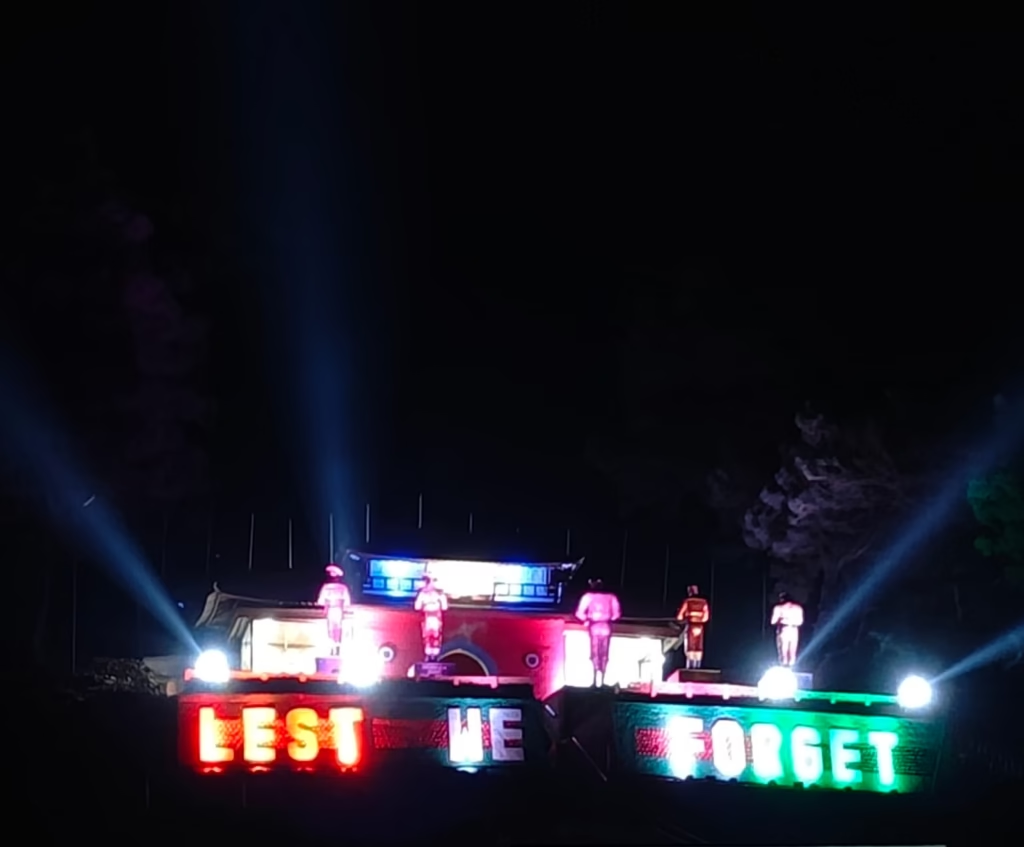
The drive to Walong was grueling. By the time we got there, it was dark. Some of us were put up at the Air Force Station; others at the Army guest house. An hour later, we arrived at the War Memorial and were shown a documentary on the Battle of Walong. Lest We Forget said the neon signage. We learnt that “At the trijunction of India, China and Myanmar, 2500 Indian soldiers from the Kumaon, Sikh and Gorkha regiments in Walong, with no winter gear, put up a heroic defense for over 20 days (October 22 – November 16, 1962) against 15,000 Chinese troops with superior ammunition, and delayed their advance by weeks. The brave 6 Kumaon regiment also launched a counterattack to reclaim positions’’. We bow to the indomitable courage of our soldiers. Some of us also choked up.
November 25, Tuesday. A big day, especially for trekkers Sudha and her husband, Bhanu, who have scaled Mt. Kilimanjaro, and done the rim-to-rim Grand Canyon hike in one day, the Tour du Mont Blanc circuit and the Three Passes Trek to Everest base camp. Namita and Ojasvani like hiking, as do Nihar and Teji. And, Anita, who had just returned from Mansarover, had already tested the limits of her endurance. Damo, who became the first civilian mountaineer of Arunachal Pradesh in 1996, led the way. The occasion – A three-hour trek up to Dong Valley, where the first rays of the sun fall in India.
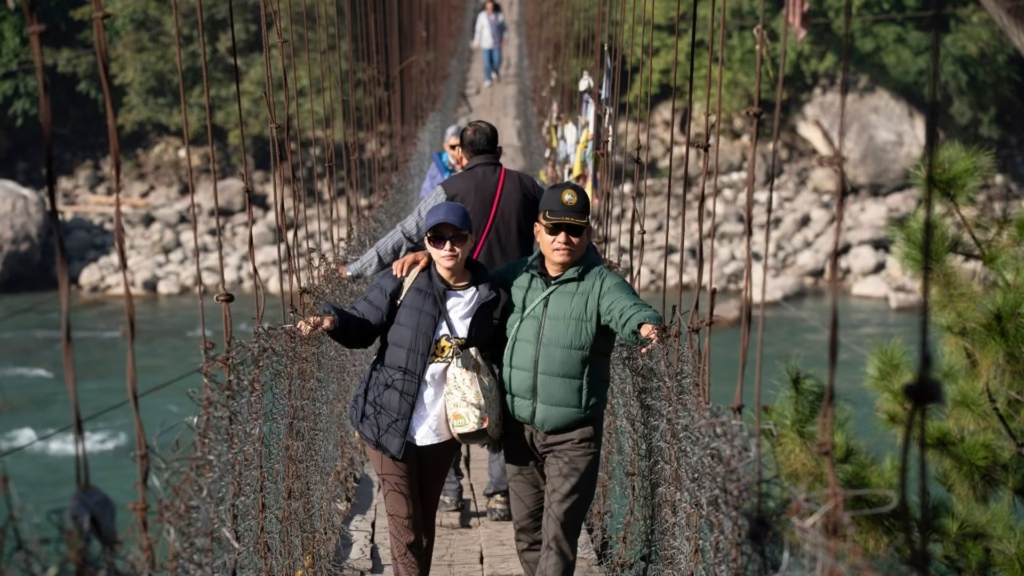
To get there, one crossed a 200-metre foot suspension bridge (FSB 17), which was the lifeline of the valley before road connectivity. This rope and plank hanging bridge connects Moilam Kambing in Walong to Tinai village on the Dong side. The Lohit river flows below. Having made this rather exciting walk, swinging a bit, and mostly alert but happy, one was welcomed by the Secretary of the Meyor Welfare Association, TT Meyor. He and I had time to interact. He told me that the Meyor (also known as Talong) inhabit Walong and Kibithoo in Anjaw district.
“There are just 1200 people in the tribe today,’’ lamented the Principal of the local school, who also shared a note that he had written about the rituals, customs, art, tradition, music and dance forms of his tribe. He was particularly emotional when he mentioned that members of his tribe, including his father, had played a key role during the Battle of Walong, carrying arms and ammunition, clothing and rations for the Indian Army, and thus serving the nation. Members of the community play a crucial role in supporting the defence personnel of this highly sensitive region. We bow to them.
Here’s a pause in the narrative. This is how I had originally started this account.
{On a glorious, sun-drenched morning in November, I found myself standing, every cell rejuvenated, and marvelling at a valley where the maiden rays of the Sun fall; where the air is rich and pure; and where I could hear leaves rustle softly in the winter breeze. A Chestnut Thrush whistled. The tall pines stood witness. My companions continued hiking up to the valley while I put my back on the grassy meadow and gazed at the clear blue sky. I was in paradise.}
And, we are back.
😉
Since we were also scheduled to visit Kaho, the first village of India from the east, the trek was cut short by half. The exhilarated hikers, nevertheless, returned satisfied. To my genuine surprise, a group of trekkers who had actually finished the entire climb, and seen and recorded the event, agreed to share the video after I made an earnest appeal. Many thanks to them. They had started the trek at 2.30 am and caught that breathtaking sight at about 5 am.
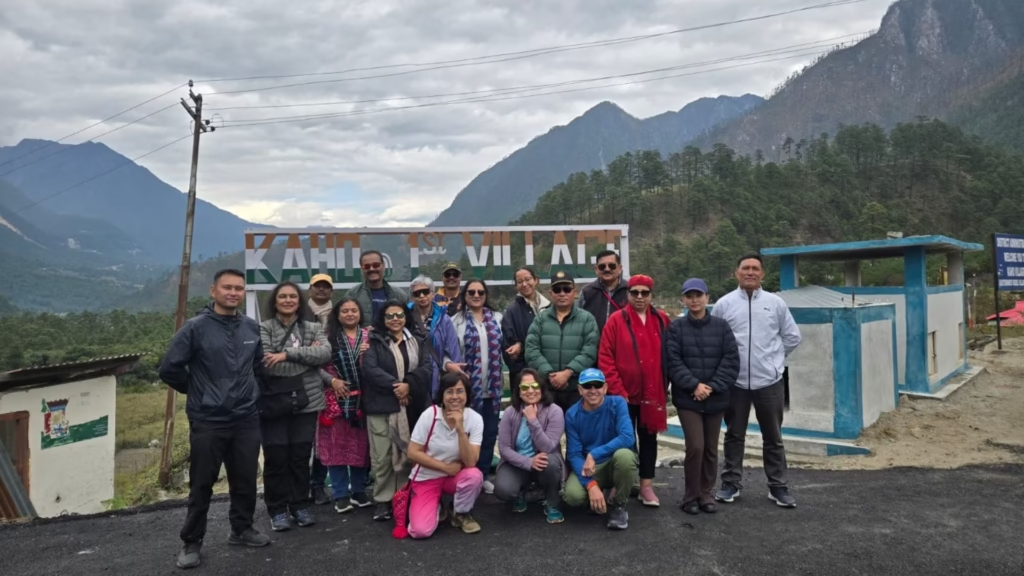
We were treated to butter tea and delicious homemade snacks by representatives of the village at the starting point of the climb. Thanking them, we made for our next stop — Kaho, `the First Village of India’. Kaho’s strategic location, and the vigilance that the community maintains on the ground seal its undeniable importance in the larger scheme of things. We were invited to the home of the local chief of the `easternmost model village’ for popcorn and coffee. Damo spoke of the chieftain’s invaluable contribution to the information channel. “His are the first eyes and ears of the administration among civilians in this sector,’’ he pointed out. (The family runs `Chochi Homestay’, and is contactable at 9233631646.)
We moved over the hill to Kibithu, which is located near the Line of Actual Control (LAC), the `easternmost military garrison of India’, from where we could see China. “Jangi Six, Defenders of the Dawn, East of the North East’’ said an ornate milestone at the entrance. “Kibithu endured the initial onslaught of Chinese aggression during the 1962 Sino-India War, and many illustrious units have defended this border,’’ we were informed.
An honour board to salute “the Tigers of Walong’’ — 6th BN (battalion) The Kumaon Regt (Regiment), records that “6 Kumaon at Tri Junction fought and fought and fought till there was an eerie Silence’’. Every citizen must visit these shrines of sacrifice to get an idea of what transpired during combat in this arduous and unforgiving terrain with a ruthless enemy. We remain profoundly indebted to our brave soldiers who protect their “Naam, Namak, Nishaan’’ (Honour, Loyalty, Nation/Insignia/ Unit) with every sinew of their being. Bharat ke Veer…Ajar rahe! Amar Rahe! (May India’s Bravehearts remain Imperishable! Immortal!)
That evening, we were invited to a wonderful cultural programme and dinner by the Meyor tribe. Their singers floored us with their rendition of Hindi film songs. Their dancers permitted us to fall in step with them, and were very accommodating when we got it all wrong. Food was served with the same affection and respect that is the hallmark of these gentle warrior clans. We cannot thank them enough for making us feel so welcome. Damo gave a heartfelt speech, lauding the community for the service it has rendered to the nation. “Their contribution, whether in the past, present or future, can never be underestimated,’’ he stressed.
ALSO READ: Rafi, the Western Ghats and Purple Flowers
We moved to the professionally-managed Nomkholong Homestay for that night. The hard-working team had prepared and laid out breakfast already by 7 am. Vinita liked the steamed roots and tubes. She and Jaya had both baked and brought cakes for us. We gorged on those. The locals eat healthy; there is no concept of dessert, and no one snacks all day or around 4 pm when people in the plains are found hankering for a little something `interesting’.
We left for Wakro, a quiet, verdant town in the Lohit district. En route, we broke our journey and sat by the Lohit river. Anita and Gupta had to cut short their trips. We missed them. Damo had also left for Tezu. Duty called. The Panchayat elections were around the corner, and he was working long hours. But he made it a point to reach Wakro that evening for another spectacular get-together hosted by ADC Lungphi. The winner of Season 3 of Mishmi Idol, Minamso Tailo, belted out the song that earned him the title, among others.
Every singer we heard in east Arunachal was outstanding. People were courteous, helpful and dignified; their hospitality was unsurpassable; every meal was sumptuous; and wherever we looked, there was at least one picture postcard vista. AQI was mostly below 50. In Walong, it was 12. Noise pollution – Nil. The infrastructure is being built. Roads are under construction. Homestays are preferred, although there are a few hotels. Do check the state tourism website and make bookings through government-approved tour operators before getting there.
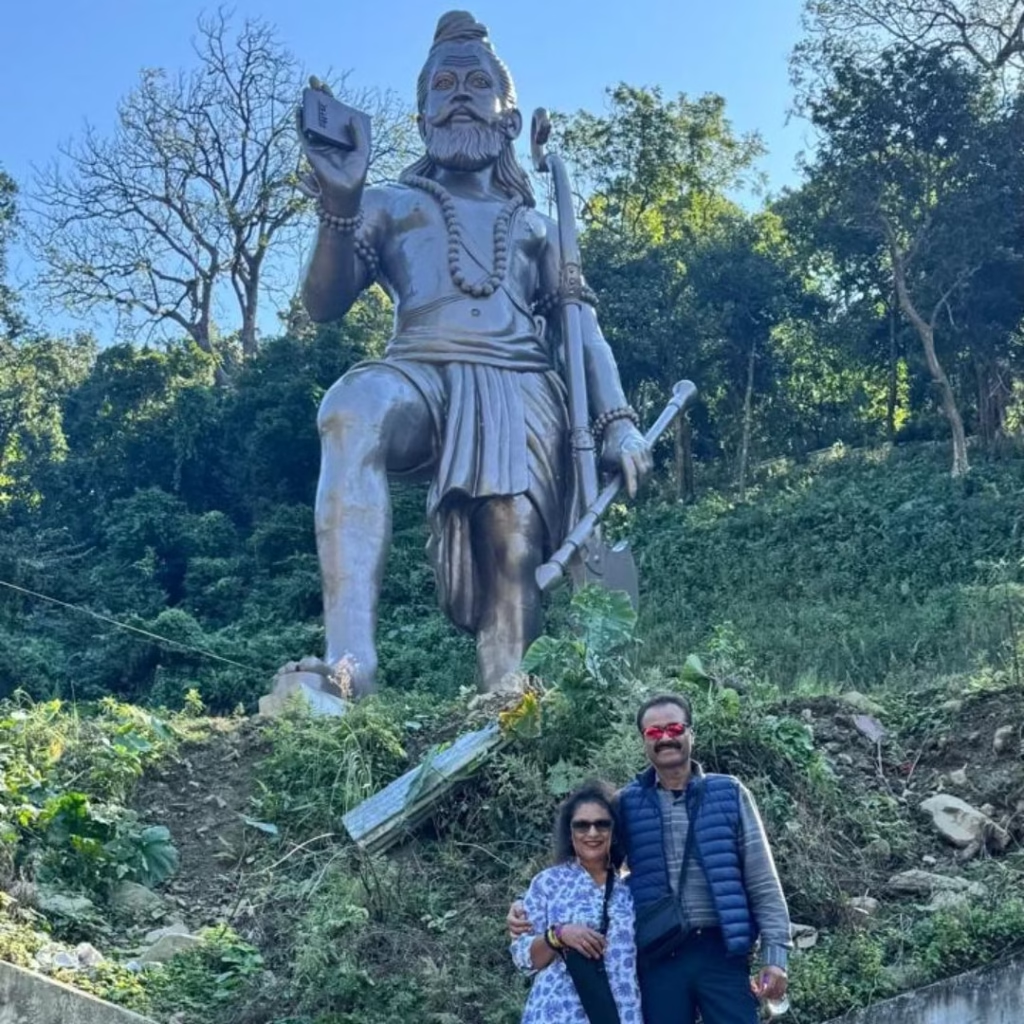
November 27. We went to the `Kumbh of the East’ — Parshuram Kund, which is thronged by lakhs of devotees during Makar Sankranti (often 13 January) for a sacred dip in the holy waters. The administration has the challenging task of ensuring safety since the Lohit river is known for its strong currents and whirlpools at this spot. At the local temple, at Damo’s behest, we were each offered a Rudraksh that had been energized and blessed; he had donated a sack full of these sacred dried seeds earlier in the year.
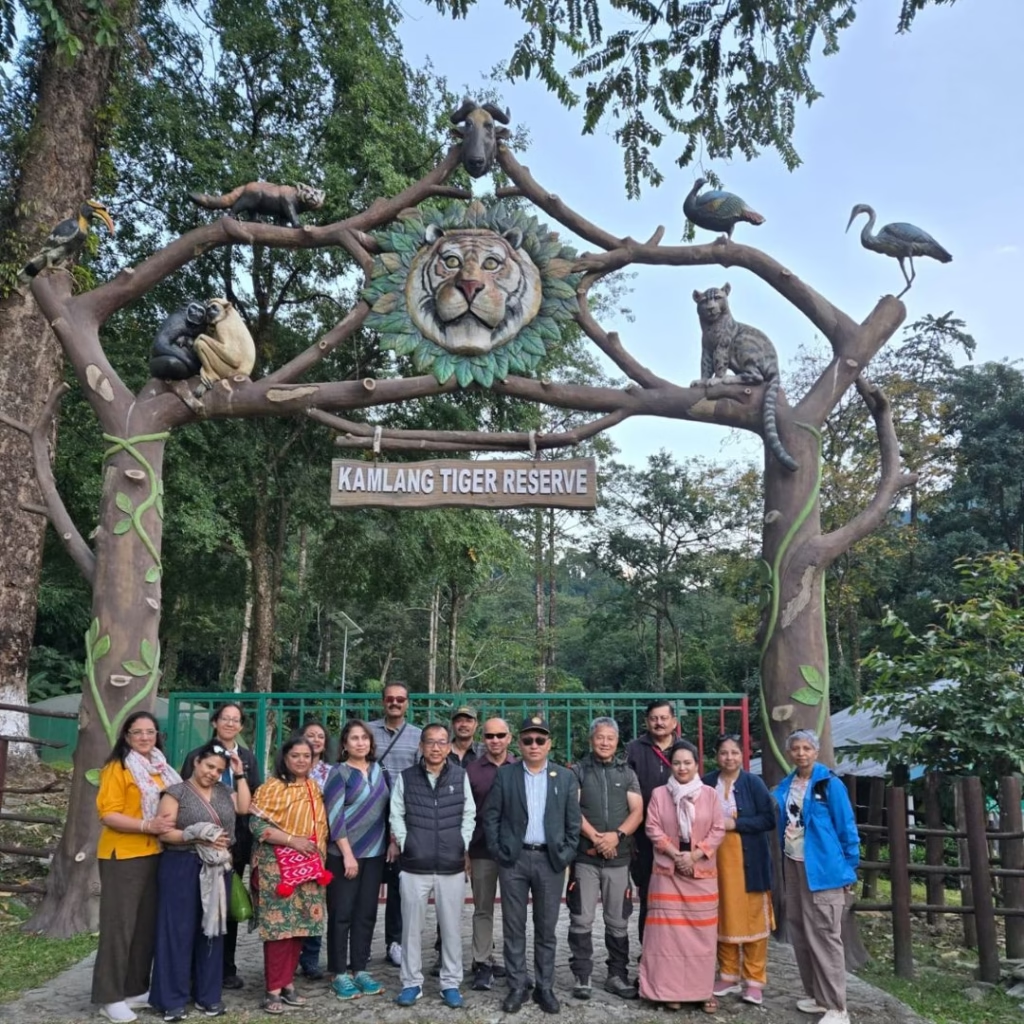
Later that day, we visited the Kamlang Wildlife Sanctuary and Tiger Reserve, and walked to Mithun Point by the Lohit River. Lunch was set up on a raised machan-like wooden platform by the riverside. An idyllic setting. Dreamy. Damo’s gifts to us continued day after day. Whether it was meeting the defence personnel in the region or being hosted by the local community, his focus on inter-personal relationships, and the associations he has forged in his State made so many `impossible things’ …possible. We express our wholesome appreciation and gratitude for everything.
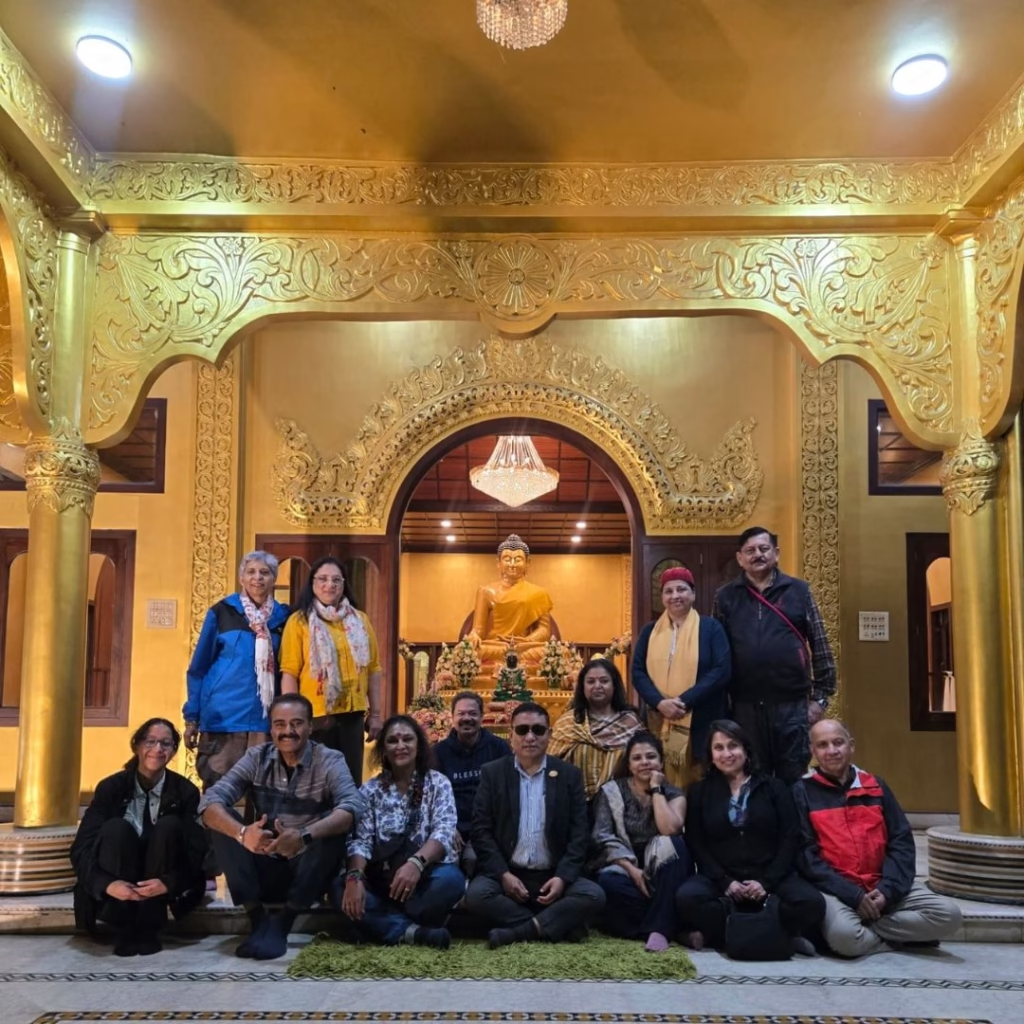
In the evening, we reached the Golden Pagoda in Namsai. This Burmese-style Buddhist temple, also known as Kongmu Kham, was about to close for the night when Damo intervened and made sure that we could stand at the feet of the Buddha. The Pagoda is covered with gold paint, and shimmers in the twilight; mythical lions guard its entrance; a statue of the Buddha in meditation is placed inside; on the outside are traditional bell posts. In the complex are also two other pagodas that are artistically built and decorated. One of these will bring me my birthday gift the next morning.
Up early, I walked to the Pagodas. Sunlight fell upon the emerald glass borders of one of the structures, and the entire strip lit up, one piece after another. It was going to be a great day; a phenomenal year. The group was on its last leg of the trip. We were going back to Dibrugarh via Tinsukia. Enroute, at the Tai Khamti Emporium, we bought souvenirs, and had an Assamese thali at a wayside restaurant. Teji decided to host dinner for everyone. Damo suggested the Seven Sisters in Dibrugarh.
Now, for three very important personal stories. My batchmate from Assam, Professor Indira Gogoi, travelled nearly 200 kilometres from Golaghat to join us. She was accompanied by her daughter and nephew; the latter chronicled the evening for me by shooting many videos. Damo, too, drove almost 200 kilometres to get to us from Tezu. They both brought material gifts. Indu got a cake, which everyone had planned without my knowledge. Damo brought me a beautiful jacket. We played games. Everyone sang. It was a very moving experience for me. And, it was not over.
I didn’t know that yet.
We were lodged at the new ITBP Guest House, which had been inaugurated as recently as September 2025. It was late, and I decided to make black coffee for everyone since I was about to have a cup, before turning in for the night. I motioned them to settle down in a lounge near the entrance. They insisted that I come over to the `other one’ way down the hall. I complied… only to be utterly (butterly…totally and entirely) surprised. The room had been prepared for a birthday party.
Anu had brought decorations all the way from Ahmedabad. Ojasvani’s lungs had pumped air into the blue and white balloons. Vinita had gone gift shopping in central Delhi, and bought splendid stoles. One had kantha work on it; the other displayed Gond art. Jaya had coordinated. Indu bought me a gorgeous Assamese dupatta. Renu said she bought the bag she gifted me, right under my nose, at the Emporium. Overwhelmed might still be understating what I was going through. Gobsmacked! Amazed! Goggle-eyed! (We must create a new word.)
The last time anything like this had happened to me was in November 1987, at the SOS village, where I was lodged, in Bhimtal, during the Indo-Canada Youth Exchange Programme’s India phase. My sub-group in the NCC (Anu, Indira, Gupta and I are from the Victory group. The 42 cadets were divided into 6 groups of 7 each) had similarly surprised me with a cake. This one had many more players, and for everyone to coordinate was just mind-blowing.
To such friends, many thanks. To my husband, who decided to make the evening special, sincere gratitude.
We left Dibrugarh, satiated but angling to return to the north-east.
—-
Let me introduce the group properly.
We had…
An officer of the Indian Army’s decorated Param Vir Chakra battalion (also called the Rezang La Battalion) 13 Kumaon – Colonel Harsh Chhibber (retd.), who has served in Siachen, and in Turtuk during the Kargil War; Anuradha Verma, 28 years with Reliance, now in the industrial production of polymers; Jaya Roy, a former banker turned philanthrope, who moonlights as a baker, who also handled the accounts on this trip meticulously; her husband, Nihar Parida, a logistics expert, dedicated birder and ace photographer.
Two teachers — Renu Chhibber and Vinita Gupta; the latter, also an expert chef; Two doctors – Namita Singh (Consultant Psychologist, Apollo Health City, Telangana) and Anita Chaudhary (Gynaecologist, Obstetrician and coordinator of the Art of Living’s Varanasi chapter) and Namita’s daughter, Ojasvani – skilled in Media Arts Production, Digital Direction, and Cinema (post production and distribution); Two computer engineers – Sudha Srikantswamy (whose core work is in healthcare analytics for optimizing outcomes) and Bhanuprakash Subramanya (who led cloud storage and data management strategy and implementation at Netapp and IBM).
Also in the team – Two aviators, who have both flown the Boeing 737 and the Airbus 320. Vijay Prasad Gupta flew Dornier 228s into the world’s most dangerous airport – Lukla in Nepal for 13 years, and Corporate jets to Iceland, Africa, Greenland and the Arab world for another 13; for the last ten years, he has been with Indigo. Tejinder Singh Malhan was in Command of the Boeing 787 Dreamliner for Air India and before that of the Airbus 320 for Indian Airlines. He logged 24,000 flying hours over 36 years before retiring last year. Interesting fact — all three of us flew Cessna(s) as trainees.
——
Some Key pointers:-
For reading, there is… www.arunachaltourism.com
ILP (Inner Line Permit), PAP (Protected Area Permit, RAP (Restricted Area Permit) are required.
Government-approved tour operators help with transportation and homestays.
Arunachal’s new tourism slogan “Beyond Myths and Mountains’’ intends to showcase the State’s rich culture and heritage just as much as its natural beauty and enchanting wonders.
…So, when are you going there?
Sangita.