 CHAT WITH US NOW!

Check out the list of the new seven wonders of the world. Know the details of these global heritage sites.

It was in 2007, when a Swiss company, the New 7 Wonders Foundation, ran an online contest to choose the new Seven Wonders of the World. After voting by more than 100 million people for the nominated UNESCO World Heritage Sites, the ‘new Seven Wonders of the World’ were chosen.
These new Wonders are present on four different continents of the world and were built by the ancient and medieval empires. Regarded as the greatest architectural feats, these monuments are among the most visited sites in the world.
Let’s know about these new Seven Wonders of the World and understand what makes them distinct.
1. Taj Mahal (Agra, Uttar Pradesh, India)
Historical Legacy & Architecture
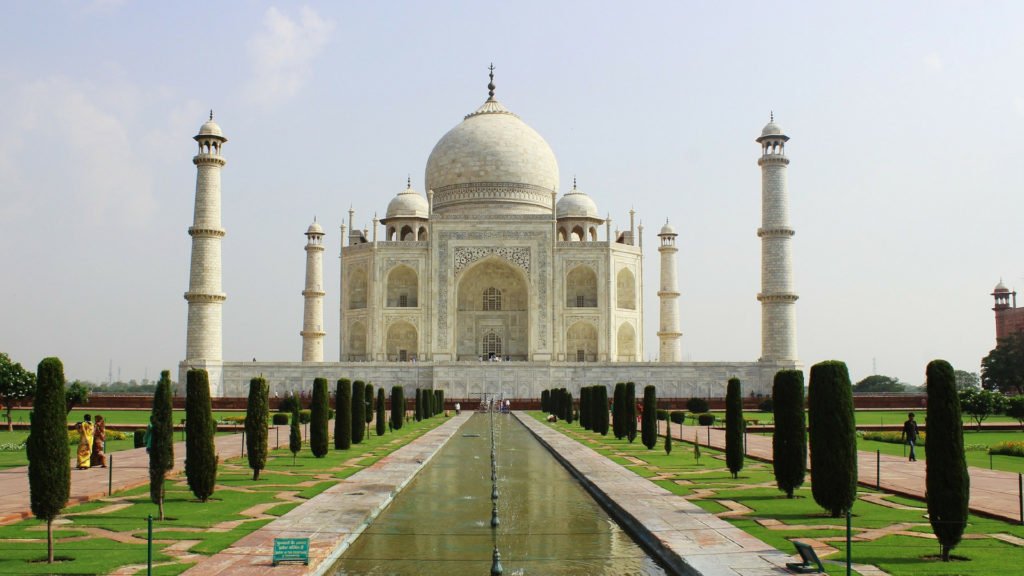
The Taj Mahal, also translated as ‘Crown of the Palace’, is an ivory white-marble mausoleum built between 1632 and 1648. It was commissioned by the Mughal Emperor, Shah Jahan, to house the tomb of his beloved wife, Mumtaz Mahal. The Taj Mahal is often recognised as an architectural achievement of the Mughal Empire. To build this ravishing piece of art, around 20,000 artisans were employed, and it took 16 long years to complete the construction. The Taj Mahal is rightly regarded as a masterpiece of architecture, and its construction reflects an ultimate fusion of the Mughal and the traditional Persian art. The entire structure is crafted from translucent white Makrana marble, inlaid with semi-precious stones (such as lapis lazuli, jasper, and jade) using the intricate pietra dura technique. Its perfect symmetrical geometry, majestic central dome, and flanking minarets are visually framed by a classical charbagh (four-quadrant) Persian garden reflection pool.
How to Reach & Best Time to Visit
-
How to Reach: One of the New Seven Wonders of the World, the Taj Mahal, is located in Agra, Uttar Pradesh. The monument is easily accessible from New Delhi via the Yamuna Expressway (a 3- to 4-hour drive) or by high-speed trains such as the Gatimaan Express departing from Hazrat Nizamuddin Station.
-
Best Time to Visit: The ideal months are between October and March when northern India experiences cooler, pleasant weather. To capture the best lighting and escape heavy crowds, aim for an early morning entry (the gates open 30 minutes before sunrise). Note that the Taj Mahal is strictly closed to the public on Fridays.
TourismBharat Insider Tip
💡 Avoid carrying backpacks, large tripods, or electronic accessories, as security lines at the Eastern and Western gates are incredibly stringent and will delay your entry. For a truly magical, crowd-free view away from the main complex, head to Mehtab Bagh (The Moonlight Garden) located directly across the Yamuna River at sunset, or book a night-viewing ticket during a full moon cycle.
2. Great Wall of China (China)
Historical Legacy & Architecture
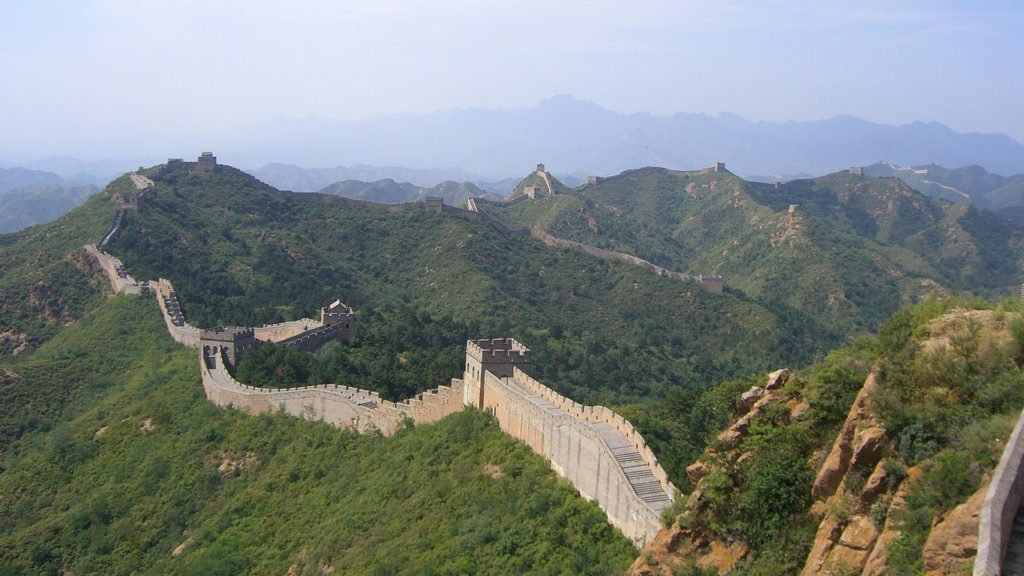
The Great Wall of China was built between 220 B.C. and A.D. 1644 by various emperors and dynasties. Historians say that it took around 1800 years to construct this wall, and it is basically a fortification of materials like stone, tamped earth, brick, wood, etc., to secure the Chinese Empire from Mongol invasions. The Great Wall of China is actually a number of walls overlapping each other that stretch approximately 21,196 kms from east to west of China. Regarded as the longest man-made structure, the Great Wall of China passes through mountains, plateaus, grasslands and deserts.
How to Reach & Best Time to Visit
-
How to Reach: Most travellers access the wall from Beijing. The Badaling and Mutianyu sections are roughly 1.5 to 2 hours away by tourist bus or train.
-
Best Time to Visit: Autumn (September to November) provides crisp air, clear blue skies, and spectacular mountain foliage colours framing the stone fortifications.
TourismBharat Insider Tip
💡 Skip the Badaling section completely; it is overwhelmingly crowded with tour buses and heavily commercialized. Instead, head to the Mutianyu section, which features fully restored watchtowers but significantly fewer tourists. Mutianyu also features a fully functional cable car to take you up to the wall, and an exhilarating toboggan slide that lets you coast down the mountain side when you’re finished exploring.
RECOMMENDED FOR YOU: BEST PLACES TO VISIT IN INDIA DURING MONSOON
3. Christ the Redeemer Statue (Rio de Janeiro)

Historical Legacy & Architecture
Out of all the new Seven Wonders of the World, the Christ the Redeemer statue is the most recent one. This 125-foot-tall Art Deco representation of Lord Jesus stands on the Corcovado mountain, located in Rio de Janeiro, Brazil. Constructed between 1922 and 1931, the Christ the Redeemer is today a symbol of Christianity across the globe. It is made of reinforced concrete and soapstone, and weights 6,35,000 kilograms. The construction cost of this giant statue was around $2,50,000, most of which was raised through donations. Brazilian engineer Heitor da Silva Costa, French sculptor Paul Landowski and Albert Caquot created this Wonder. As one of the world’s most recognisable achievements in monumental design, the statue is a masterclass in global Art Deco Architecture.
How to Reach & Best Time to Visit
-
How to Reach: Travelers can reach the peak by taking the historic Trem do Corcovado (Corcovado cog train) through the lush Tijuca Atlantic Forest, or via authorised official park vans departing from Copacabana or Largo do Machado.
-
Best Time to Visit: September to November provides comfortable humidity levels and clear views. Aim for a late afternoon visit to experience a breathtaking panoramic sunset over Guanabara Bay.
TourismBharat Insider Tip
💡 Check the live mountain weather cameras online before buying your transit tickets up to the summit. Because of Corcovado’s extreme elevation, heavy sea clouds can suddenly roll in and completely obscure the statue in a thick blanket of white mist, leaving you with zero visibility. Booking the cog train on the right-hand side during the ascent will give you the absolute best glimpses of the scenery along the way.
4. Petra (Jordan)

Historical Legacy & Architecture
Located in southern Jordan, Petra is a historic and archaeological city and is believed to have been settled during 9,000 BC; however, it was in the 4th century BC when it was primarily the capital of the Nabataean Kingdom. Later, in 106 AD, Petra fell to the Roman Empire.
Nabataeans were masters in water management, which is proven through their expertise in constructing water chambers and intricate tunnels. They were also specialised in stone carving — El-Dier monastery and a 4000 seater amphitheatre are some of the classic examples.
How to Reach & Best Time to Visit
-
How to Reach: Petra, the UNESCO World Heritage Site, is situated near the town of Wadi Musa. It is roughly a 3-hour drive from Jordan’s capital, Amman, via the Desert Highway, or a 2-hour drive from the coastal resort city of Aqaba.
-
Best Time to Visit: Spring (March to May) and Autumn (September to November) offer mild daytime temperatures perfect for extensive walking.
TourismBharat Insider Tip
💡 Walking from the main entrance through the Siq (the narrow, winding canyon entrance) to the Treasury takes about 30 minutes, and the entire archaeological park covers miles of rough terrain. Wear sturdy hiking boots, not light sneakers. Additionally, purchase a Jordan Pass online before traveling—it waives your tourist visa fees and covers your Petra entry ticket, saving you significant time and money at the gate.
5. The Colosseum (Rome, Italy)

Historical Legacy & Architecture
Also known as the Flavian Amphitheatre, the Colosseum is next in the list of New Seven Wonders of the World. This amphitheatre is a great example of the Roman Empire’s architectural feat. This monument was built between A.D. 72 and A.D. 80. It was commissioned by the emperor Vespasian and was completed by his successor Titus.
With a seating capacity of over 50,000 spectators, the Colosseum was then used for gladiatorial events and public spectacles like mock sea battles, animal hunts, executions, battle reenactments, etc. It is now left in a state of ruin due to earthquakes and the mining of the Colosseum’s materials. Today, only one-third of its original structure stands.
How to Reach & Best Time to Visit
-
How to Reach: Located in central Rome, the monument has its own dedicated subway station, Colosseo (Line B), making it incredibly easy to reach via public transit from any part of the city.
-
Best Time to Visit: Shoulder seasons—specifically April to May and September to October—offer pleasant weather without the blistering Mediterranean summer heat.
TourismBharat Insider Tip
💡 General admission tickets only grant access to the standard tiered seating. If you want an unforgettable experience, book a specialized “Underground and Arena Floor” guided tour well in advance. This grants you restricted access to walk exactly where the gladiators stood and explore the subterranean tunnels, which gives you a completely different perspective on Roman engineering.
6. Chichen Itza (Yucatan, Mexico)

Historical Legacy & Architecture
Chichén Itzá was a powerful city during the Terminal Classic Period, built by the Maya people. It was during 800 A.D. to 1200 A.D. when this city was a popular trading centre for cloth, honey, salt and slaves. During the Mayan civilisation, Chichén Itzá was an economic and political hub. It was in the 16th century that the Spanish abandoned this city. Later, in the early 19th century, archaeological excavations started here. El Caracol, an astronomical observatory of the Mayan civilization is one of the most interesting sites here. The architectural design of El Castillo serves as a physical, stone manifestation of the highly advanced Mayan Calendar system.
How to Reach & Best Time to Visit
-
How to Reach: Situated in the Yucatán State, it is an easy 2-to-3-hour drive via rental car, ADO tour bus, or colectivo from major tourist hubs like Cancún, Playa del Carmen, or Mérida.
-
Best Time to Visit: November through February offers the coolest temperatures. Arrive exactly when the gates open at 8:00 AM to explore before the intense tropical sun hits its peak.
TourismBharat Insider Tip
💡 When standing directly in front of the main staircase of El Castillo, clap your hands loudly once. The acoustic design of the pyramid bounces the sound back as a hollow, chirping echo that perfectly mimics the call of the Quetzal—a bird considered highly sacred by the ancient Maya. Also, combine your trip with a swim at the nearby Cenote Ik Kil to cool down afterward.
7. Machu Picchu (Cuzco Region, Peru)
Historical Legacy & Architecture
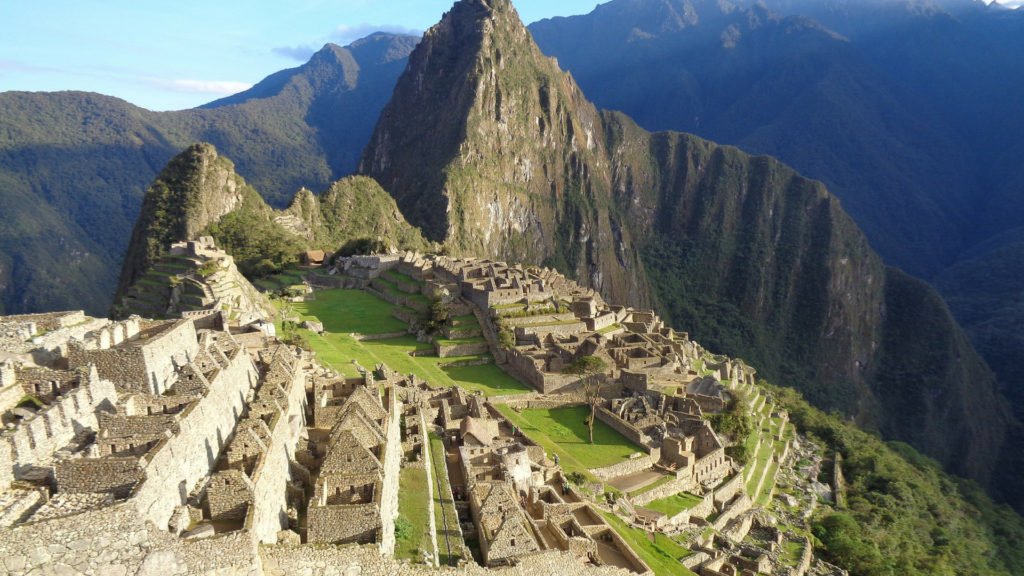
Machu Picchu is an Incan Citadel of the pre-Columbian era, located above the Sacred Valley, on the eastern slopes of the Andes range. As per archaeologists, it was built in 1438-1472 as an estate for Pachacuti, the Incan emperor. Later, at the time of the Spanish Conquest, this city was abandoned. Until 1911, it was not a known site except to the locals, when an American historian, Hiram Bingham, brought it to global attention. This site was built in the classical Inca style and had polished dry-stone walls. You can reach this place only by train, helicopter or on foot. The Peruvian government has lately limited the amount of time tourists can spend here in order to preserve this site.
How to Reach & Best Time to Visit
-
How to Reach: Fly into Cusco, take a scenic train (Inca Rail or PeruRail) to the town of Aguas Calientes (Machu Picchu Pueblo), and then take a short, 25-minute shuttle bus up the winding mountain switchbacks to the main entrance.
-
Best Time to Visit: The dry season runs from May to September. June through August sees the highest volume of international travellers.
TourismBharat Insider Tip
💡 Peru strictly regulates access to Machu Picchu via timed, single-entry circuit tickets that must be purchased months in advance online. If you are physically fit, try to book a ticket that includes permission to climb Huayna Picchu (the steep peak rising directly behind the ruins). It is a demanding, steep scramble up historic stone steps, but it rewards you with an unmatched, bird’s-eye view of the entire citadel layout below.
Liked this post, loved looking at the seven wonders of the world images? Don’t forget to share this post with your friends.
(Christ the Redeemer Statue image source: wikimedia.org)
New 7 Wonders Of The World Video!
FAQs:
Q. What is the new 7 Wonders of the World list?
Let’s list the official new seven wonders of the world below:
- Taj Mahal
- Great Wall of China
- Christ the Redeemer Statue
- Petra
- The Colosseum
- Chichen Itza
- Macchu Picchu
Q. What are the old vs. the new 7 wonders of the world?
The old seven wonders of the world were:
- The Great Pyramid of Giza – Egypt
- Hanging Gardens of Babylon – Earlier called Mesopotamia (Present-day Iraq)
- Statue of Zeus at Olympia – Greece
- Temple of Artemis at Ephesus – Turkey
- Mausoleum at Halicarnassus – Turkey
- Colossus of Rhodes – Greece
- Lighthouse of Alexandria – Egypt
The new seven wonders of the world are:
- Taj Mahal – India
- Great Wall of China – China
- Christ the Redeemer Statue – Brazil
- Petra – Jordan
- The Colosseum – Italy
- Chichen Itza – Mexico
- Macchu Picchu – Peru
Q. What are the new 7 wonders of the world locations?
The new 7 wonders of the world locations are:
- Taj Mahal is located in Agra, India
- The Great Wall of China stretches across various regions of China
- Christ the Redeemer Statue is located in Rio de Janeiro, Brazil
- Petra is located in southern Jordan
- The Colosseum is located in Rome, Italy
- Chichen Itza is located in Yucatan, Mexico
- Macchu Picchu is located in the Cuzco region in Peru
Q. What are the new 7 wonders of nature?
- Amazon Rainforest and River (Brazil, Bolivia, Colombia, Ecuador, French Guiana [France], Guyana, Peru, Suriname, Venezuela
- Hạ Long Bay (Vietnam)
- Jeju Island (South Korea)
- Iguazú / Iguaçu Falls (Argentina/Brazil)
- Puerto Princesa Subterranean River National Park (Philippines)
- Komodo Island (Indonesia)
- Table Mountain (South Africa)
Q. What are the seven wonders of the ancient world?
Here are the seven wonders of the ancient world:
- The Great Pyramid of Giza (Egypt)
- Hanging Gardens of Babylon (Earlier called Mesopotamia; Present-day Iraq)
- Statue of Zeus at Olympia – (Greece)
- Temple of Artemis at Ephesus (Turkey)
- Mausoleum at Halicarnassus (Turkey)
- Colossus of Rhodes (Greece)
- Lighthouse of Alexandria (Egypt)
Q. What are the seven wonders of the modern world?
Here is the list of the new seven wonders of the modern world:
- Taj Mahal – India
- Great Wall of China – China
- Christ the Redeemer Statue – Brazil
- Petra – Jordan
- The Colosseum – Italy
- Chichen Itza – Mexico
- Macchu Picchu – Peru
Q. What is the 8th wonder of the world?
Located in Cambodia, Angkor Wat is the eighth Wonder of the World, and got this recognition, leaving behind Italy’s Pompeii.
Q. What are the best times of year to visit the Great Wall of China?
The absolute best times of year to visit the Great Wall of China are during the shoulder seasons of Autumn (September to November) and Spring (April to May).
-
Autumn (Peak Choice): This is considered the ideal time to visit. The weather is crisp, skies are clear, and the mountains surrounding sections like Mutianyu and Simatai are covered in stunning red and golden foliage.
-
Spring: Offers comfortable hiking temperatures and beautiful cherry blossoms blooming along the ancient stone steps.
-
Times to Avoid: Try to avoid visiting during summer (June to August), as it brings heavy tourist crowds, high humidity, and intense heat. Most importantly, completely steer clear of China’s Golden Week (the first week of October) and the Labor Day holiday (early May), when domestic travel spikes drastically and the wall becomes overwhelmingly congested.
Q. What types of travel insurance are recommended for international trips to these locations?
Because visiting the New 7 Wonders involves travelling across completely different continents—ranging from the high-altitude Peruvian Andes to the remote desert canyons of Jordan—a standard flight-cancellation policy is not enough. You should look for comprehensive travel insurance that includes:
-
Emergency Medical Evacuation Coverage: This is vital for Machu Picchu (Peru) or Petra (Jordan). If you experience severe altitude sickness or get injured while hiking remote ruins, the cost of being transported to a high-quality international hospital can run into tens of thousands of dollars.
-
Adventure & Sports Riders: Standard policies often exclude injuries sustained during “extreme activities.” Make sure your policy explicitly covers trekking and high-altitude hiking (up to 3,000 meters / 10,000 feet) so you are protected while exploring Peru or climbing mountain trails in China.
-
Comprehensive Theft & Baggage Protection: Sites located in bustling metropolitan areas, such as the Colosseum in Rome or Christ the Redeemer in Rio de Janeiro, are notorious hotspots for highly skilled pickpockets. Ensure your policy covers cash, passports, and high-end gear like smartphones or cameras.
Q. How can I book guided tours for multiple wonder attractions?
While there is no single international agency that natively bundles all seven continents into a single automated checkout, coordinating a multi-wonder itinerary is incredibly seamless when you partner with the right regional experts.
The most reliable, stress-free way to lock in your bucket-list journeys is through a hybrid booking strategy combining dedicated global platforms and trusted destination partners:
-
Your Trusted Global Partner — TourismBharat: For the majority of these iconic destinations—including the magnificent Taj Mahal, the ancient desert canyons of Petra, and the historic amphitheatres of Rome—TourismBharat serves as your comprehensive, high-authority travel partner. We specialise in mapping out end-to-end, tailor-made itineraries that seamlessly bridge cultural sightseeing with modern transit logistics. From securing hard-to-get priority entry tickets to pairing you with hand-picked, certified local historians, we strip the stress out of international travel planning so you can focus entirely on the experience.
-
Securing High-Restriction Sites: Certain wonders—most notably Machu Picchu (regulated strictly by Peru’s Ministry of Culture) and the Colosseum’s Underground Hypogeum—enforce strict daily visitor caps. When planning a multi-wonder vacation, always lock in these high-restriction checkpoints first. When you book your core itineraries through TourismBharat, our travel desk prioritises anchoring your travel dates around these tightly regulated windows, ensuring you never miss out due to a sold-out calendar.
Let’s Design Your Next Adventure! Planning a journey across the world’s greatest wonders requires precision, local insight, and flawless execution. Whether you want to witness the morning sun reflecting off the white marble of the Taj Mahal or navigate the rose-red passages of Petra, TourismBharat is here to craft a seamless, elite travel experience just for you.
Q. Suggest packing essentials for a trip covering diverse climates of these sites.
If you are planning an epic multi-wonder journey, your suitcase will need to handle everything from tropical humidity to high-altitude mountain chills. Pack smart by focusing on versatile, lightweight layers and high-utility gear:
| Category | Essential Items to Pack | Why You Need It |
| Footwear | Broken-in hiking boots, moisture-wicking merino socks, and light city sneakers. | Petra and Machu Picchu require miles of trekking on uneven, historic stone surfaces. |
| Clothing Layers | Breathable linen shirts, UV-protection clothing, a compact fleece jacket, and a packable waterproof windbreaker. | Handles the dry desert heat of Jordan/Mexico, while letting you layer up for chilly, damp mornings in the Peruvian Andes. |
| Sun & Health | Reef-safe SPF 50+ sunscreen, a wide-brimmed hat, polarized sunglasses, and altitude sickness medication (Acetazolamide). | Vital for the exposed ruins of Chichen Itza and navigating the 8,000-foot heights of Machu Picchu safely. |
| Gear & Power | A universal travel adapter, a heavy-duty 20,000mAh power bank, and a lightweight, anti-theft daypack (like Pacsafe). | Keeps your phone/camera charged during long transit days in China and protects your gear from pickpockets in Rome or Rio. |
Nice information. Thanks
You are most welcome Alina!